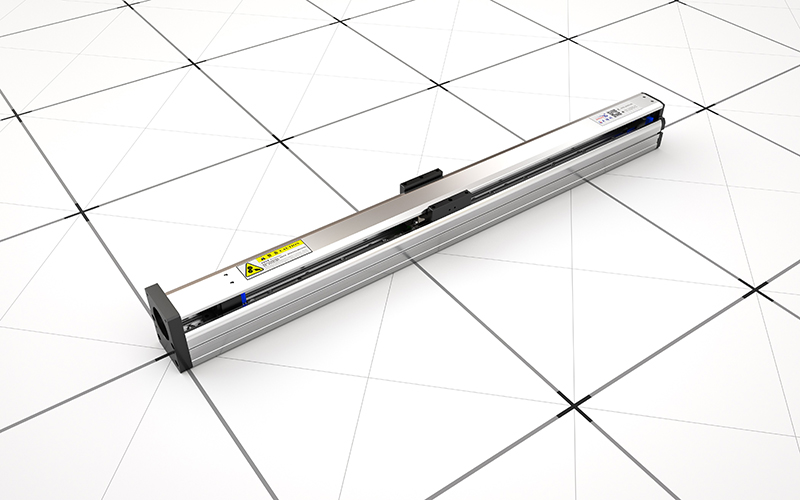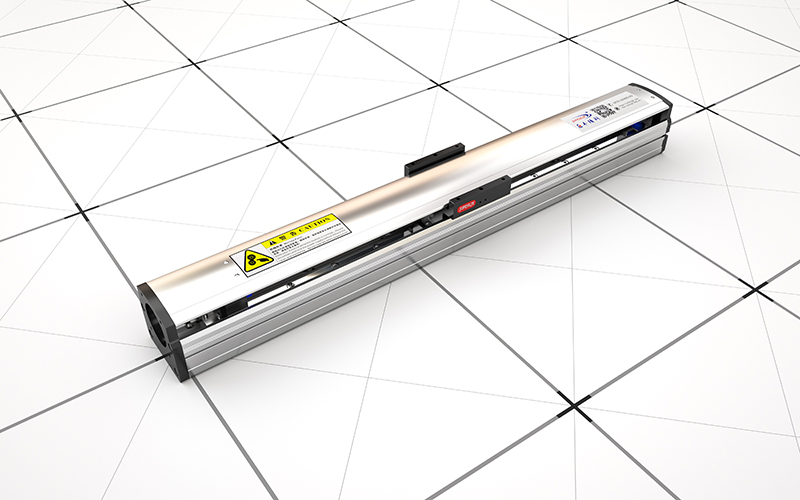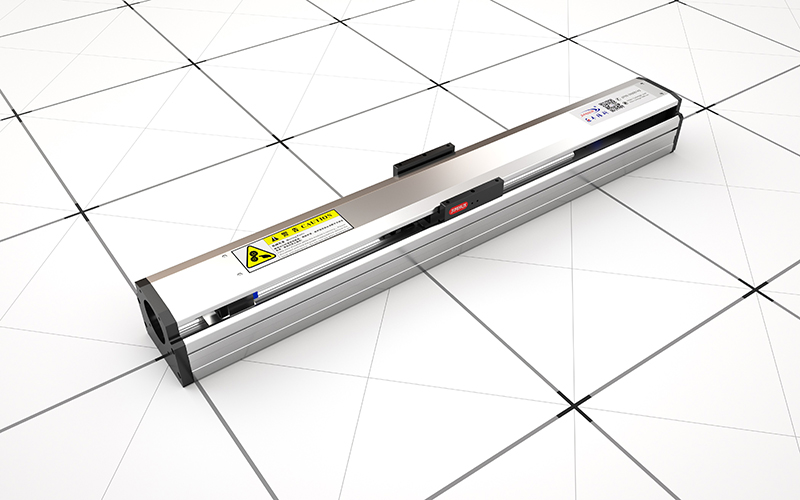
Ball Screw Linear Actuators | ±0.01 mm JFJK-S Series
Repeatability ±0.01mm
C5/C7 Ball Screw Grades
High Rigidity & Precision
Customizable Stroke
2D/3D Drawings Provided
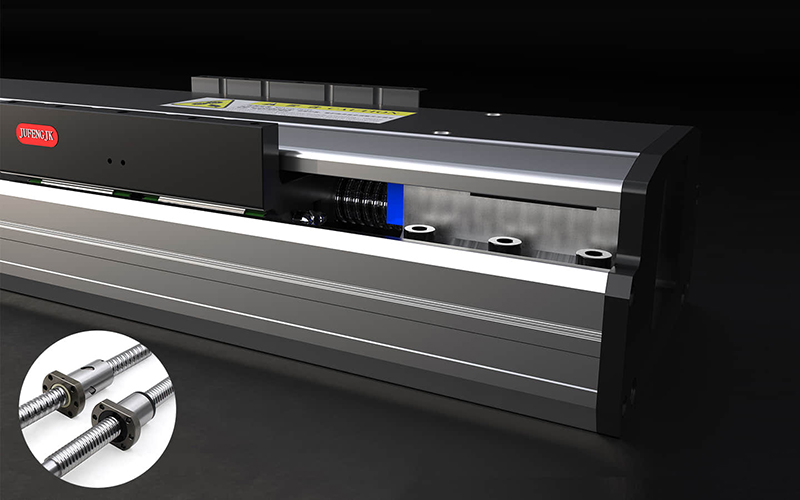
JFJK-S series ball screw linear actuators are the precision end of our range: high rigidity, high thrust, and ±0.01 mm repeatability, built for axes where the module does the work rather than just moving the workpiece. Where a belt drive trades accuracy for speed and length, a ball screw trades stroke and cost for stiffness — and stiffness is what a machining, dispensing, pressing or metrology axis actually needs.
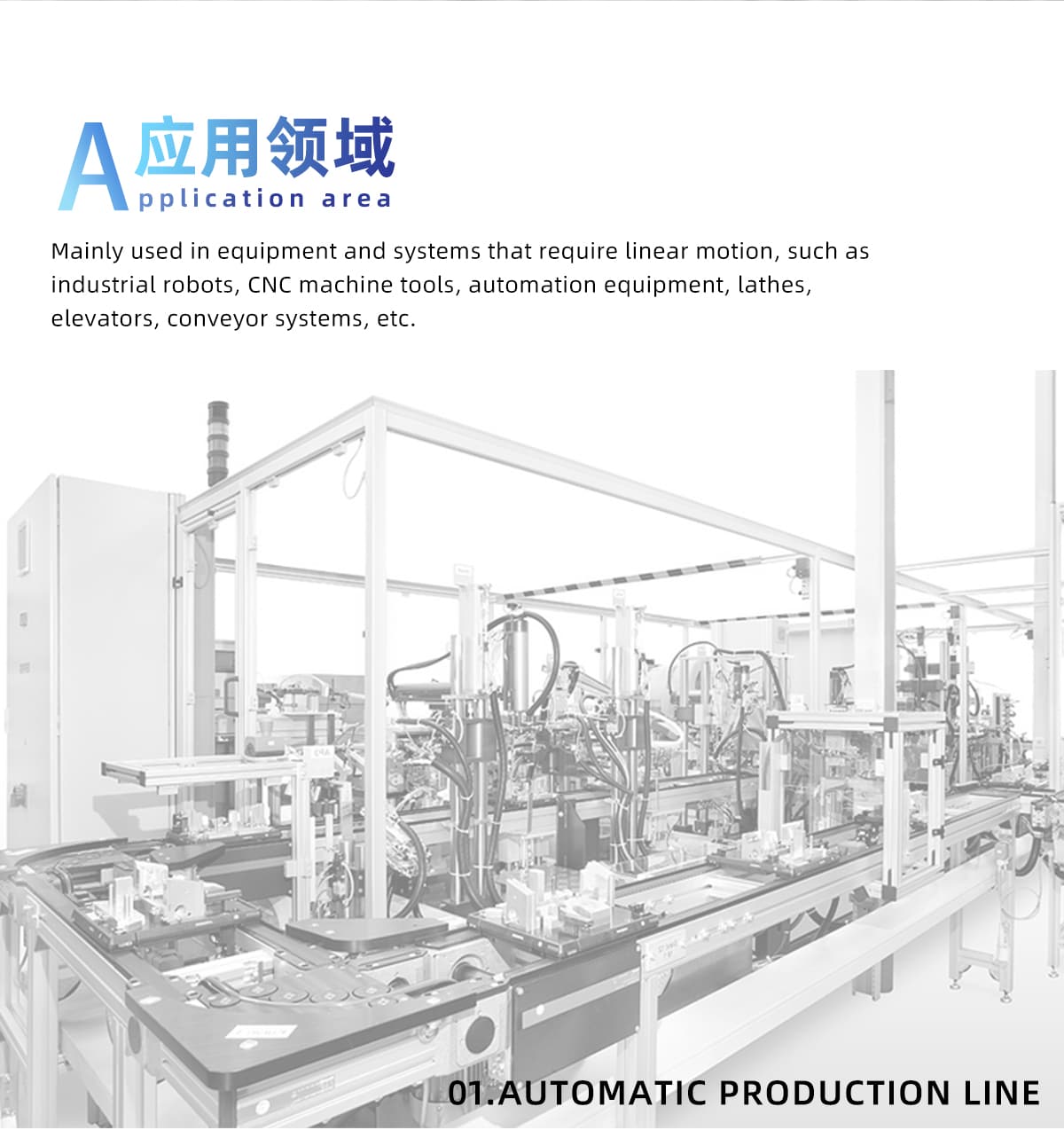
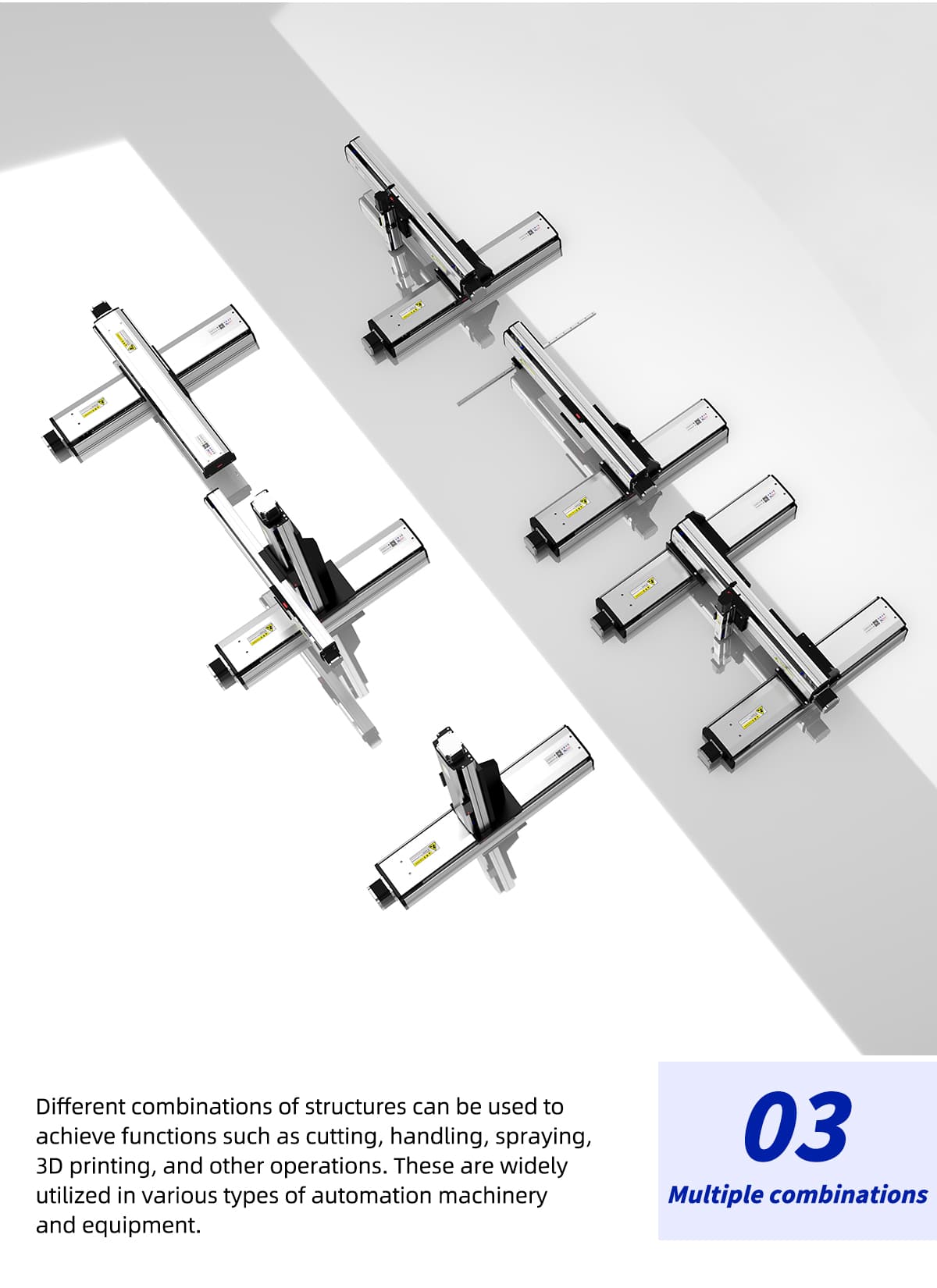
These modules are specified into CNC equipment, semiconductor wafer handling and inspection, medical and pharmaceutical automation, and precision assembly stations. If your requirement includes a number for repeatability, thrust or resistance to a cutting force, start here rather than with the belt family.
Why a screw drive behaves differently
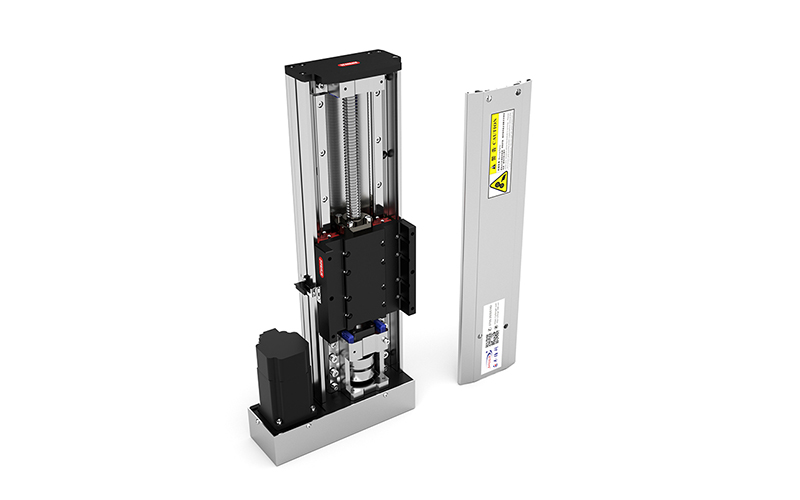
A ball screw converts rotation to linear motion through recirculating balls running between a ground screw and a nut. Because rolling replaces sliding, friction is low and the drive is efficient — which is exactly why it can push hard without the motor and belt having to absorb the difference, and why the position it reaches stays where it was put under a steady load.
Four consequences define the applications:
Thrust. A screw axis pushes and pulls with force a belt cannot transmit over the same envelope, which is what makes it suitable for pressing, clamping, drilling and any axis that meets resistance.
Stiffness. Under an oscillating cutting load, a preloaded screw and nut deflect far less than a belt span. The tool stays where the program says it is.
Positioning quality. Fine, repeatable increments — our ball screw modules are specified at ±0.01 mm repeatability.
Stroke ceiling. A long, slender screw whips at speed. Past a certain length-to-diameter ratio the axis must slow down, use a larger screw, or switch to a belt or rack drive. This is a real limit, not a catalogue footnote.
On vertical axes there is a further point worth stating plainly: a ball screw is efficient enough that it can be back-driven by gravity, so it does not replace a brake. A vertical ball screw axis still needs a motor brake or a counterbalance — the screw gives you stiffness, not self-locking.
Belt or ball screw? The decision in one paragraph
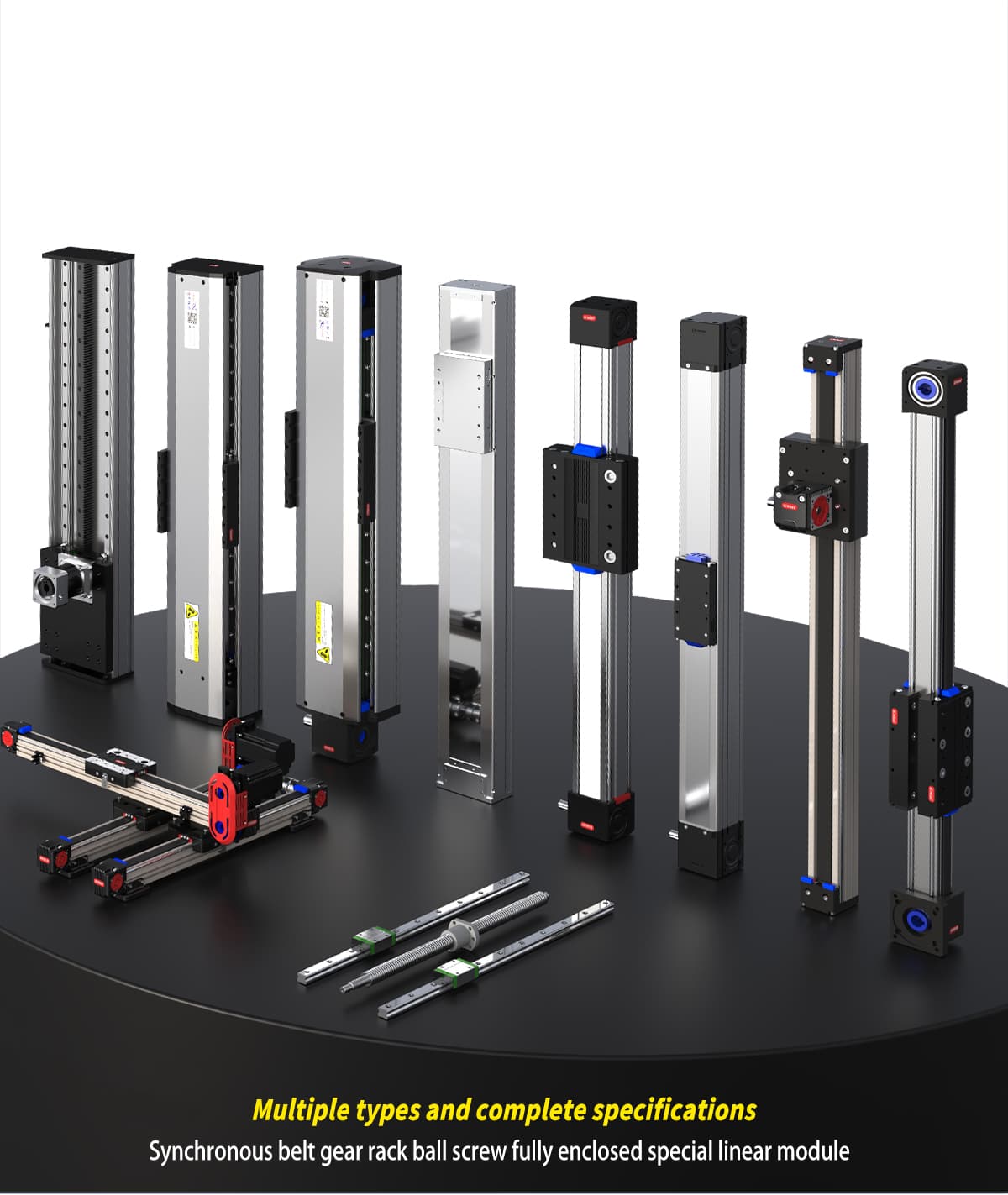
If the axis moves a load quickly across a long distance and the accuracy requirement is “it arrives in the right place, repeatedly”, use a belt-driven module. If the axis meets resistance, holds a position under load, or must repeat within a tight tolerance, use a ball screw. If the load is heavy and the travel is long at the same time, neither is ideal and a gear & rack module carries the thrust without the whip limit.
The JFJK-S range
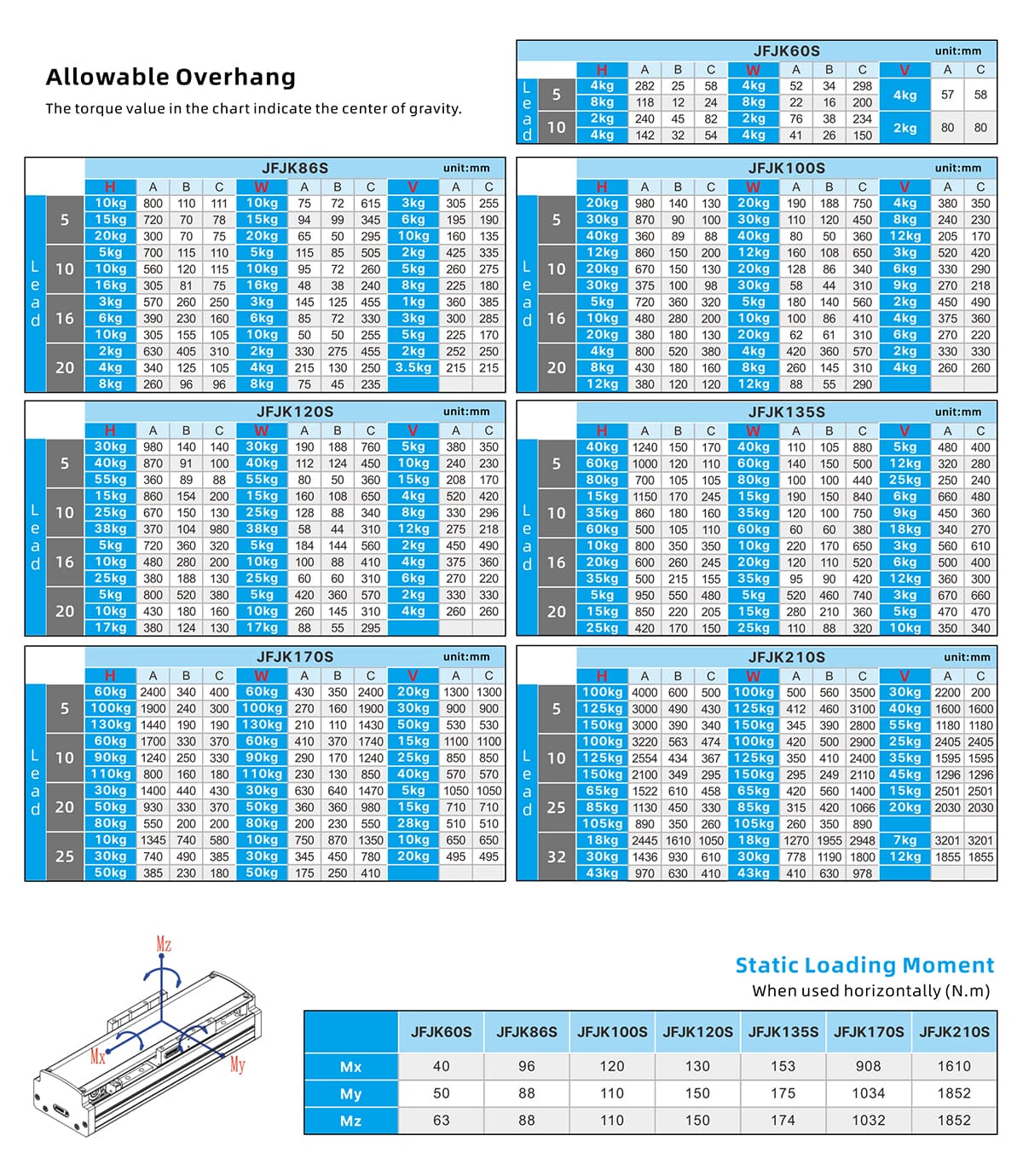
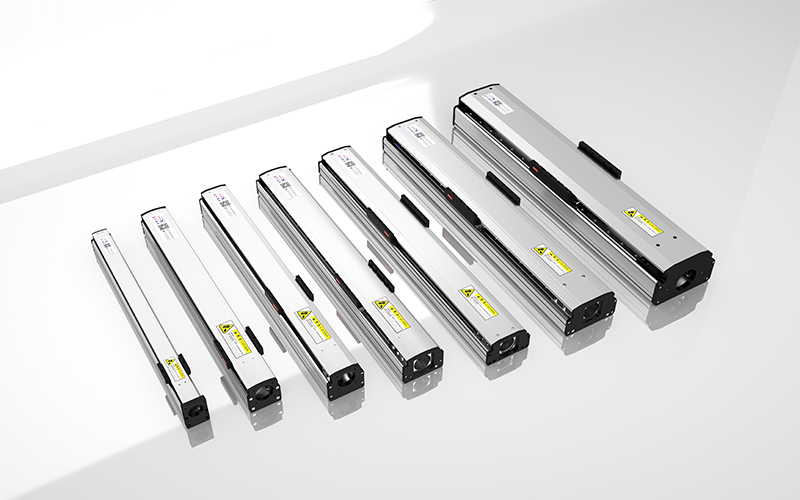
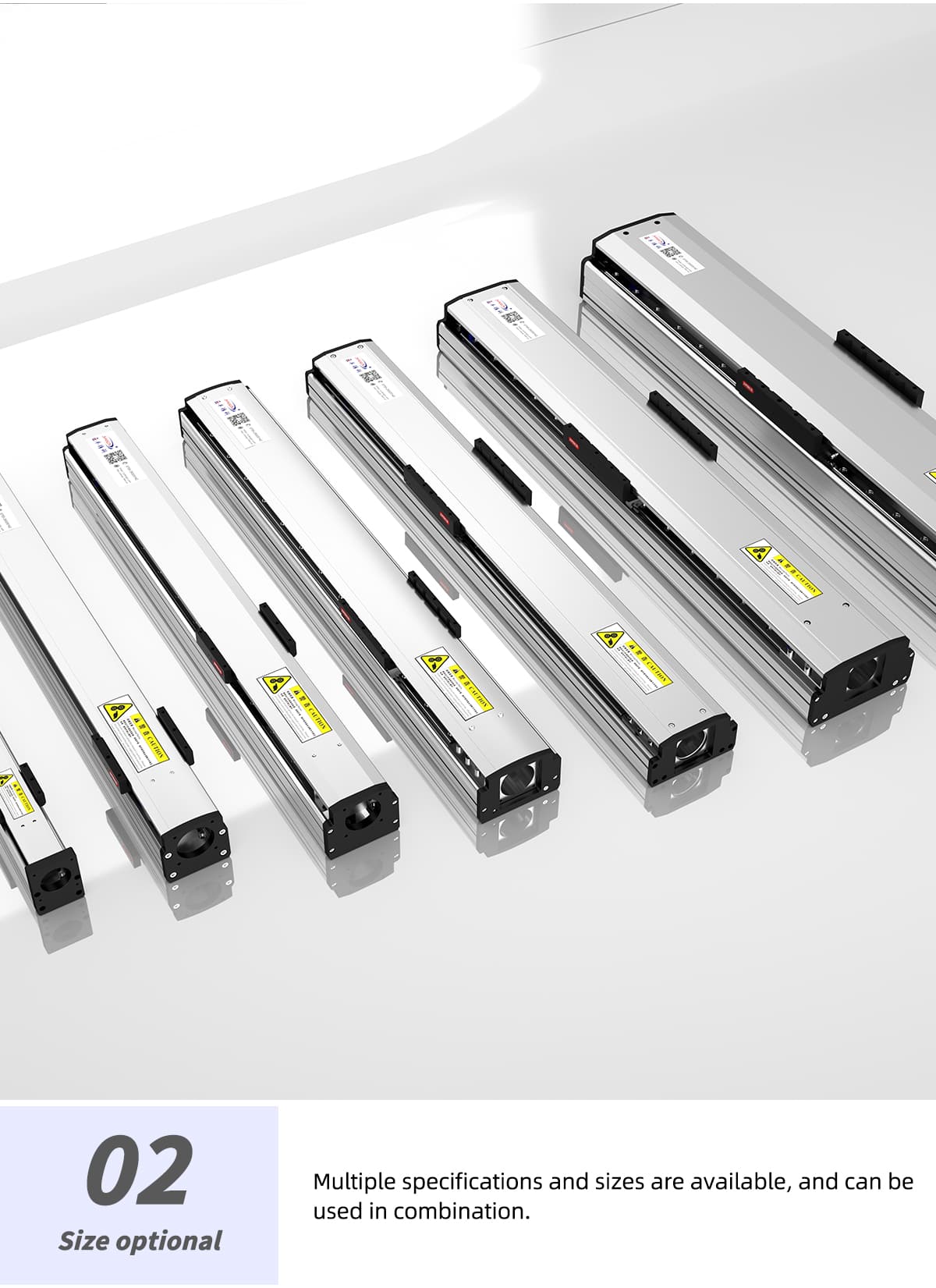
The frames are grouped by load class. Use the grouping to narrow the choice, then confirm the screw diameter and lead against your stroke and speed:
| Models | Group | Typical fit |
|---|---|---|
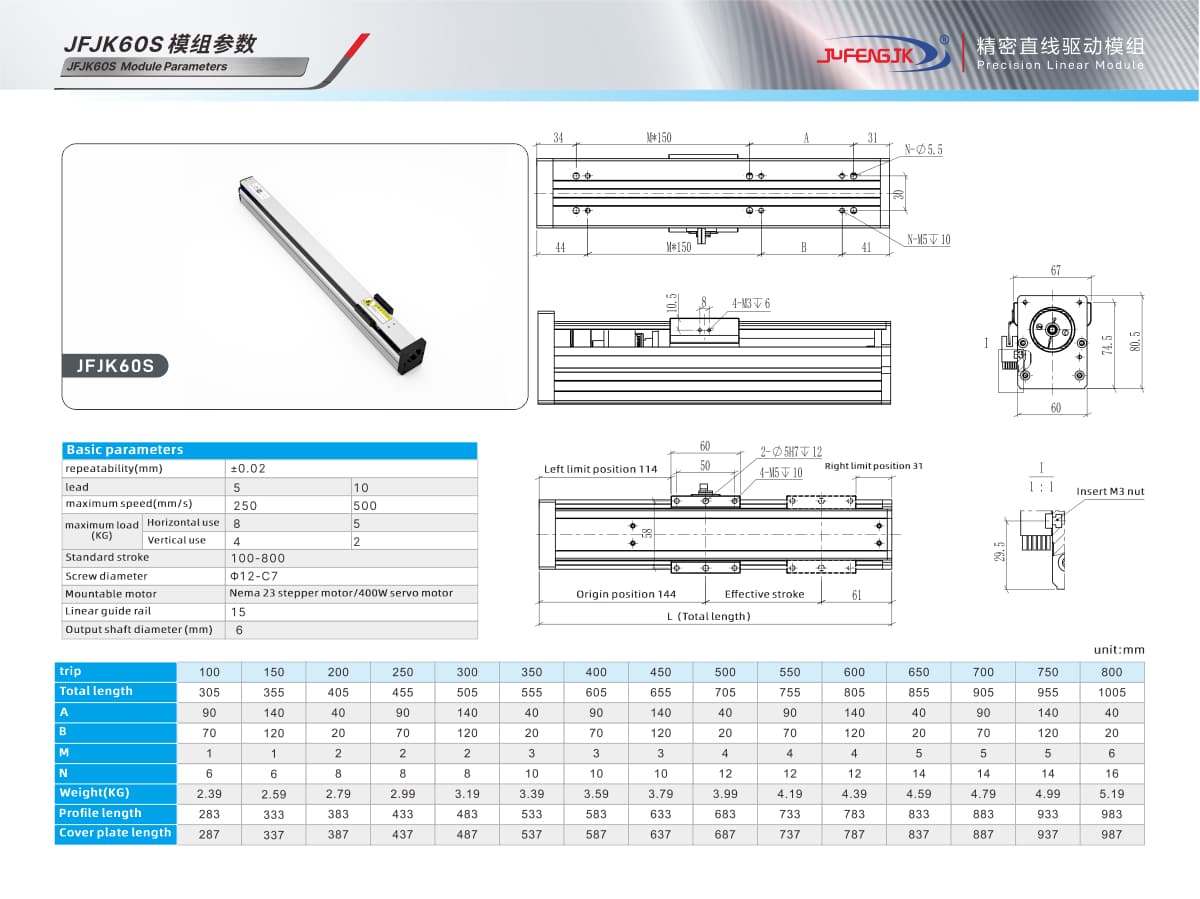
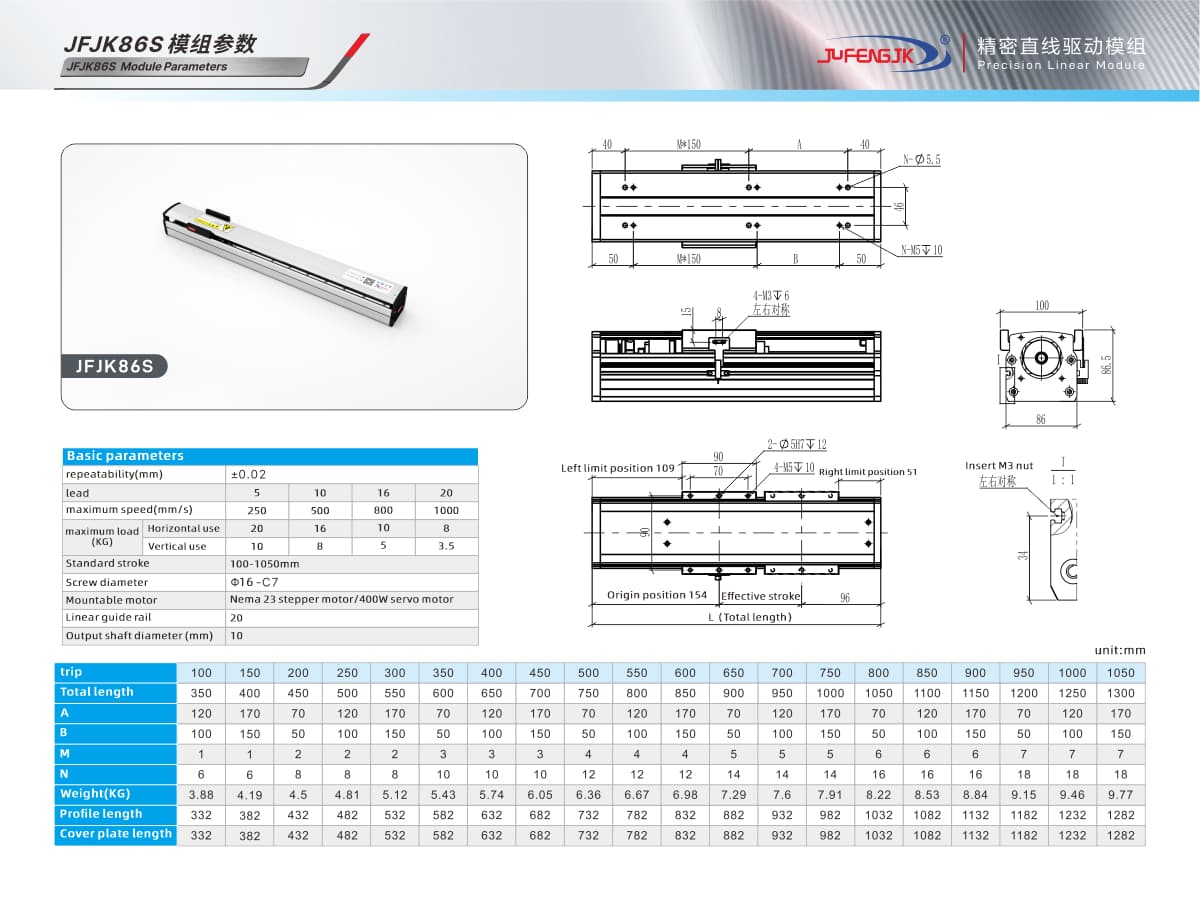
| JFJK60S / JFJK86S | Compact precision | Small-format positioning where a wide frame will not fit |
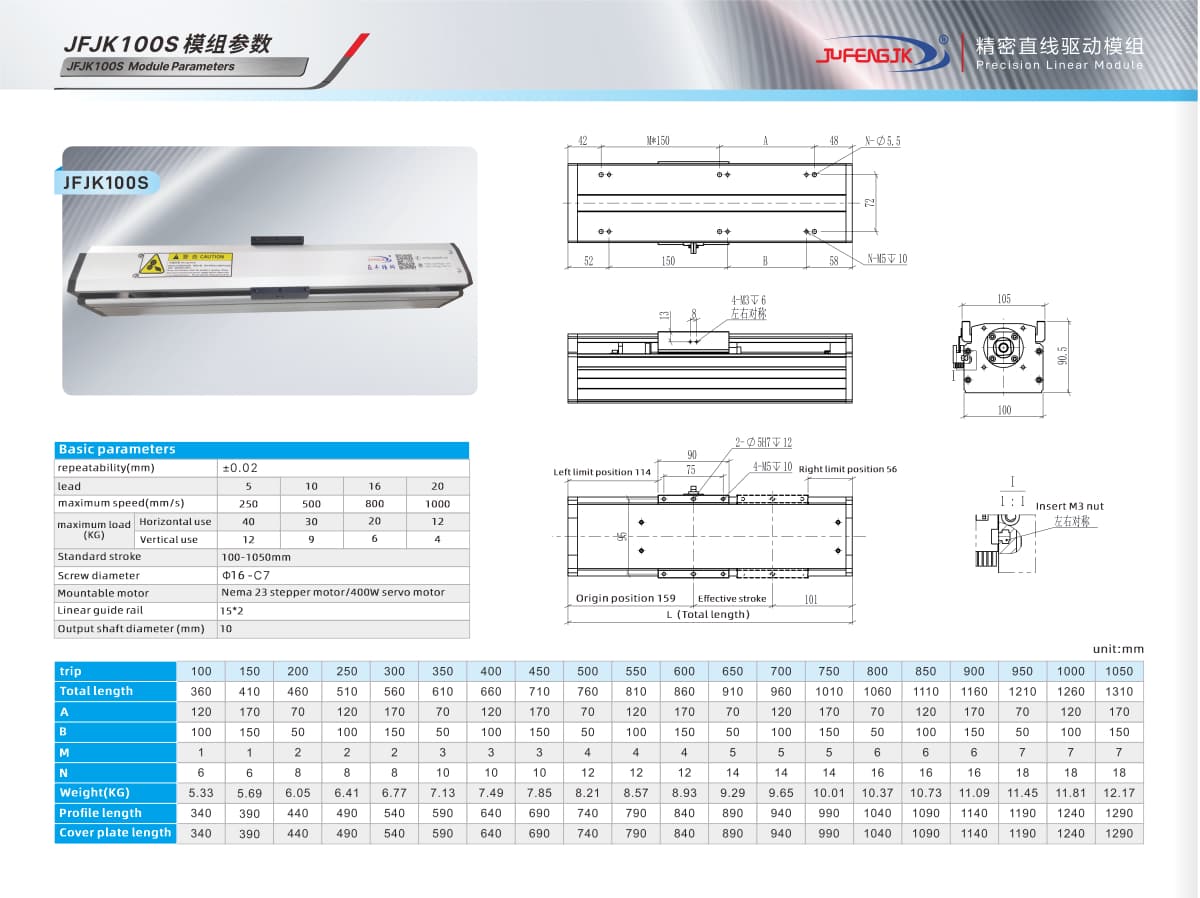
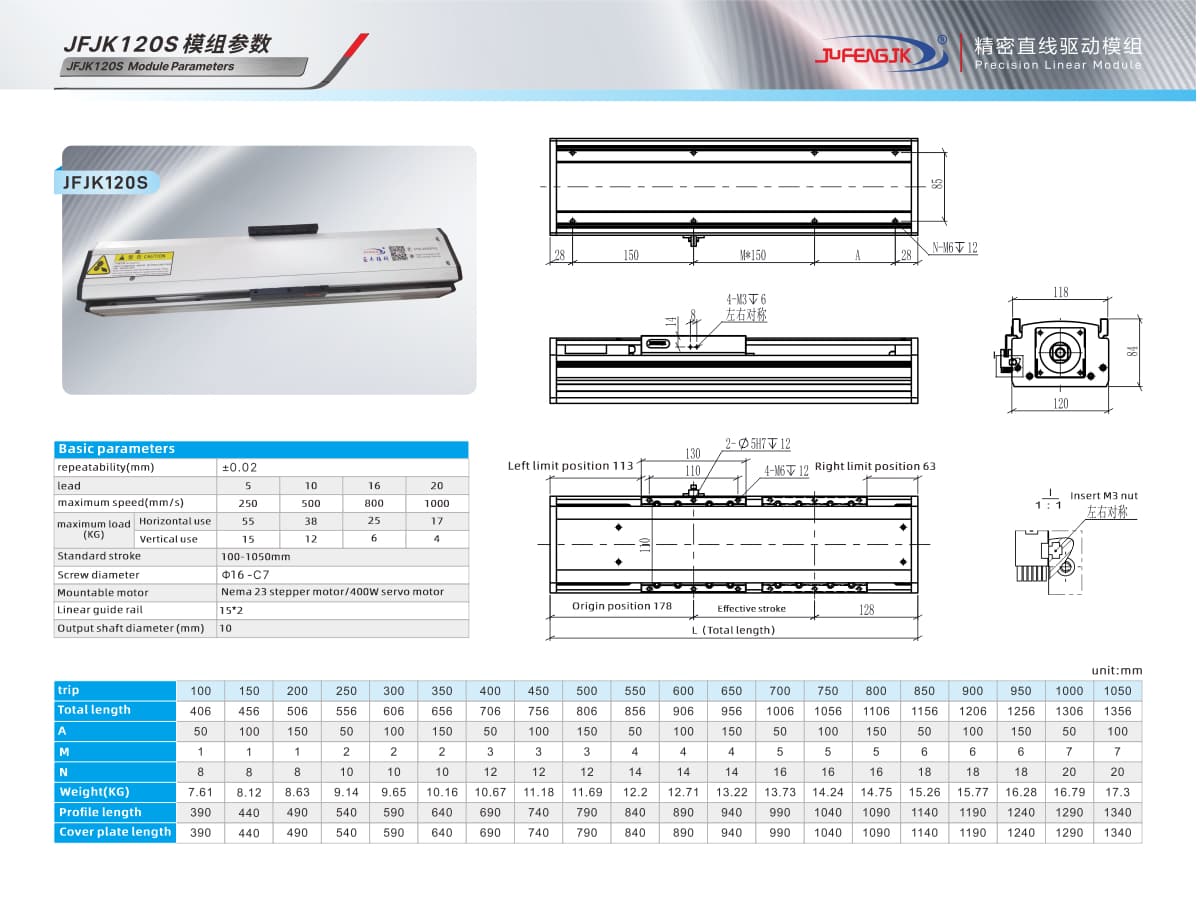
| JFJK100S / JFJK120S | Standard industrial | General precision positioning and feed axes |
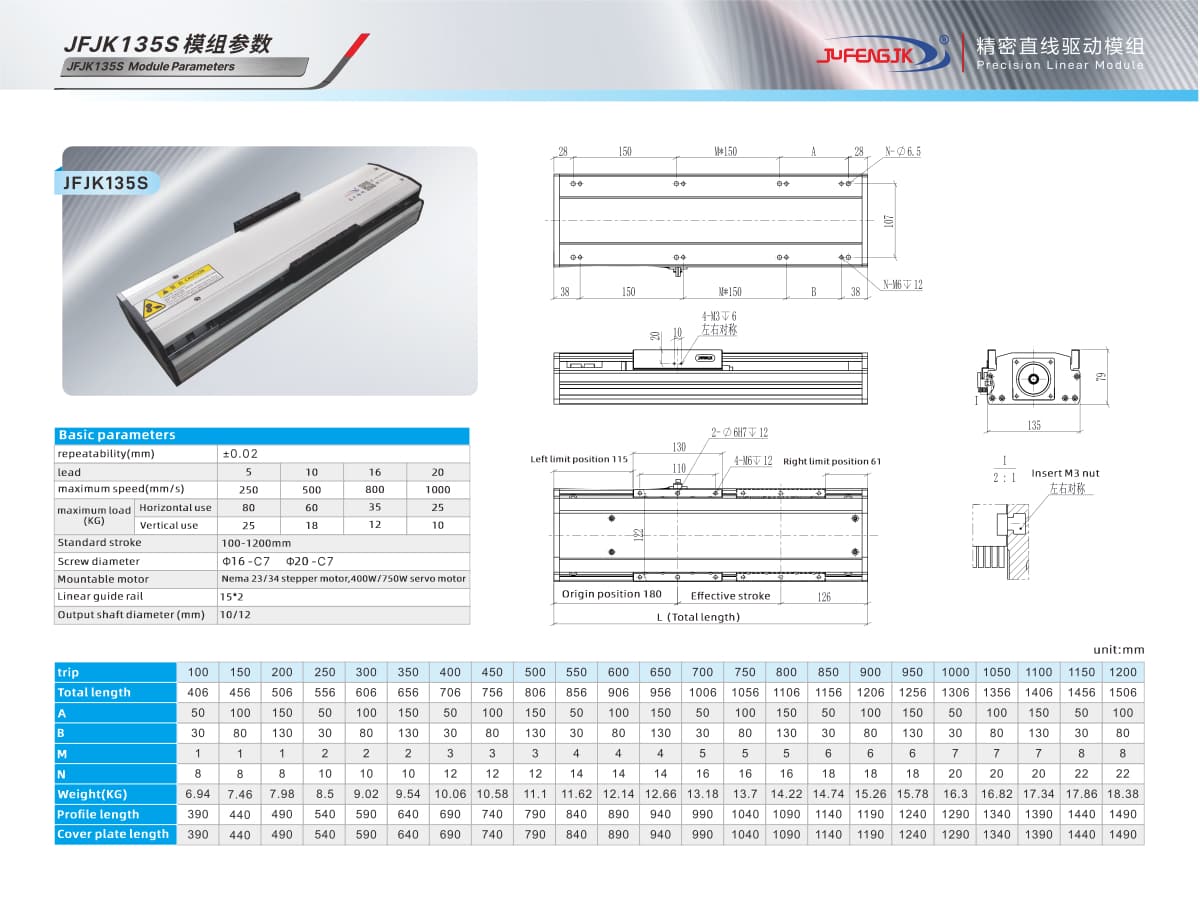
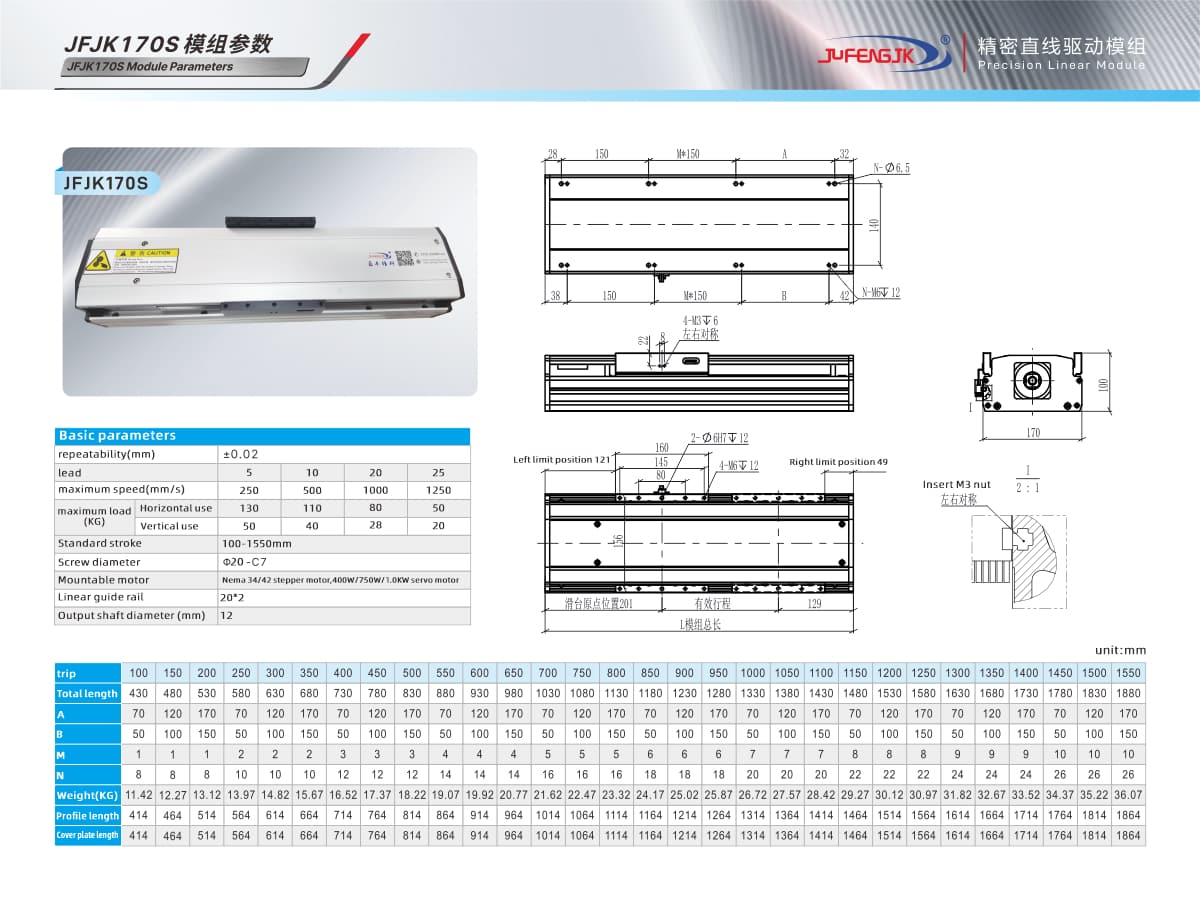
| JFJK135S / JFJK170S | Heavy-duty loads | Larger carriages and higher thrust — machining, pressing, loaded positioning |
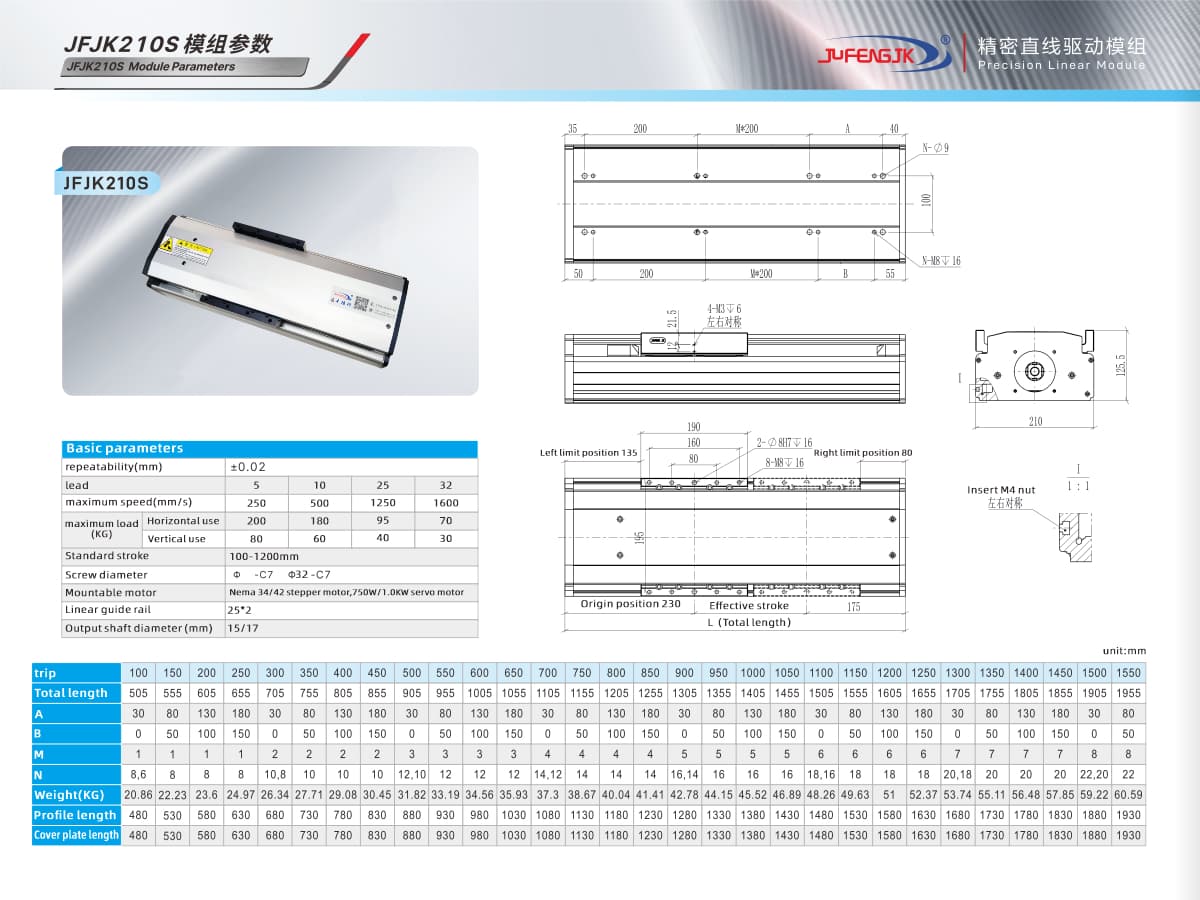
| JFJK210S | Largest documented frame | Maximum thrust and rigidity over a loaded stroke |
Series specifications
| Parameter | Value |
|---|---|
| Repeatability | ±0.01 mm |
| Ball screw grades | C5 / C7 available |
| Stroke | Customizable |
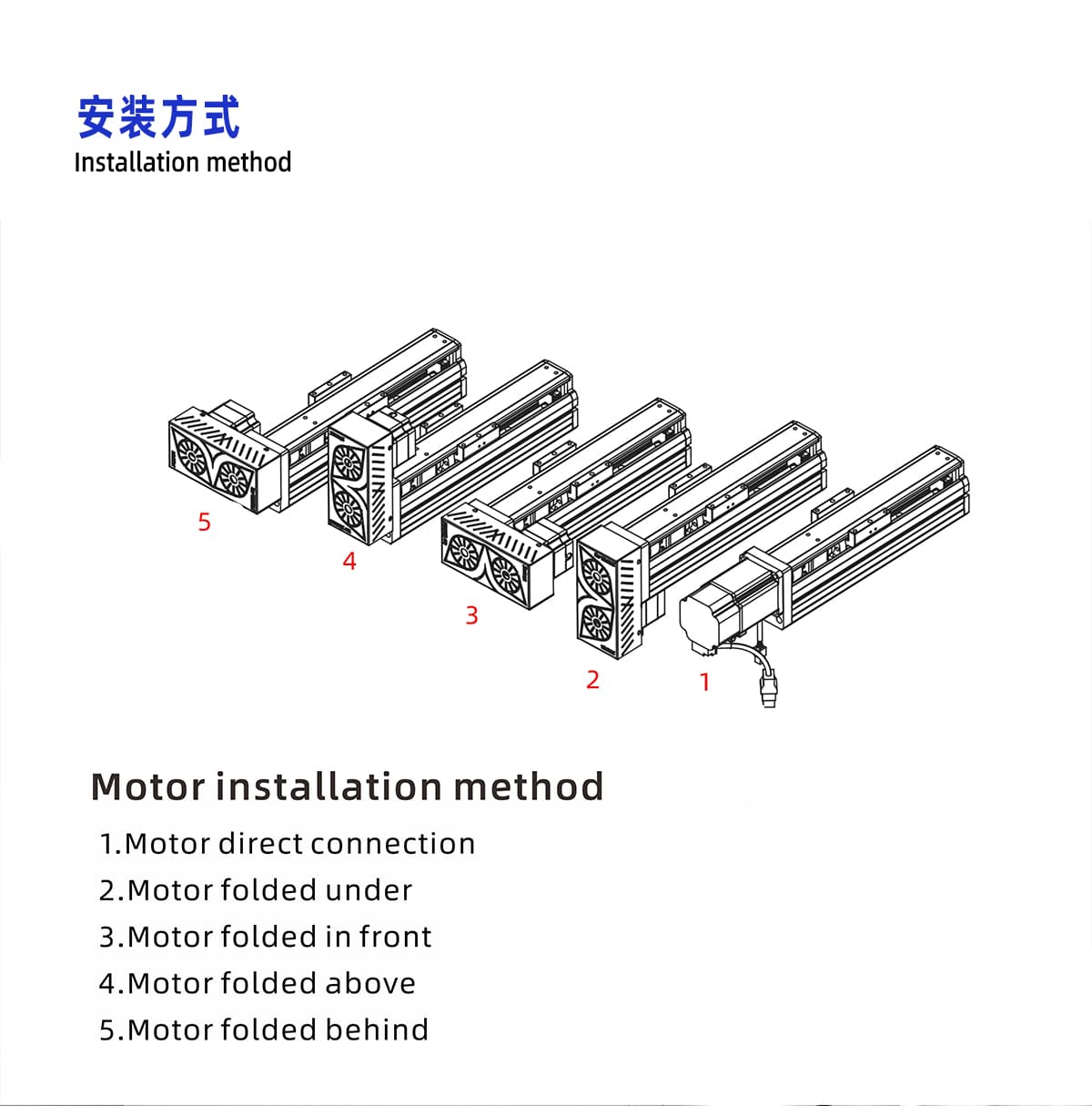
| Mounting | Customizable mounting configurations |
| Motor interface | Integrated stepper or servo support, bracket matched to the module |
A naming note while you compare: JFJK + number + S is a ball screw actuator. The same number without the S is the belt-driven semi-enclosed actuator of a related frame size. They look like siblings because they are — but the drive changes speed, thrust and motor sizing, so treat them as separate specifications rather than interchangeable variants.
What to send us for a screw axis
Stroke — and the maximum speed you need at that stroke. These two together decide the screw diameter and lead, so a stroke without a speed target cannot be properly quoted.
Thrust or load — the force the axis must produce or resist, including the cutting or pressing component if there is one.
Orientation — horizontal, vertical or inclined. Vertical means we discuss braking in the first reply.
Repeatability target — state the number you must hold, not the number you would like.
Duty and environment — continuous motion, chip and coolant exposure, cleanroom requirements.
Motor interface — the servo or stepper you intend to use, or ask us to size the bracket to it.
Where screw-driven modules are the right answer
Semiconductor and electronics. Wafer handling, inspection and die-level positioning ask for repeatability under a load that never stops moving. Our ball screw actuators are built into wafer handling and inspection equipment where repeatability is held within ±0.01 mm.
CNC and machining. Feed and positioning axes that see cutting force, and tool or workpiece axes that must hold position while the cut is taken.
Medical and pharmaceutical automation. Dispensing, pipetting, sample handling and assembly stations where the motion has to be identical on the ten-thousandth cycle as on the first.
Precision assembly and test. Press-fit, gauging and inspection axes where force and position are both specified and a compliant drive would blur the result.
Where the environment adds chips, coolant or fine dust, the same drive principle is available in a sealed frame: see fully enclosed dustproof actuators.
Machining and documentation
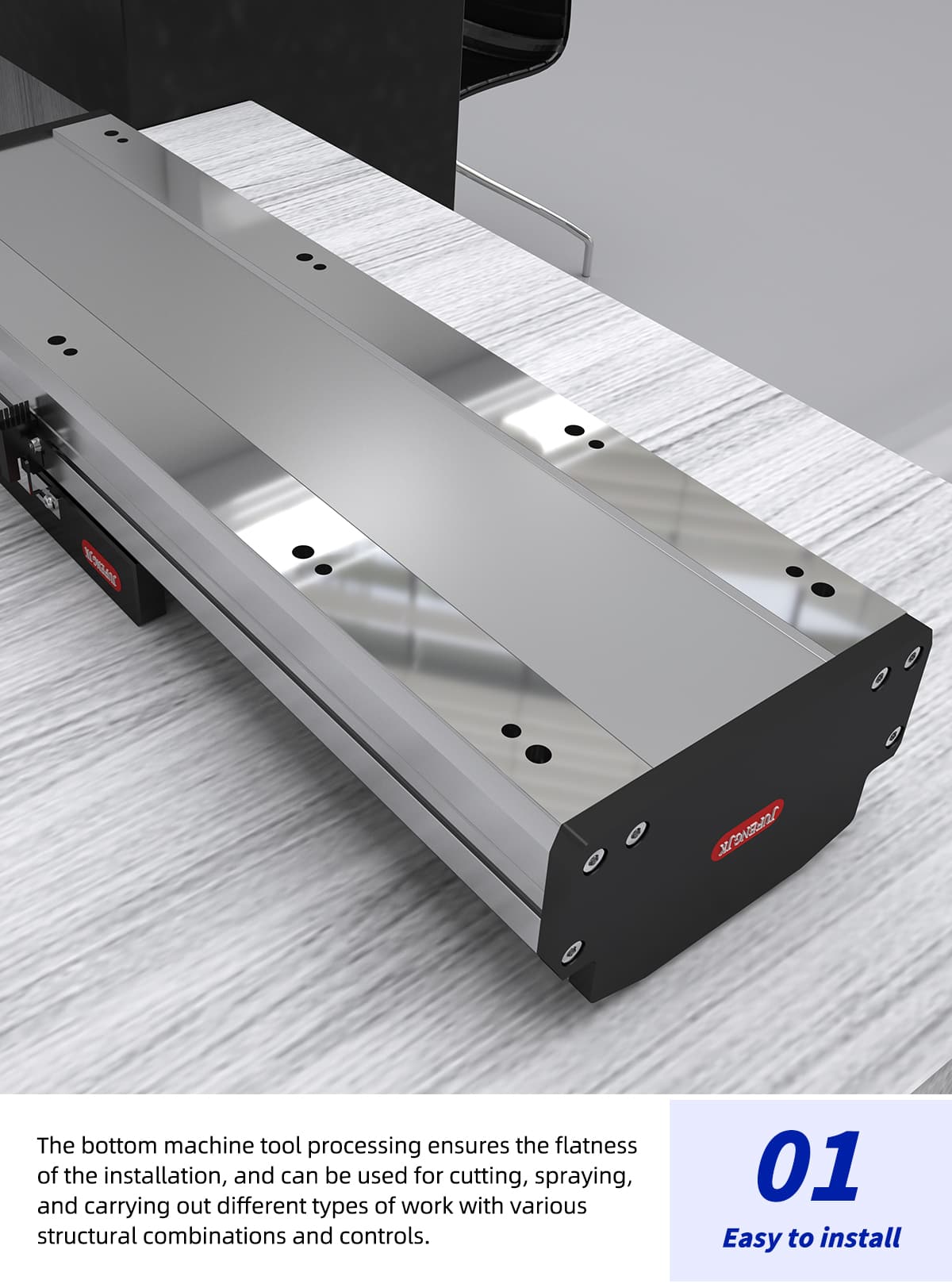
The screw, nut, housing and carriage are matched as an assembly, and the frame is machined in-house — CNC milling, grinding and turning — so non-standard mounting faces, special carriage plates and modified strokes are a manufacturing decision rather than an outsourced project. For every axis we supply 2D and 3D files, so your mechanical team integrates the module rather than reverse-engineering it.
Accessories are matched to the same frame: servo mounting brackets from 100 W to 1.5 kW and stepper brackets from NEMA 17 to NEMA 56 are produced to suit the module interface.
Questions we get asked
Can I get ±0.01 mm on a long stroke?
Repeatability and stroke interact through screw whip and thermal behaviour. Tell us the stroke and the speed together and we will confirm what the axis can hold rather than quote a figure that only applies on a short bench.
Is the screw preloaded?
Preload is chosen to suit the application — more preload means more stiffness and slightly more drag and heat. It is part of the specification conversation, not a fixed catalogue value.
Can the module be mounted vertically?
Yes, with a brake motor or counterbalance. A ball screw is efficient enough to be back-driven, so gravity has to be handled by the motor and brake, not by the screw.
Specify the axis, not the part number
Send stroke, thrust, speed, orientation and repeatability to [email protected], or attach your drawing and let our engineers propose the configuration with 2D/3D files. WhatsApp: +86 137 9839 6296. Shenzhen Jufeng Jingke Automation Technology Co., Ltd. — linear motion modules manufactured in Shenzhen since 2014, supplied to more than 50 countries.
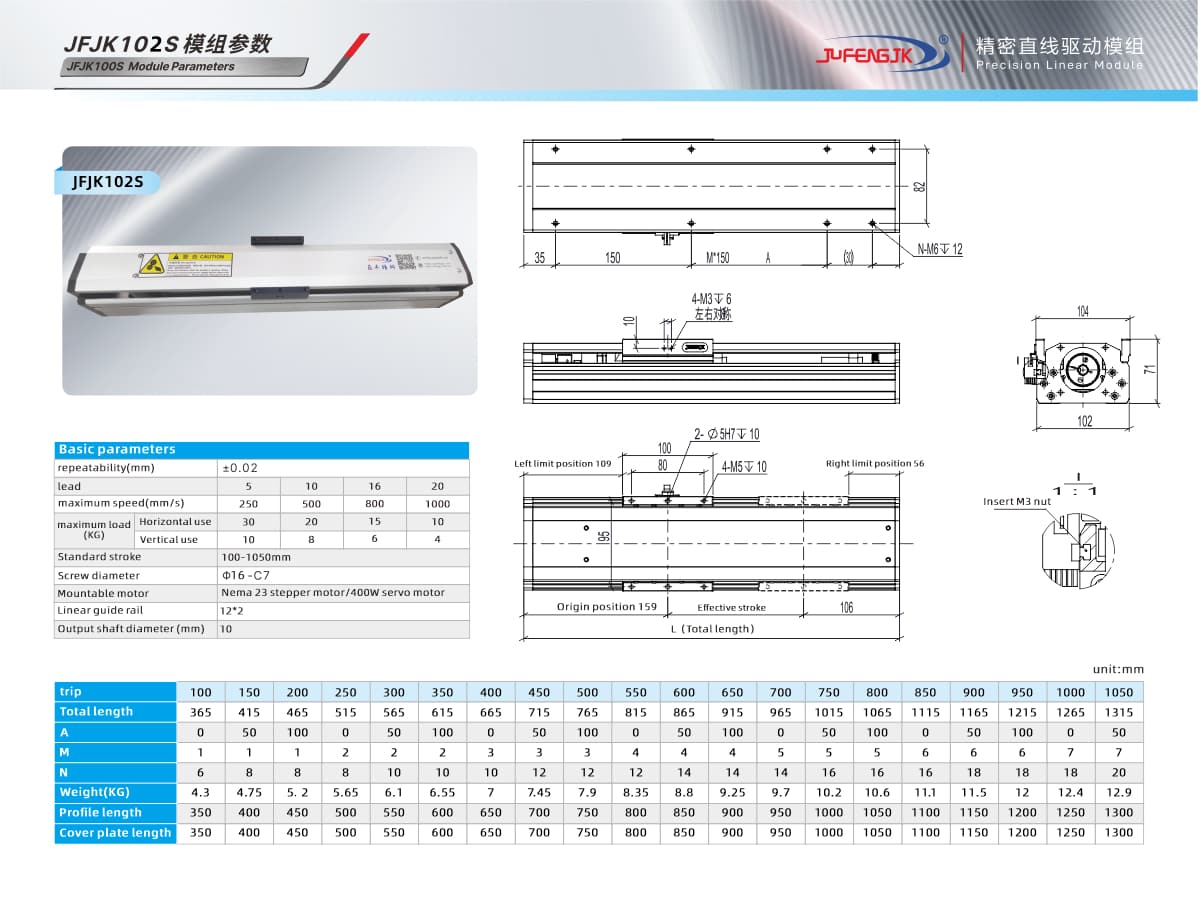
Drawings and parameters