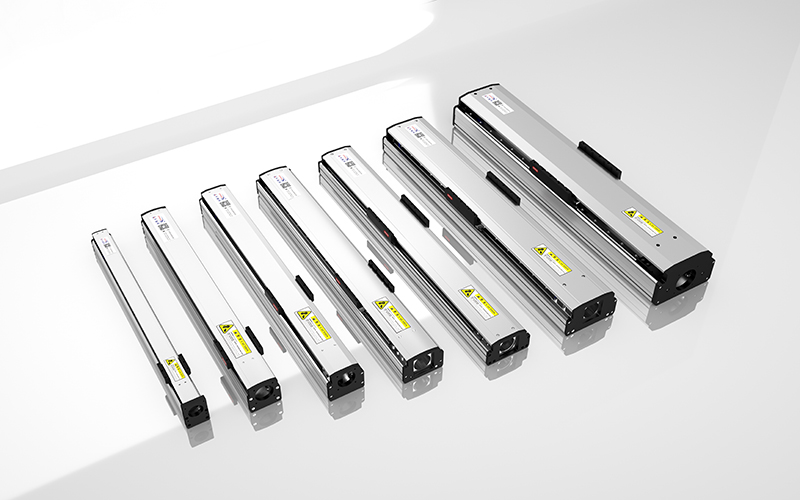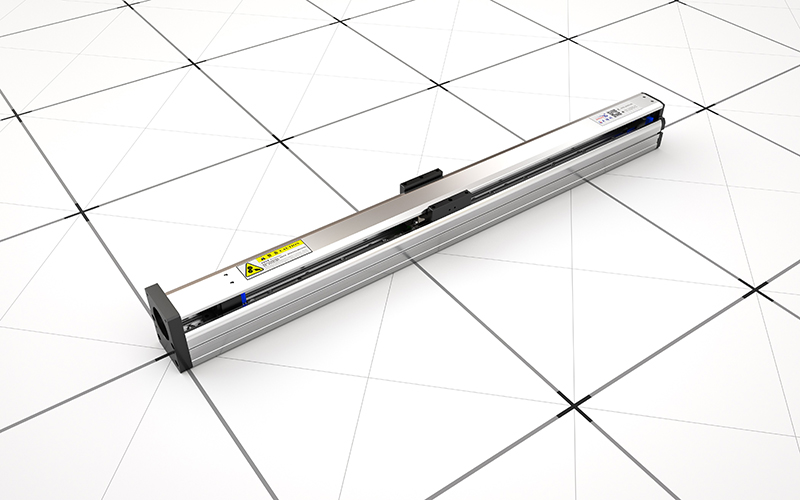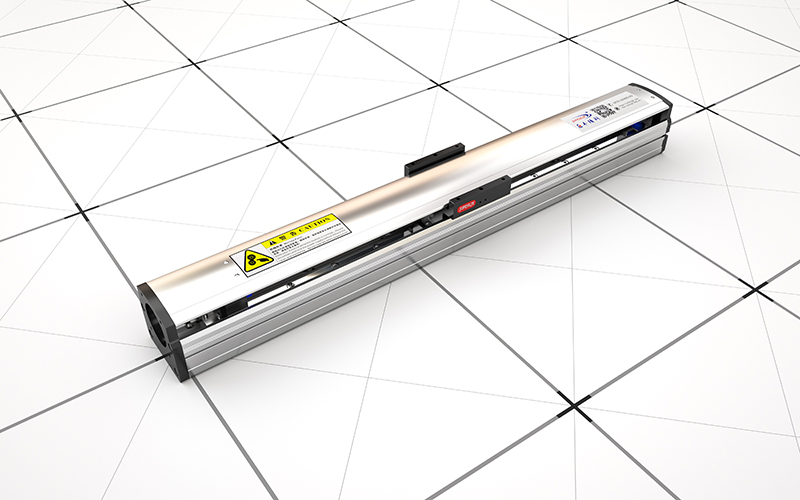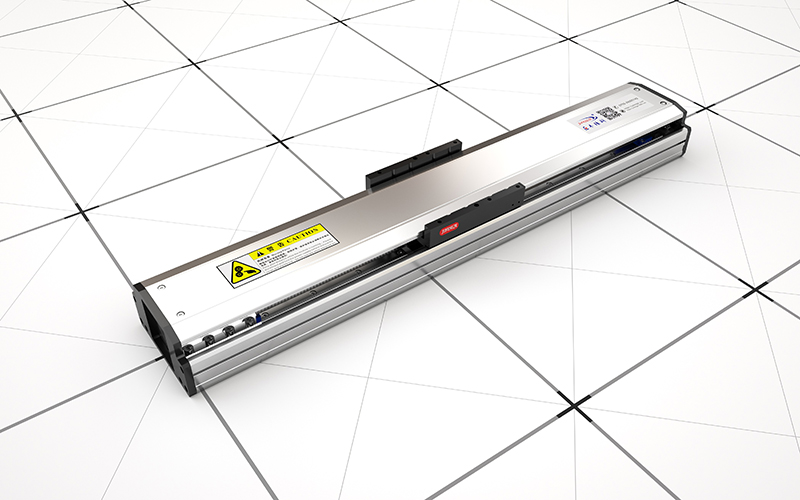
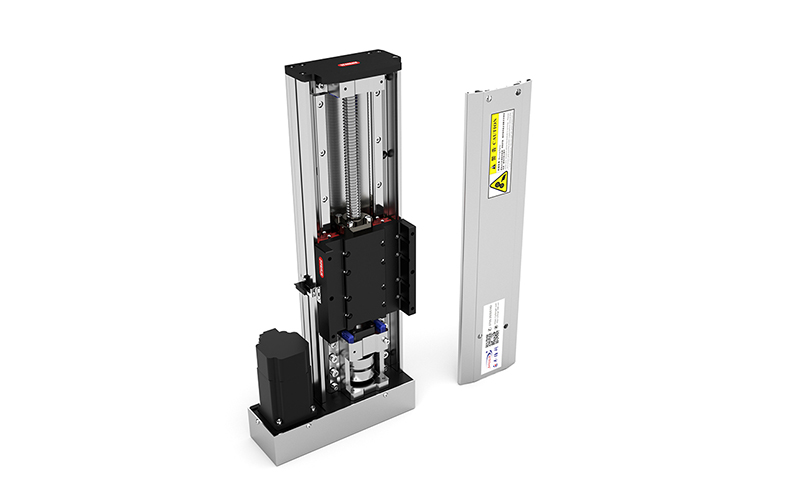
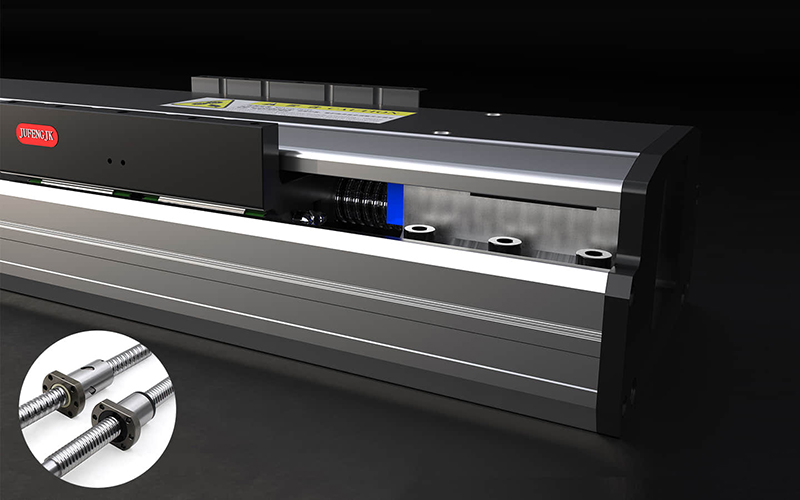
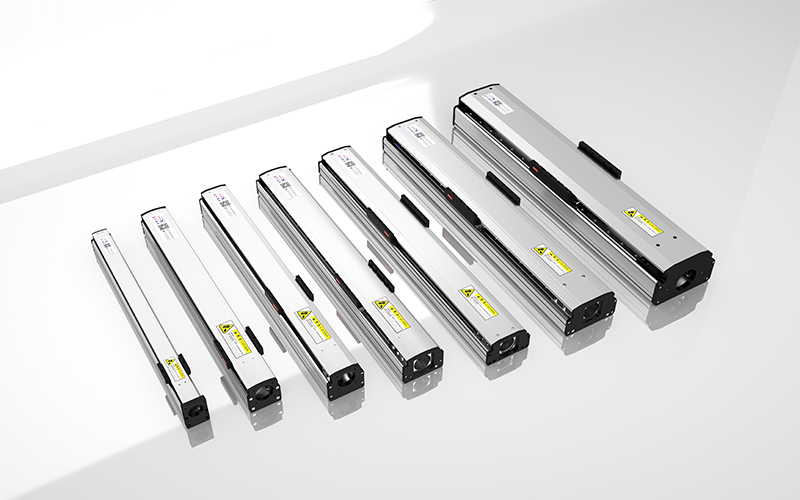
JFJK135S Ball Screw Linear Actuator
80 kg horizontal on 15 mm dual rails
Φ16 or Φ20 C7 screw option
100-1200 mm stroke, ±0.01 mm
NEMA 34 and 750 W servo ready
Overview
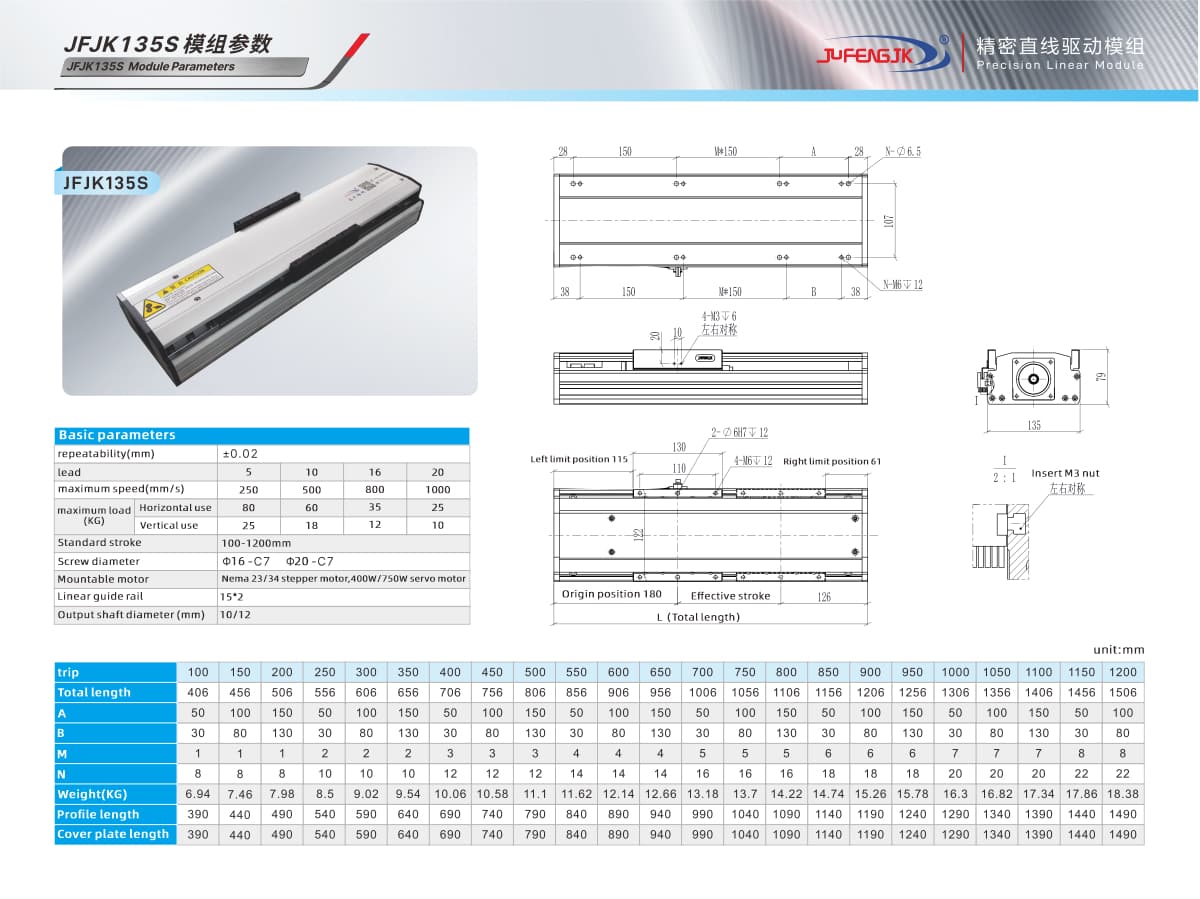
The JFJK135S is the widest module that still runs on 15 mm rails. Two of them carry a 135 mm body, and the screw is either Φ16 mm or Φ20 mm - both C7 - which is why this model takes the load from the 120S's 55 kg to 80 kg horizontally. Repeatability is ±0.01 mm, stroke 100 to 1200 mm.
Two things change on this frame. The screw can grow to Φ20 mm, which raises the critical speed and lets the axis run longer without whirling. And the motor interface opens up to NEMA 34 steppers and 750 W servos, because an 80 kg carriage at 1000 mm/s needs more than a NEMA 23 will deliver.
Output shaft is 10 mm or 12 mm depending on the screw option. Leads are 5, 10, 16 and 20 mm, all rated at 3000 rpm: 250, 500, 800 and 1000 mm/s.
Basic parameters
| Parameter | Value |
|---|---|
| Repeatability | ±0.01 mm |
| Ball screw | Φ16 mm or Φ20 mm, C7 grade |
| Linear guide rail | 15 mm × 2 (dual rail) |
| Lead | 5 / 10 / 16 / 20 mm |
| Maximum speed | 250 / 500 / 800 / 1000 mm/s |
| Maximum load, horizontal | 80 / 60 / 35 / 25 kg |
| Maximum load, vertical | 25 / 18 / 12 / 10 kg |
| Standard stroke | 100-1200 mm |
| Output shaft diameter | 10 mm or 12 mm |
| Mountable motor | NEMA 23 / 34 stepper, 400 W / 750 W servo |
| Module weight | 6.94-18.38 kg |
Lead and load
The 5 mm lead carries 80 kg horizontally and 25 kg vertically. The 20 mm lead trades that down to 25 kg and 10 kg for four times the speed.
| Lead | Max speed | Load horizontal | Load vertical |
|---|---|---|---|
| 5 mm | 250 mm/s | 80 kg | 25 kg |
| 10 mm | 500 mm/s | 60 kg | 18 kg |
| 16 mm | 800 mm/s | 35 kg | 12 kg |
| 20 mm | 1000 mm/s | 25 kg | 10 kg |
Load falls faster than speed rises. Going from 5 mm to 20 mm lead gives four times the speed and less than a third of the load. When a cycle mixes travel with force, the 10 mm lead is the usual compromise, with the Φ20 screw if the stroke is long.
Stroke, overall length and weight
Overall length is the stroke plus 306 mm, and profile and cover plate run 16 mm shorter.
| Stroke | Overall length | Profile length | Cover plate length | Weight |
|---|---|---|---|---|
| 100 mm | 406 mm | 390 mm | 390 mm | 6.94 kg |
| 300 mm | 606 mm | 590 mm | 590 mm | 9.02 kg |
| 600 mm | 906 mm | 890 mm | 890 mm | 12.14 kg |
| 900 mm | 1206 mm | 1190 mm | 1190 mm | 15.26 kg |
| 1200 mm | 1506 mm | 1490 mm | 1490 mm | 18.38 kg |
Weight grows by about 1.04 kg per 100 mm of stroke, so a 1200 mm unit is 2.6 times the mass of the 100 mm version. On a moving gantry that difference in moving mass matters as much as the rated load.
Where the 135S sits in the range
Above the JFJK120S at 55 kg and below the JFJK170S at 130 kg. It is the last model on 15 mm rails, so if your machine can only take a 135 mm wide body but the load is climbing, this is the ceiling without going to the 170S and its 20 mm rails.
FAQ
Which screw should I take - Φ16 or Φ20?
Take Φ20 when the stroke is long or the axis runs at high lead. A larger screw raises the critical speed and resists buckling on a push stroke, which is what limits long modules. For short strokes at low speed the Φ16 is enough and cheaper.
Do I need a NEMA 34?
Not for load alone, but for speed with load. At 1000 mm/s the screw turns 3000 rpm, and a NEMA 23 has usually run out of torque well before that.
What is the vertical rating?
25 kg on the 5 mm lead, 18 kg on 10 mm, 12 kg on 16 mm, 10 kg on 20 mm. These are continuous hanging loads, so treat them as the working limit rather than a peak.
Send the stroke, the screw option, the lead and the motor, and we will quote that configuration.