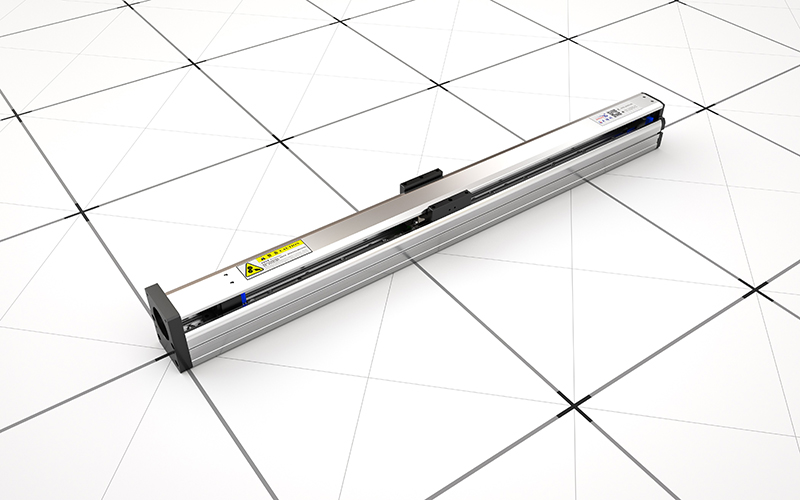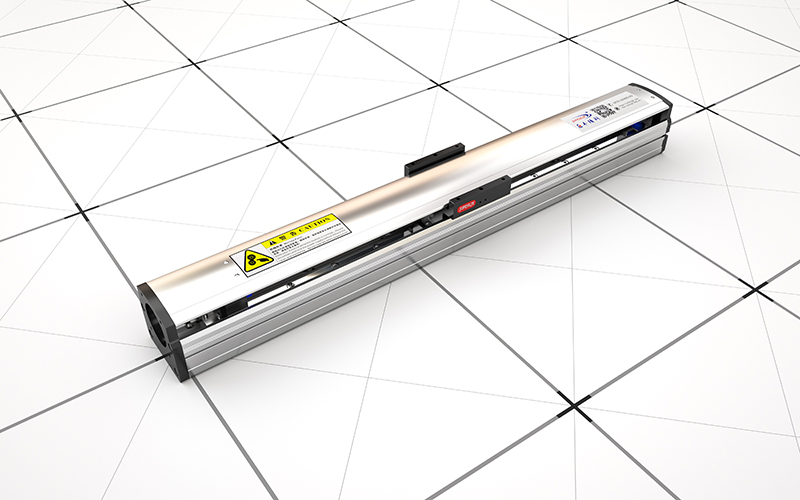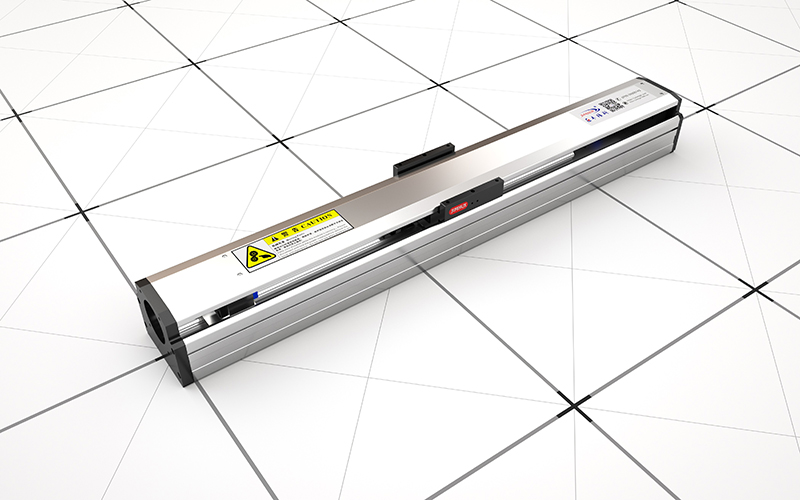
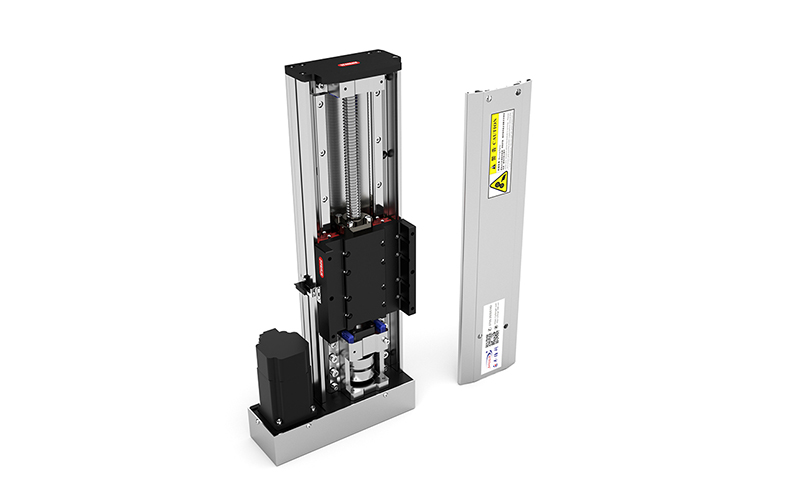
JFJK100S Ball Screw Linear Actuator
Dual 15 mm rails carry 40 kg horizontal
±0.01 mm on a Φ16 C7 screw
100-1050 mm stroke, four lead options
Carriage shares offset and pitching loads
Overview
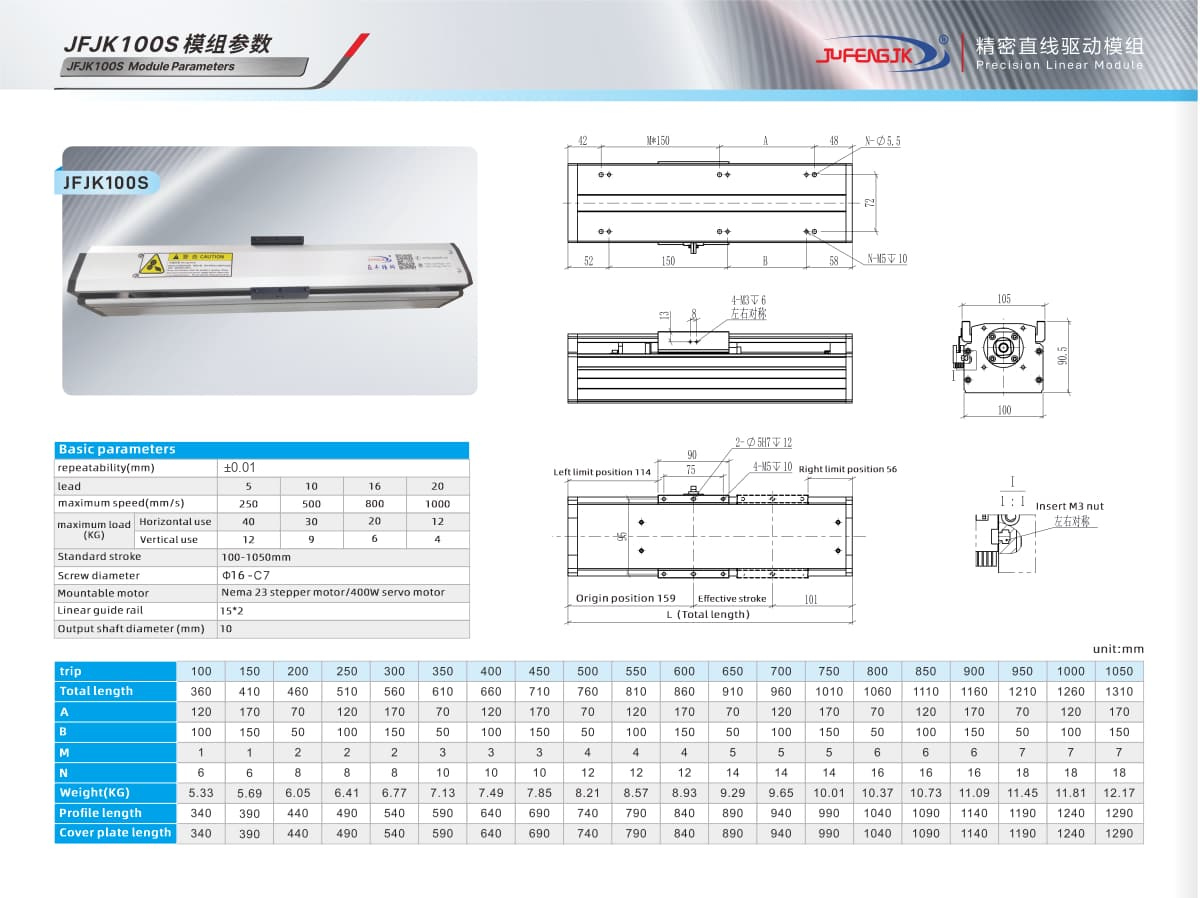
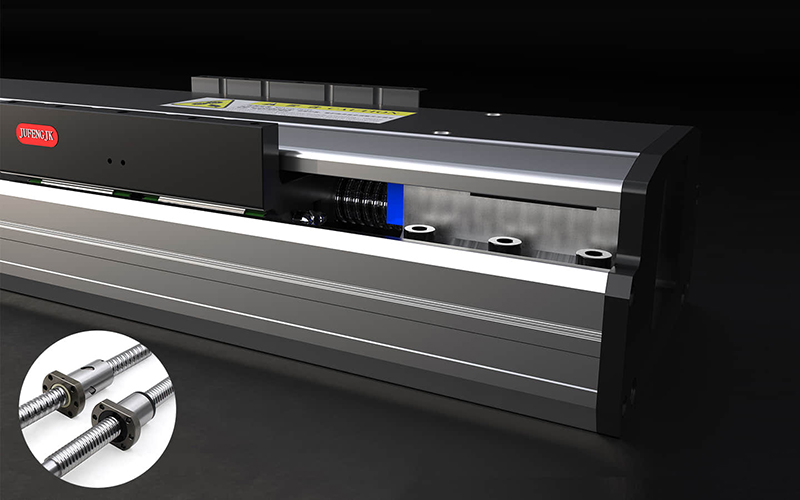
The JFJK100S is the first module in the JFJK-S range to run two guide rails instead of one: a pair of 15 mm rails carrying a 100 mm wide carriage, with a Φ16 mm C7 ball screw sitting between them. Repeatability is ±0.01 mm across the standard stroke range of 100 to 1050 mm.
The second rail is what buys the load capacity. Where the single-rail JFJK86S tops out at 20 kg, the 100S carries 40 kg horizontally and 12 kg vertically on the 5 mm lead, and it does that without the carriage pitching under an offset load.
Four leads are offered - 5, 10, 16 and 20 mm - so the same body can be ordered for force or for travel. Every one of them is rated at the same 3000 rpm at the screw; the lead only decides whether that speed becomes thrust or distance.
Basic parameters
| Parameter | Value |
|---|---|
| Repeatability | ±0.01 mm |
| Ball screw | Φ16 mm, C7 grade |
| Linear guide rail | 15 mm × 2 (dual rail) |
| Lead | 5 / 10 / 16 / 20 mm |
| Maximum speed | 250 / 500 / 800 / 1000 mm/s |
| Maximum load, horizontal | 40 / 30 / 20 / 12 kg |
| Maximum load, vertical | 12 / 9 / 6 / 4 kg |
| Standard stroke | 100-1050 mm |
| Output shaft diameter | 10 mm |
| Mountable motor | NEMA 23 stepper or 400 W servo |
| Module weight | 5.33-12.17 kg |
Lead: four options, one screw speed
Lead and load trade off directly. Going from the 5 mm to the 20 mm lead quadruples the speed and cuts the horizontal load from 40 kg to 12 kg.
| Lead | Max speed | Load horizontal | Load vertical |
|---|---|---|---|
| 5 mm | 250 mm/s | 40 kg | 12 kg |
| 10 mm | 500 mm/s | 30 kg | 9 kg |
| 16 mm | 800 mm/s | 20 kg | 6 kg |
| 20 mm | 1000 mm/s | 12 kg | 4 kg |
Choose the 5 mm or 10 mm lead for pressing, dispensing and any vertical lift. Choose 16 mm or 20 mm when the axis is mostly travelling: pick-and-place, scanning, laser work, inspection. If your cycle is a mix of both, the 10 mm lead is the usual compromise.
Stroke, overall length and weight
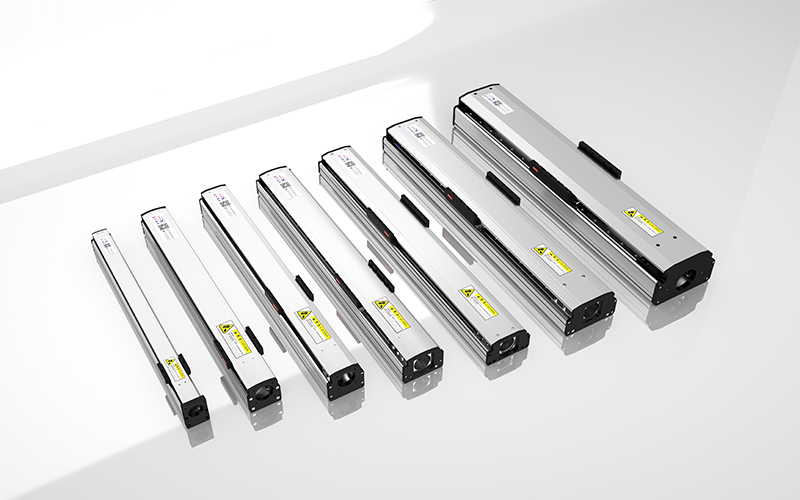
Overall length is the stroke plus 260 mm of body. That is the number that has to fit inside the machine - the stroke alone tells you nothing about space.
| Stroke | Overall length | Profile length | Cover plate length | Weight |
|---|---|---|---|---|
| 100 mm | 360 mm | 340 mm | 340 mm | 5.33 kg |
| 300 mm | 560 mm | 540 mm | 540 mm | 6.77 kg |
| 600 mm | 860 mm | 840 mm | 840 mm | 8.93 kg |
| 900 mm | 1160 mm | 1140 mm | 1140 mm | 11.09 kg |
| 1050 mm | 1310 mm | 1290 mm | 1290 mm | 12.17 kg |
So a 700 mm stroke needs 960 mm of mounting space, and weight grows by about 0.72 kg per 100 mm of stroke. Profile and cover plate lengths are 20 mm shorter than the overall length.
Where the 100S sits in the range
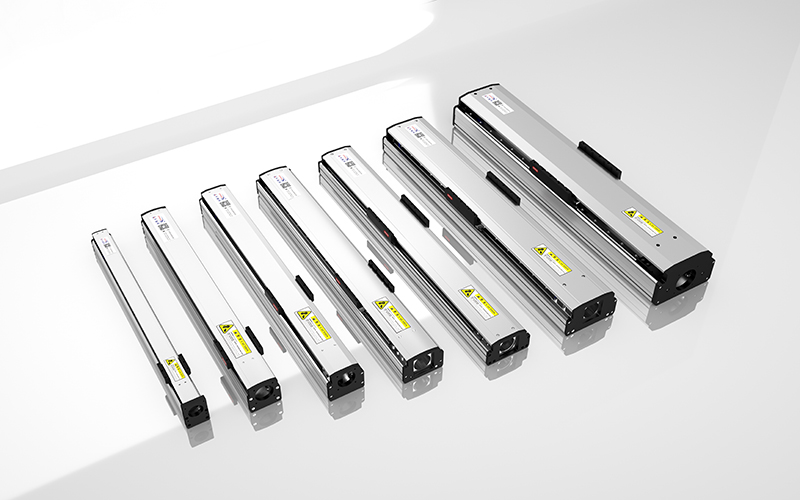
The 100S is the step you take when an JFJK86S runs out of load, but a wider module will not fit. It keeps the 15 mm rail section and doubles it, so the carriage width grows while the body height does not. If you need more than 40 kg, the next step is the JFJK120S at 55 kg in a 120 mm body.
FAQ
Why two 15 mm rails instead of one 20 mm rail?
Two rails put the load path on either side of the carriage centre, so an offset load or a pitching moment is shared instead of being taken by one bearing block. The single 20 mm rail is stiffer per unit, but the carriage still carries the moment alone.
Can I get a longer stroke than 1050 mm?
1050 mm is the standard limit for this body. Beyond that, step to the JFJK135S, which reaches 1200 mm with the same dual-rail layout and a heavier screw option.
What does 1000 mm/s actually require?
1000 mm/s on a 20 mm lead is 3000 rpm at the screw. The motor must be rated for that speed, not just for the torque - a NEMA 23 stepper will lose torque well before it reaches it.
Tell us the stroke, the lead and the motor you plan to use, and we will quote that exact configuration rather than the nearest catalogue version.