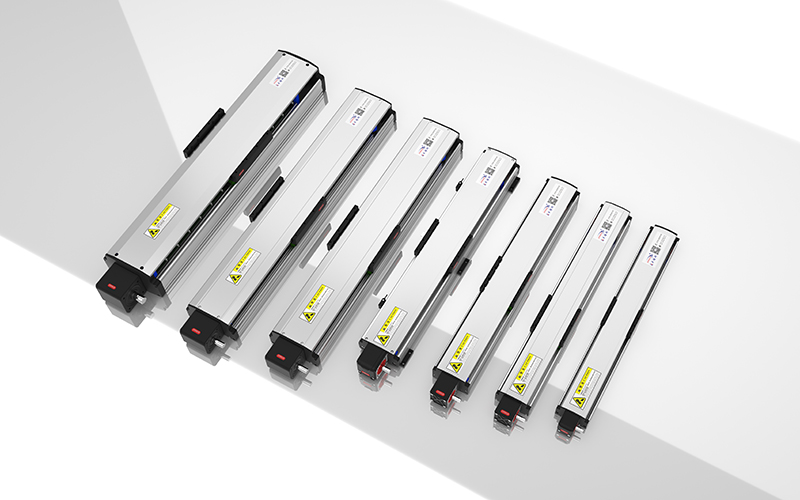
Semi-Enclosed Belt-Driven Linear Actuator Series
High Speed up to 2m/s
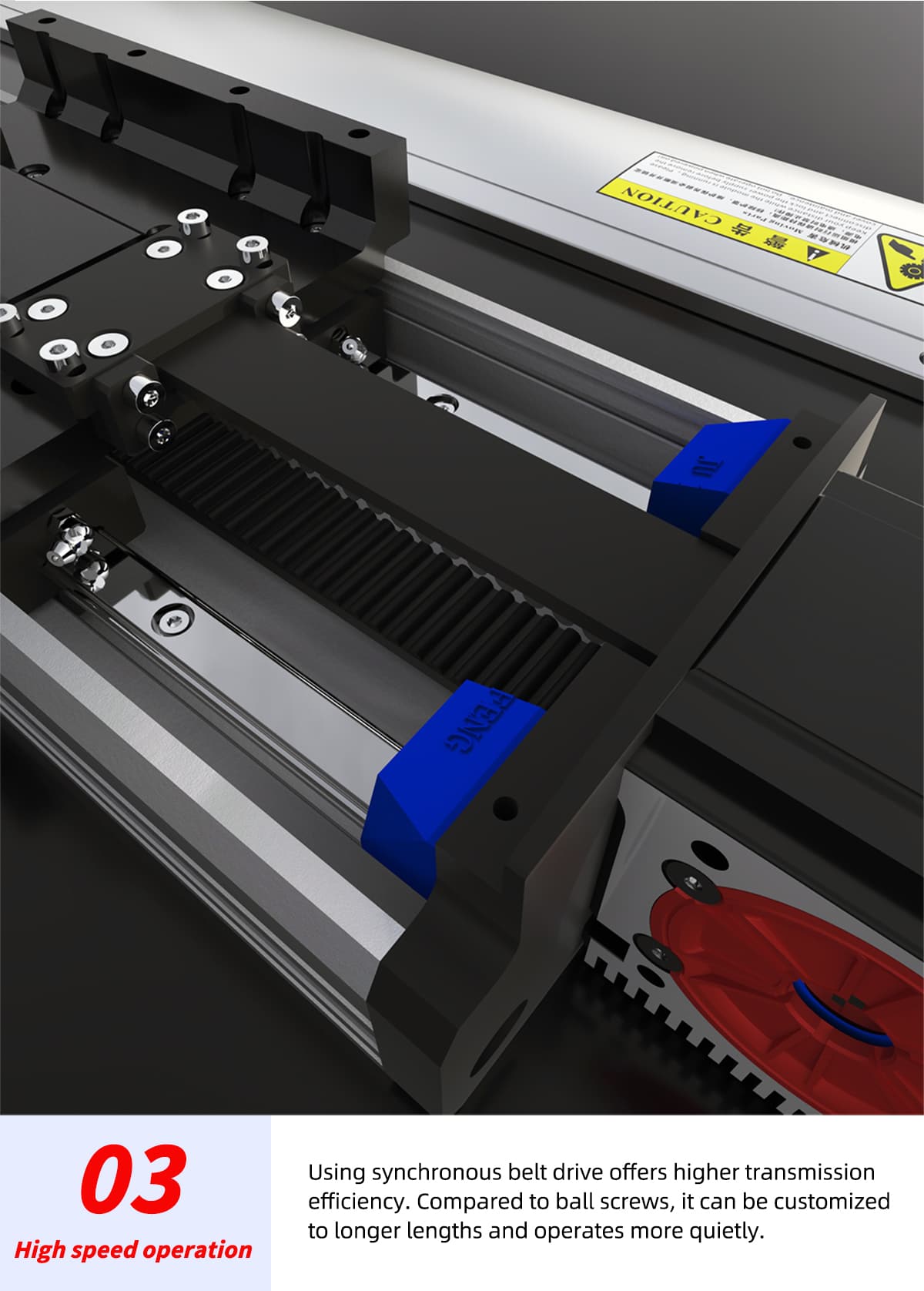
Dual Internal Guide Rails
Semi-Enclosed Stability
Stroke up to 4000mm
Customizable Solutions
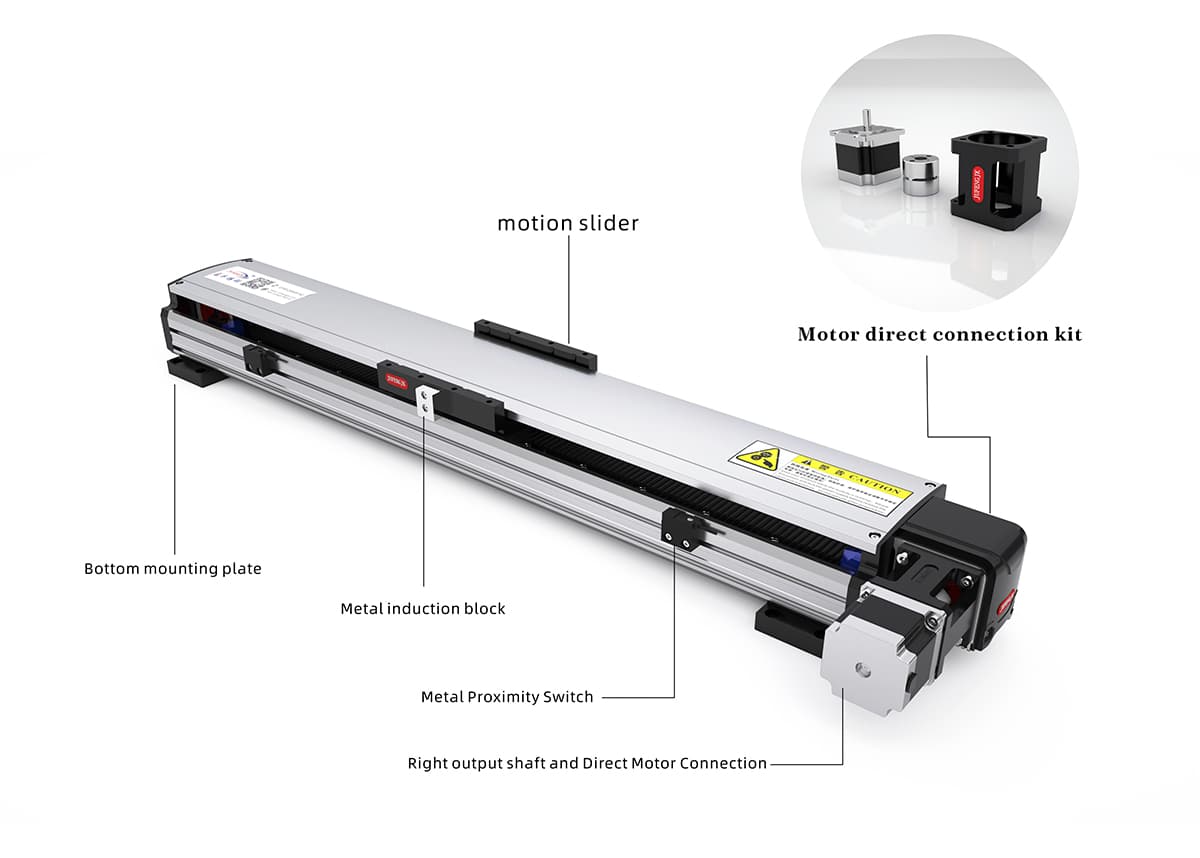
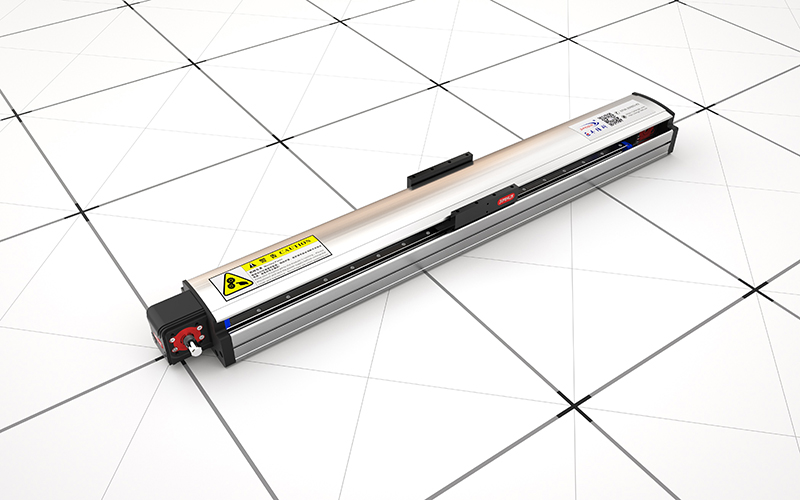
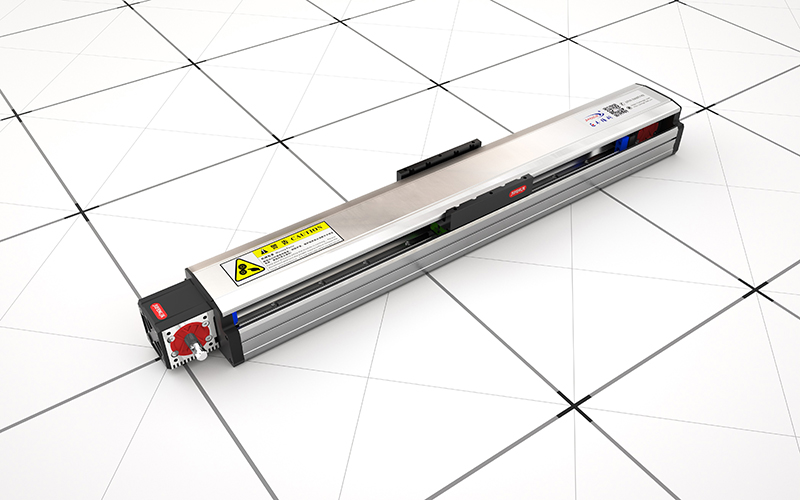
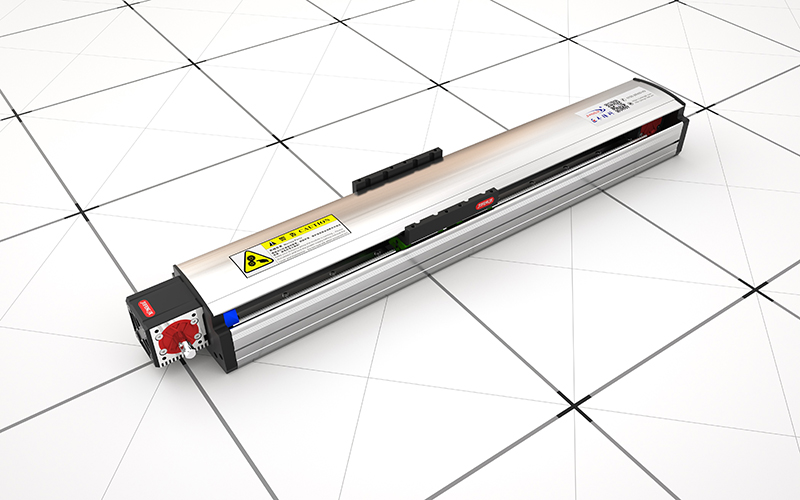
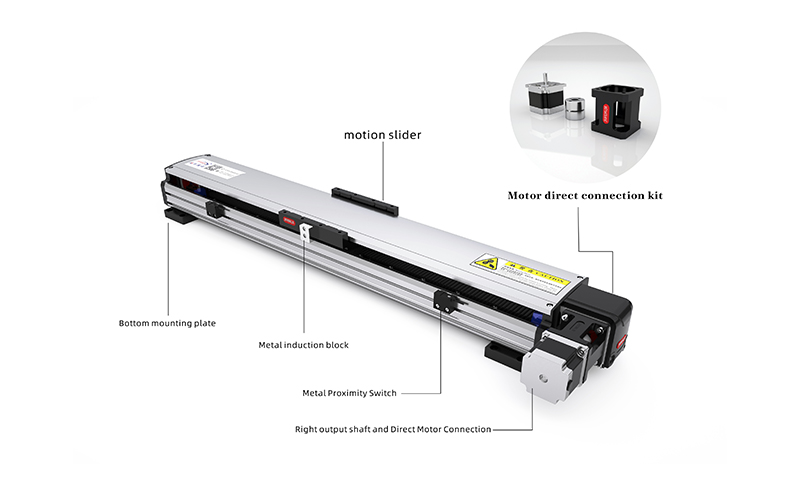
JFJK series semi-enclosed belt-driven actuators sit between the open belt modules and the sealed dustproof units: the belt and the carriage run inside a semi-enclosed aluminium extrusion, carried on two internal guide rails instead of one. The result is an axis that keeps belt-drive speed while handling the offset loads, cantilever tooling and dirty surroundings that twist and contaminate an open frame.
This is the family most of our industrial customers end up on, because most real machines are not built around a perfectly centred load. If your tooling hangs off the side of the carriage, if the axis runs near swarf or dust, or if your operators lean on the frame during setup, the extra rail and the partial enclosure are doing real work.
What “semi-enclosed” means here — and what it does not
A fully open module exposes the belt, the rail and the carriage to whatever is in the air. A fully enclosed actuator seals the whole length with a steel belt strip, so nothing reaches the motion components at all. Semi-enclosed is the middle case: the carriage and rails are protected by the extrusion geometry, but the module is not sealed against washdown or fine airborne dust.
That distinction matters at the specification stage, because the two are often confused and the wrong choice is expensive in both directions:
Choose semi-enclosed for general factory air, moderate chips, occasional dust, and any application where protection is desirable but a sealed strip is not necessary.
Step up to a fully enclosed dustproof actuator for fine powder, heavy swarf, washdown areas or anything resembling a machining envelope.
Stay with an open belt module only when the environment is genuinely clean — a lab, a clean assembly cell, a light inspection fixture.
Why two guide rails change the load you can carry
A single-rail carriage resists a moment load by levering against one rail. Put a tool 150 mm off the centre of a single-rail carriage and a modest payload turns into a significant twisting moment at the bearing. That moment shows up as rail wear, as play that grows over months, and eventually as position error your control loop cannot explain.
Two parallel rails in a common plane resist that same moment as a couple — one rail takes the tension, the other the compression — so the frame carries the load instead of the bearing preload. Practically, this means a dual-rail semi-enclosed actuator tolerates:
carriages with the tool offset from the rail centreline,
wider plates and multi-fixture carriages,
higher accelerations without the carriage rocking,
longer service life at the same load, because each bearing sees less moment.
If your drawing shows a payload hanging off one side of the carriage, this is the specification decision that will matter most — more than motor choice.
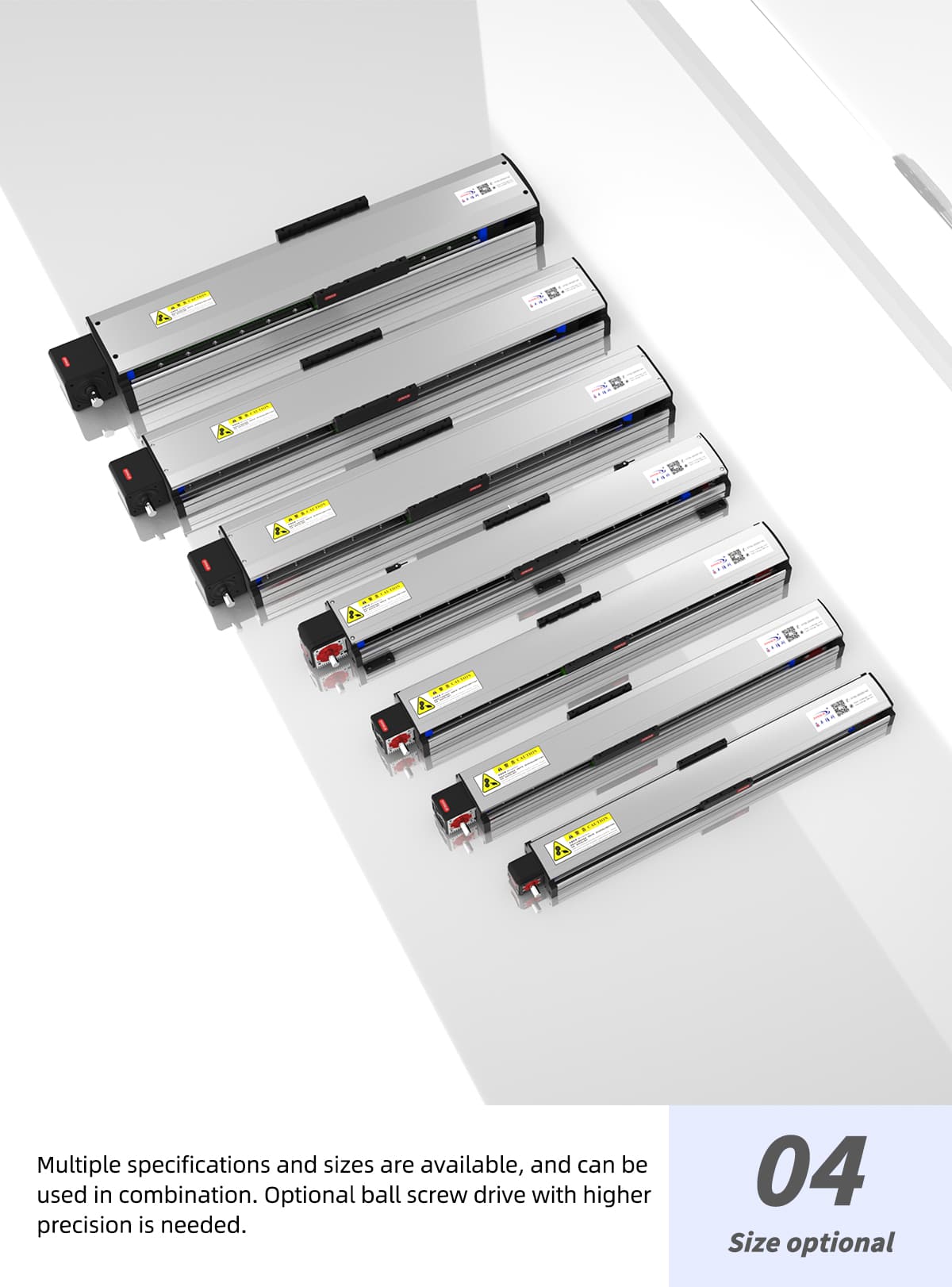
The JFJK model range
The frames are grouped by the duty they are built for. That grouping — rather than the frame number — is the useful way to narrow the choice before looking at drawings:
| Models | Group | Typical fit |
|---|---|---|
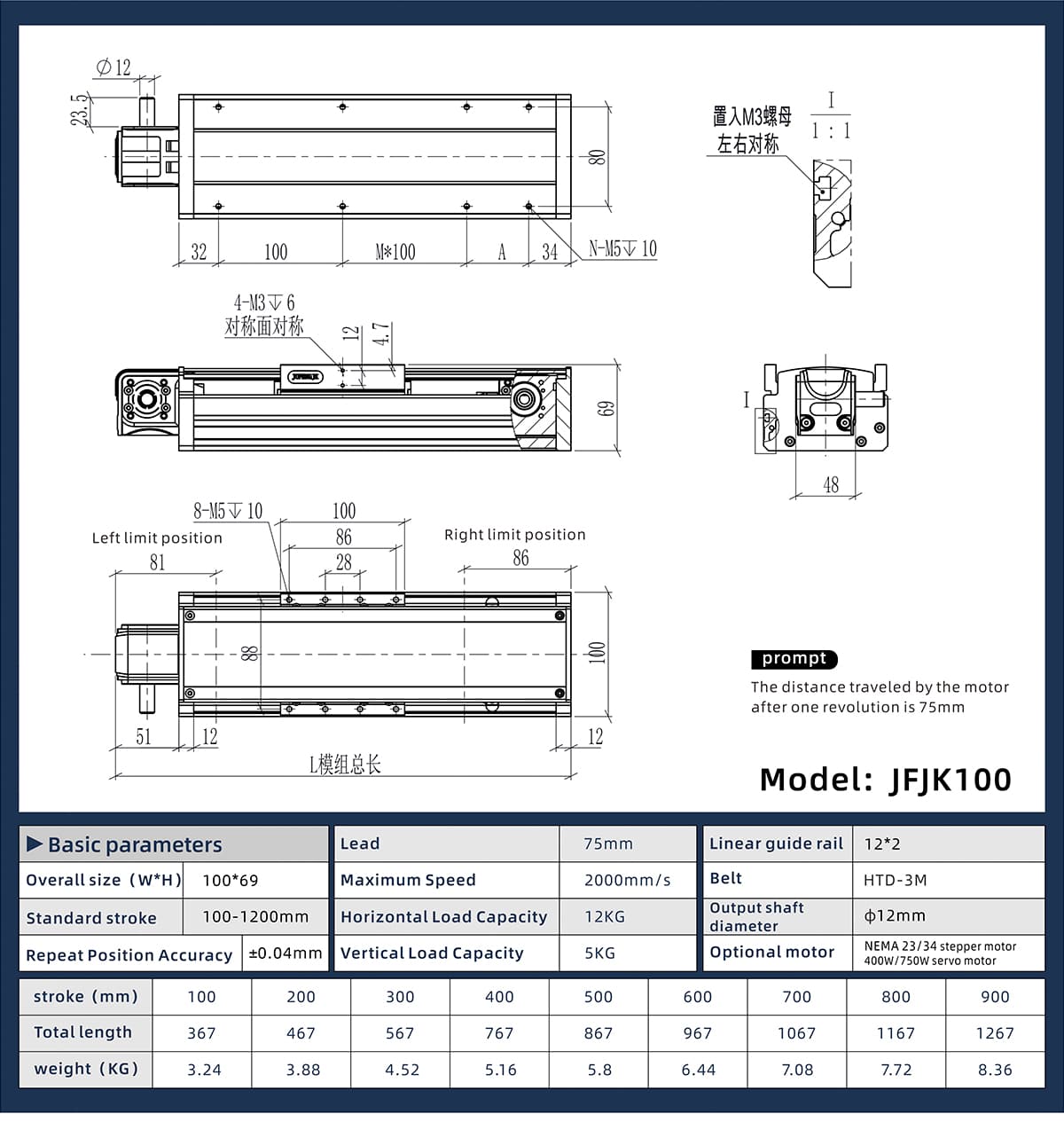
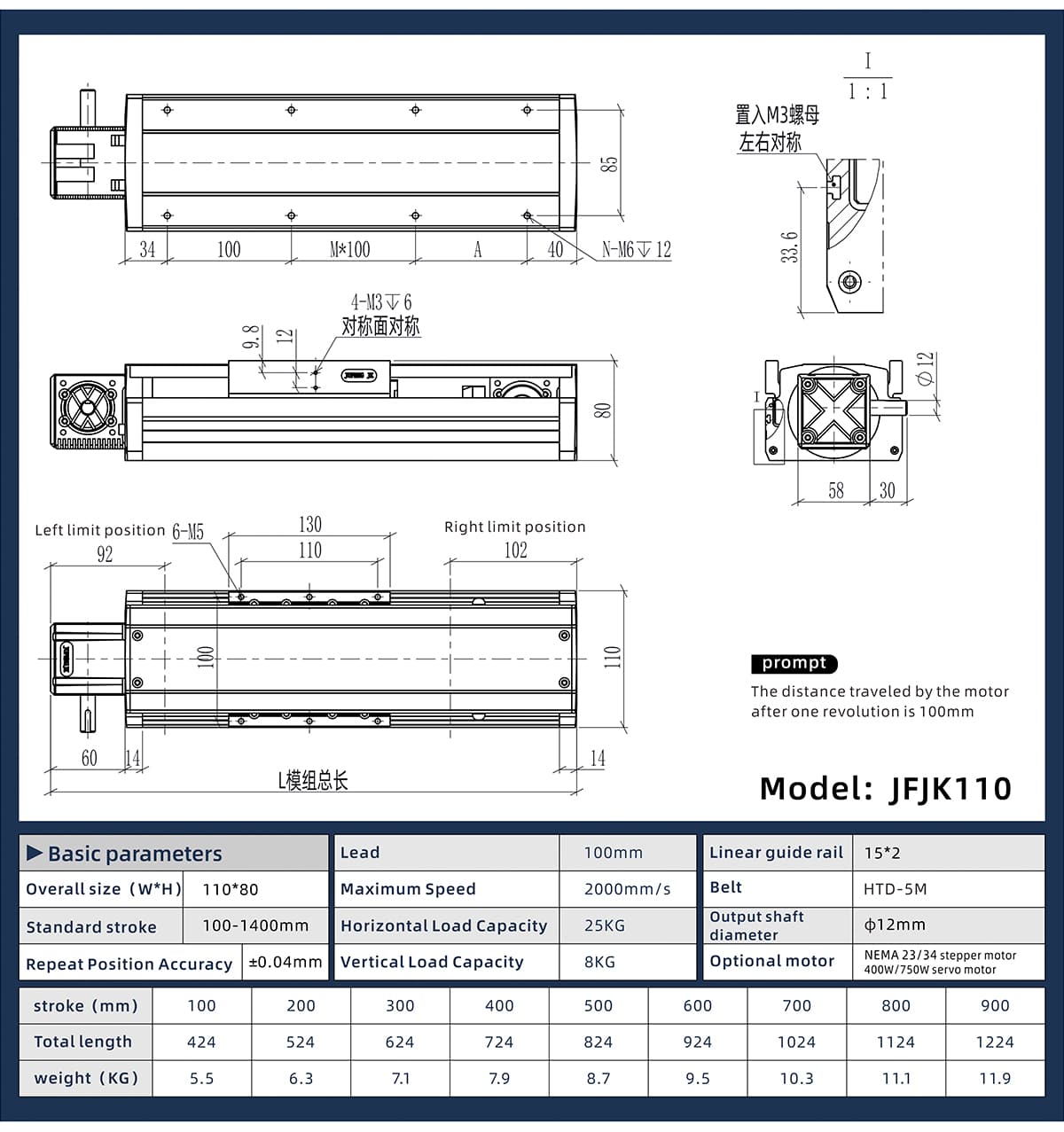
| JFJK100 / JFJK110 | Compact automation | Small assembly and inspection axes where the machine envelope is tight |
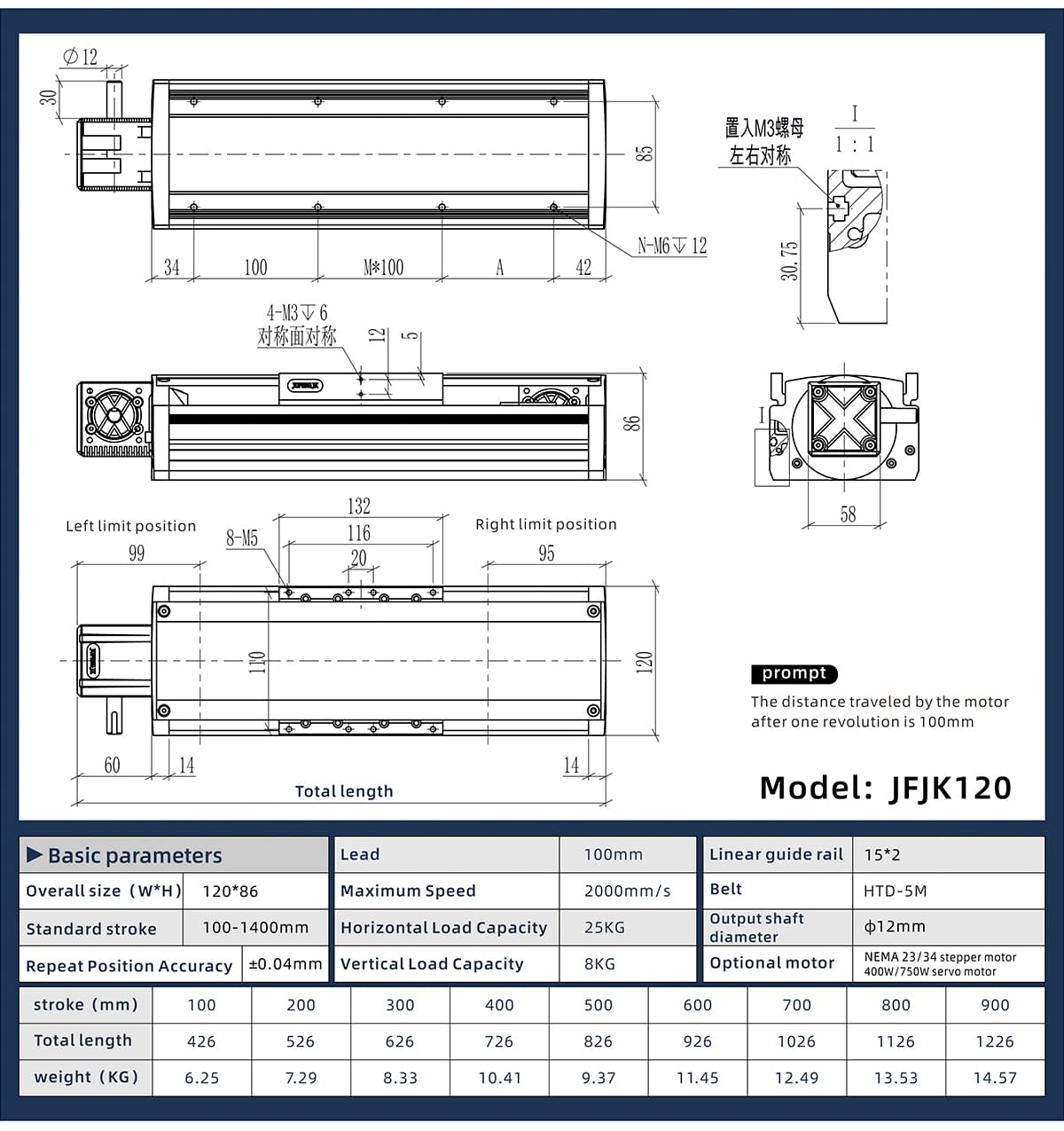
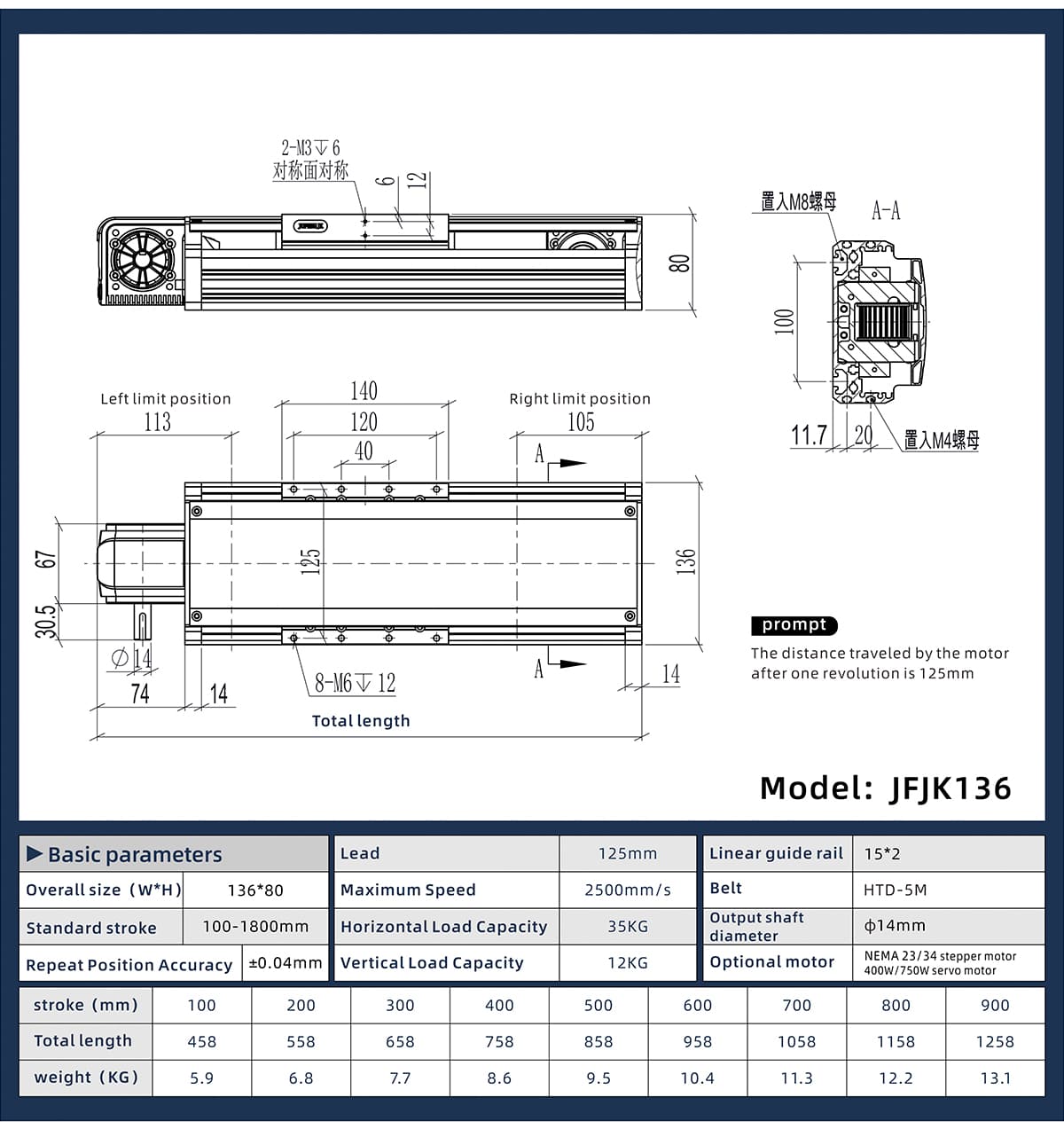
| JFJK120 / JFJK136 | Standard load handling | General transfer, pick-and-place and packaging axes |
| JFJK170 | High-thrust applications | Wider carriages and heavier tooling, still on belt drive |
| JFJK210 | Maximum stability | Long strokes that need a wide, settled frame |
Series specifications
| Parameter | Value |
|---|---|
| Maximum speed | Up to 2 m/s |
| Repeatability | ±0.05 mm |
| Maximum stroke | Up to 4,000 mm, customizable |
| Drive system | High-strength timing belt with dual internal guide rails |
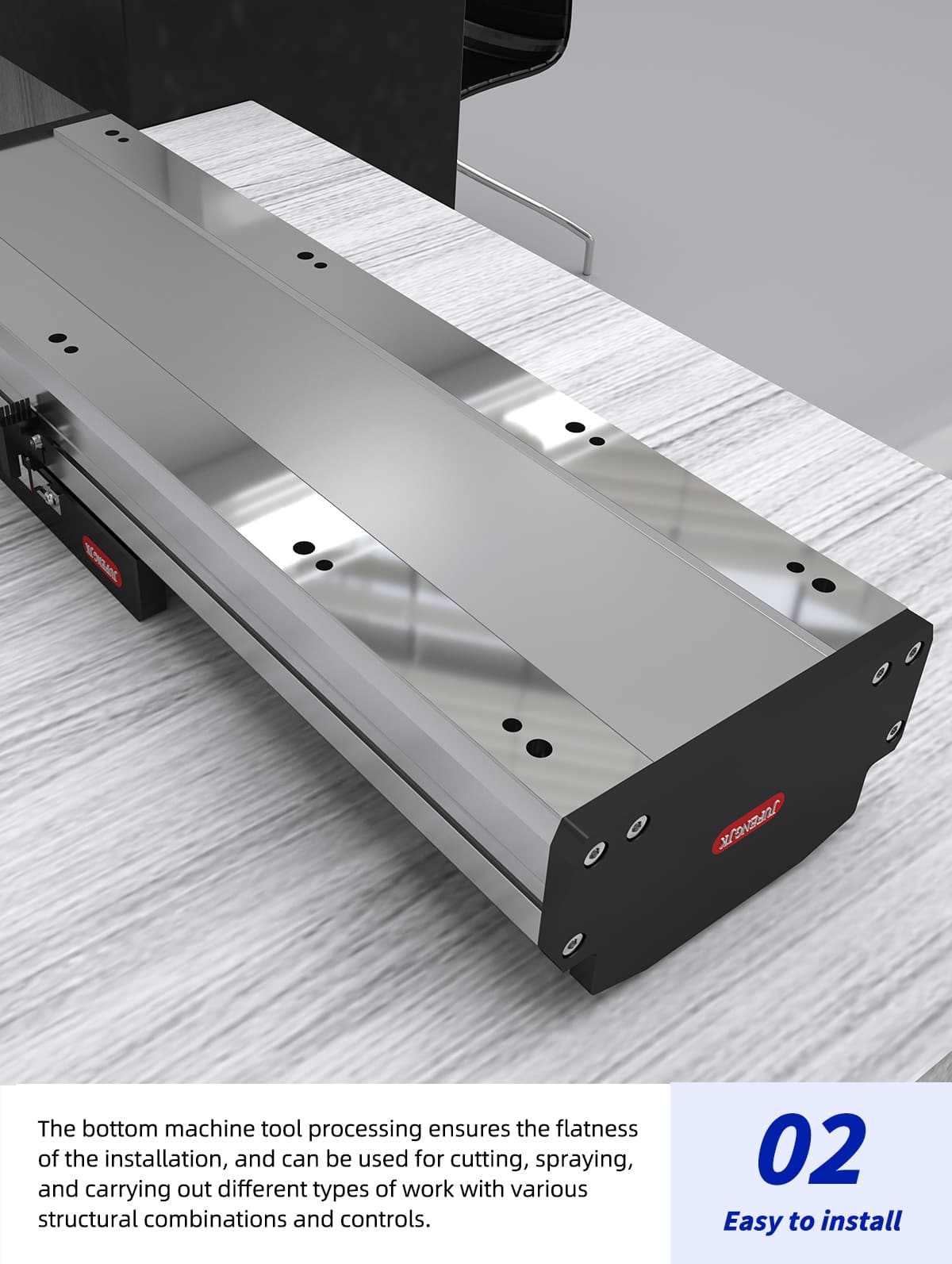
| Structure | Semi-enclosed aluminium profile protecting the transmission |
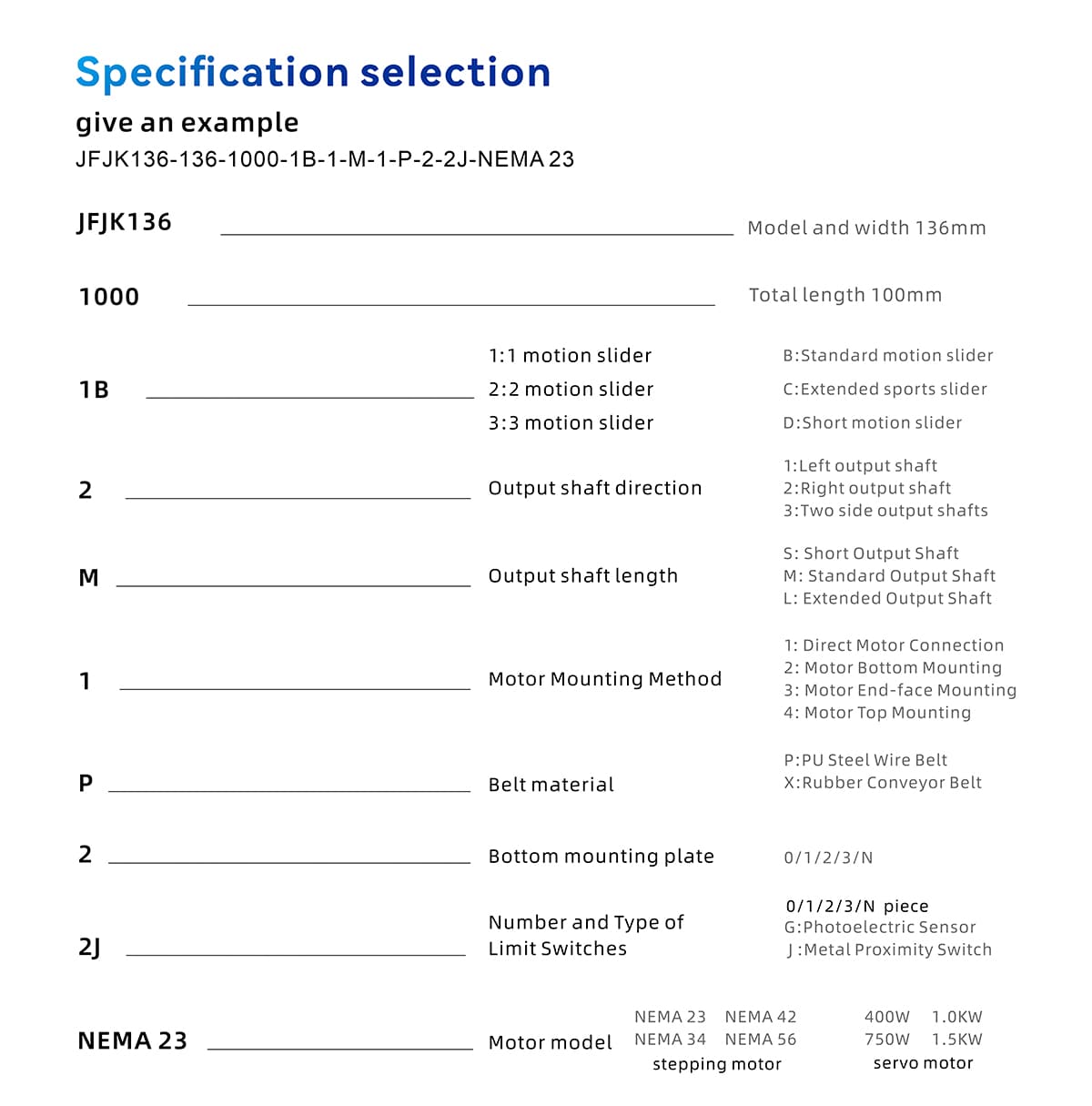
One naming note worth knowing while you browse: in our catalogue the JFJK number without an S is a belt-driven semi-enclosed actuator, while JFJK + number + S is the ball screw actuator of a similar frame size. The frame families are related, the drive is not — so an axis cannot be swapped from one to the other without re-checking speed, thrust and motor sizing.
Specifying a semi-enclosed axis
Five inputs decide the configuration. Send them together and the quotation is usually a single round trip:
Stroke and overall length — plus whether the frame must overhang or stay within the machine envelope.
Payload, with the offset — mass and where it sits relative to the carriage centre. This is the number most often left out and most often the reason a first proposal has to be revised.
Speed and acceleration profile — peak speed and how aggressively the axis starts and stops.
Duty cycle — continuous production duty versus intermittent positioning.
Mounting and environment — horizontal, vertical or inclined; chips, coolant, dust, humidity.
For vertical axes, tell us in the first message: a belt drive does not self-lock, so a vertical application needs a brake motor or counterbalance arrangement, and that changes the bracket and the recommendation.
Where these actuators run
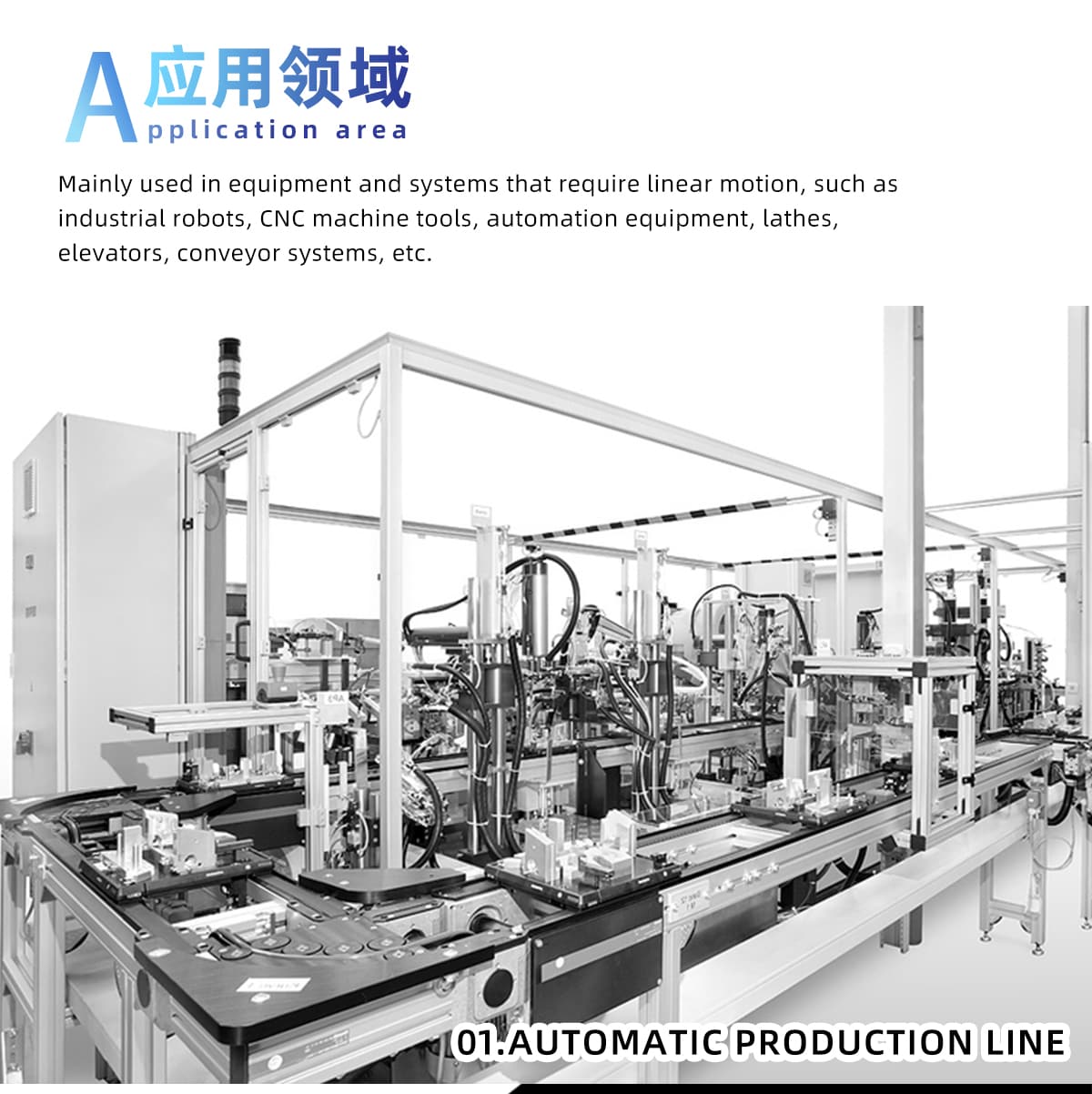
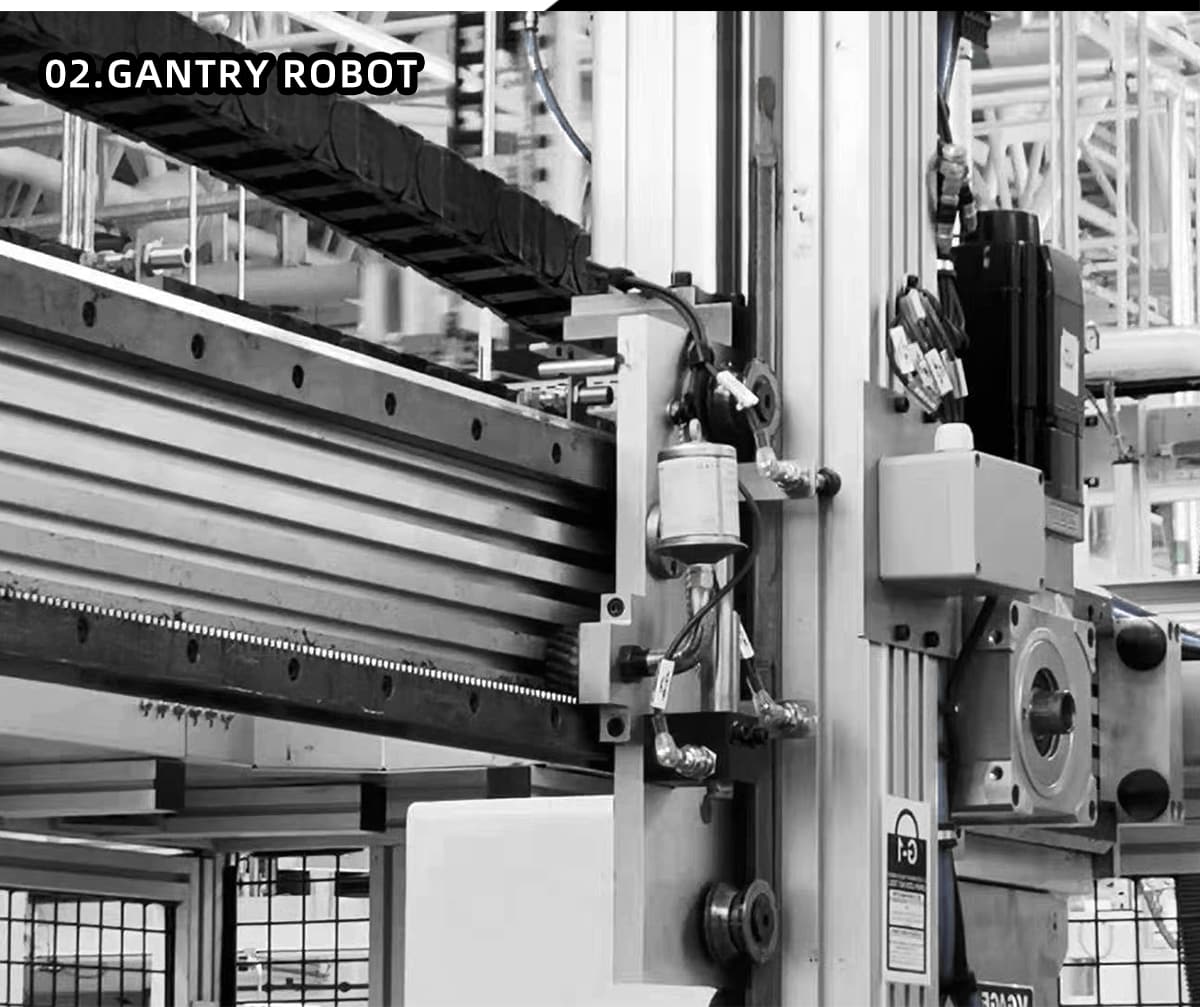
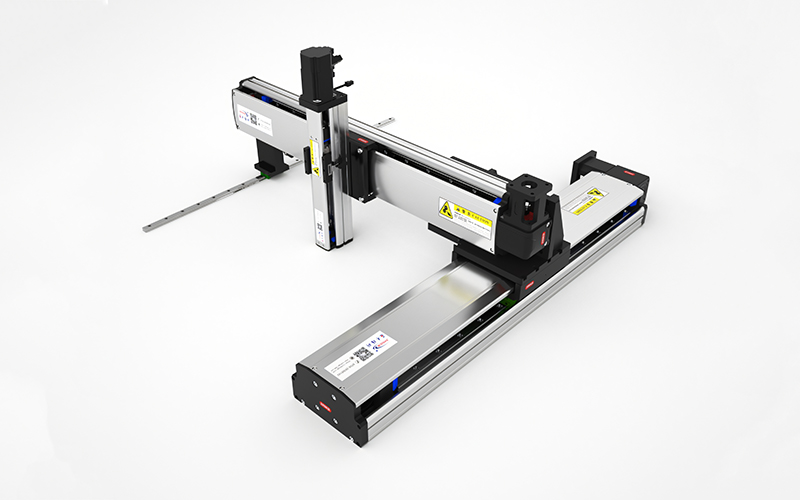
The semi-enclosed frame is the default for general automation: packaging machinery transfer and pusher axes, pick-and-place gantries, material handling and loading systems, and the non-cutting axes of CNC equipment where a workpiece or a guard has to move quickly and repeatedly. It is also common in pharmaceutical and food-adjacent automation where the machine is clean but not sealed, and in 3D printing and additive equipment where a wide, stable carriage carries the print head or the build platform.
Built to your drawing, not just to the catalogue
Stroke is the obvious customisation, but it is rarely the only one. We routinely produce modified carriage plates with customer hole patterns, extended and shortened frames, additional mounting faces, belt covers, and dual or multi-carriage arrangements. Because CNC milling, grinding and turning are in-house, a drawing change does not become a sourcing project.
We also supply the surrounding hardware — timing wheels, servo brackets and stepper brackets — matched to the module, so the motor interface is not a separate problem. For applications that need a different drive principle rather than a different frame, see the JFJK-S ball screw actuators or the specialised and custom modules.
Questions we get asked
Can I add a second carriage to one axis?
Yes, and on a dual-rail frame it is a sensible configuration — two carriages driven by the same belt, spaced to suit your fixtures. Tell us the spacing and whether they must stay synchronised under load.
How long can the stroke be?
It depends on the belt, the frame section and the speed you want at that length, so we size it rather than quote a fixed maximum. Send the stroke and we will confirm what the axis can do at your speed.
Will this work as a vertical Z axis?
Mechanically yes, but it needs a brake or a counterbalance because a belt does not hold position when power is removed. Say so up front and we will propose the arrangement.
Send us the axis, get a proposal
Email [email protected] with your stroke, load, speed and accuracy requirement — or attach the drawing and let our engineers work from it. WhatsApp: +86 137 9839 6296. Shenzhen Jufeng Jingke Automation Technology Co., Ltd., manufacturing linear motion modules since 2014.
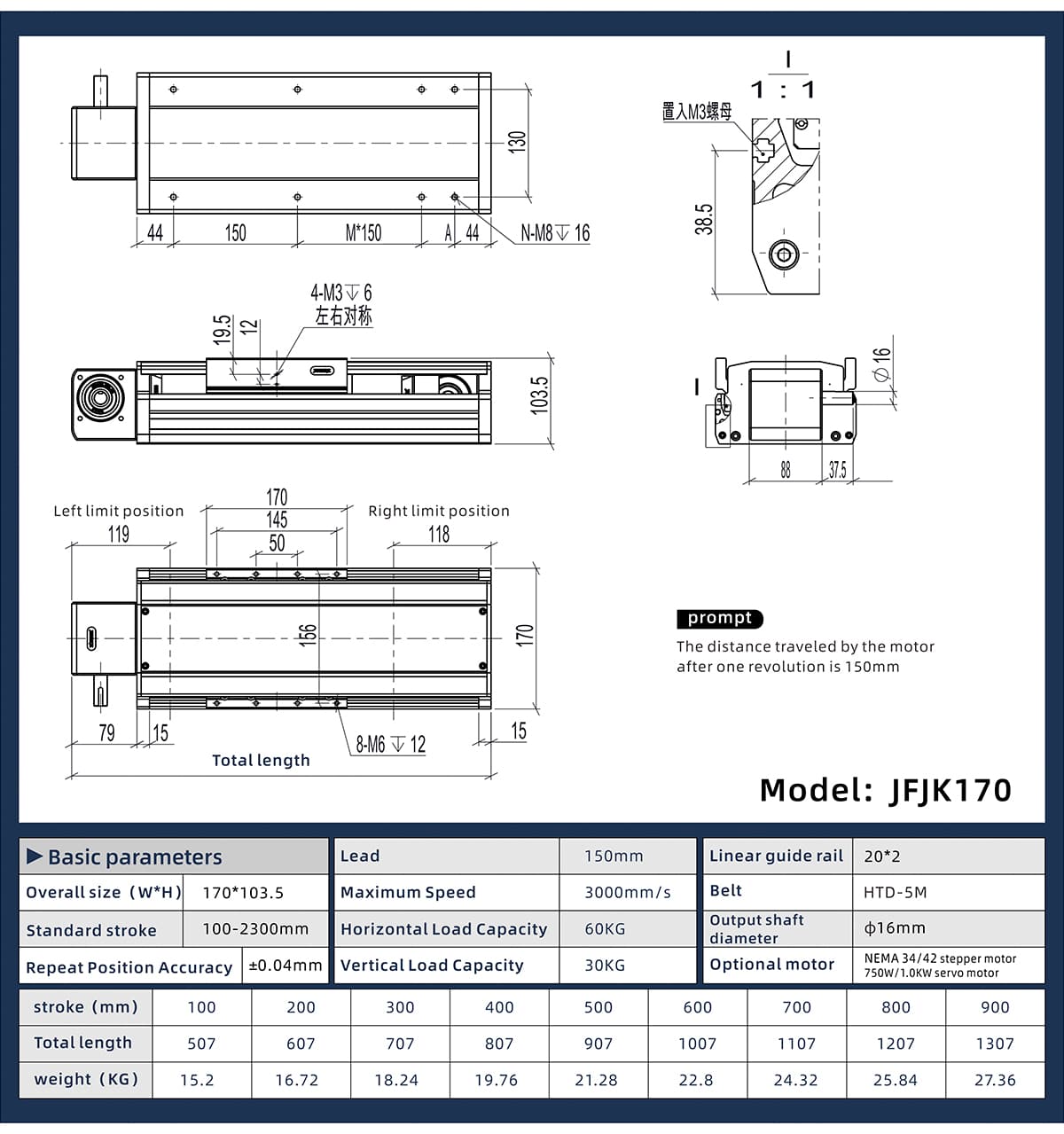
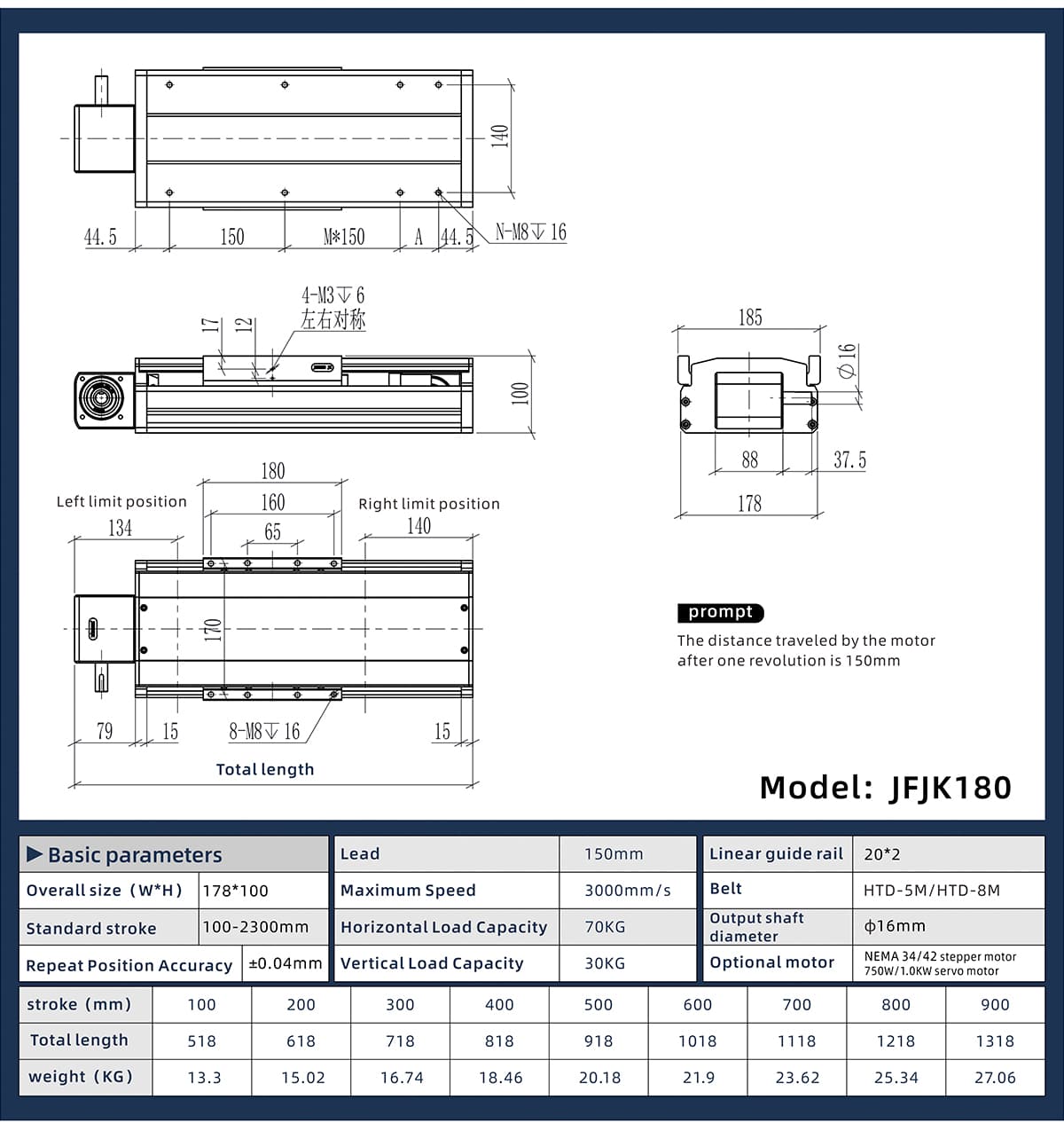
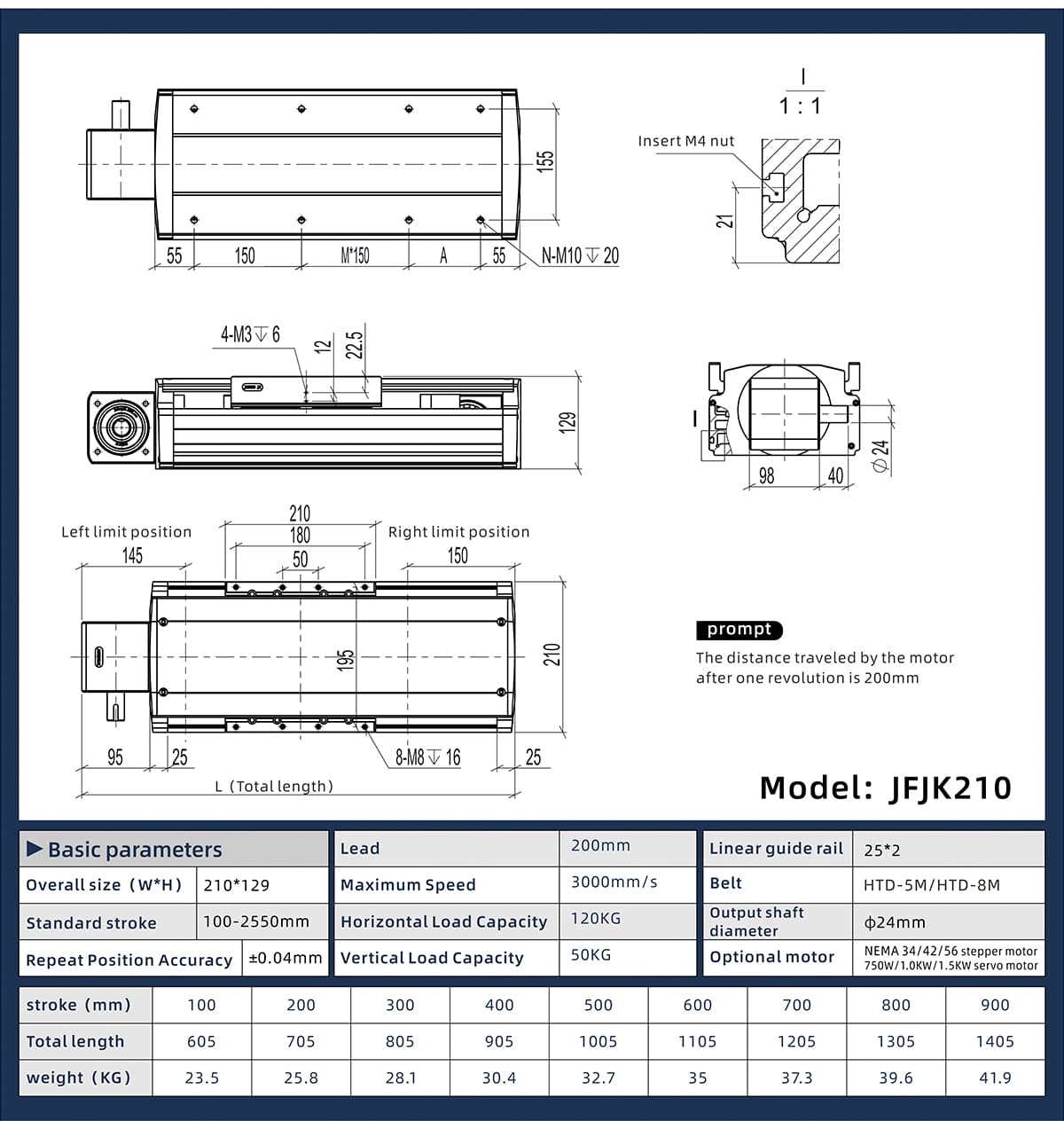
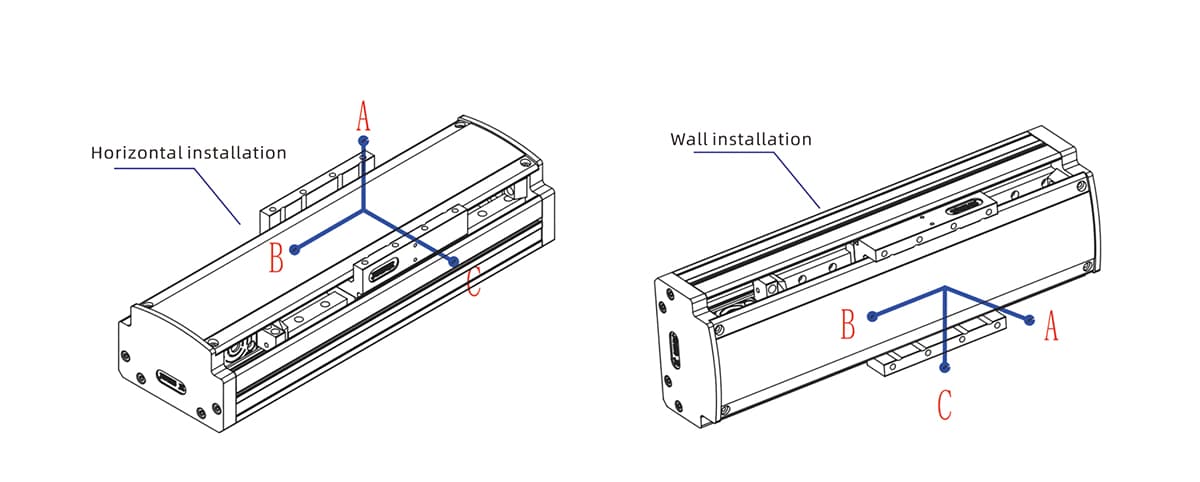
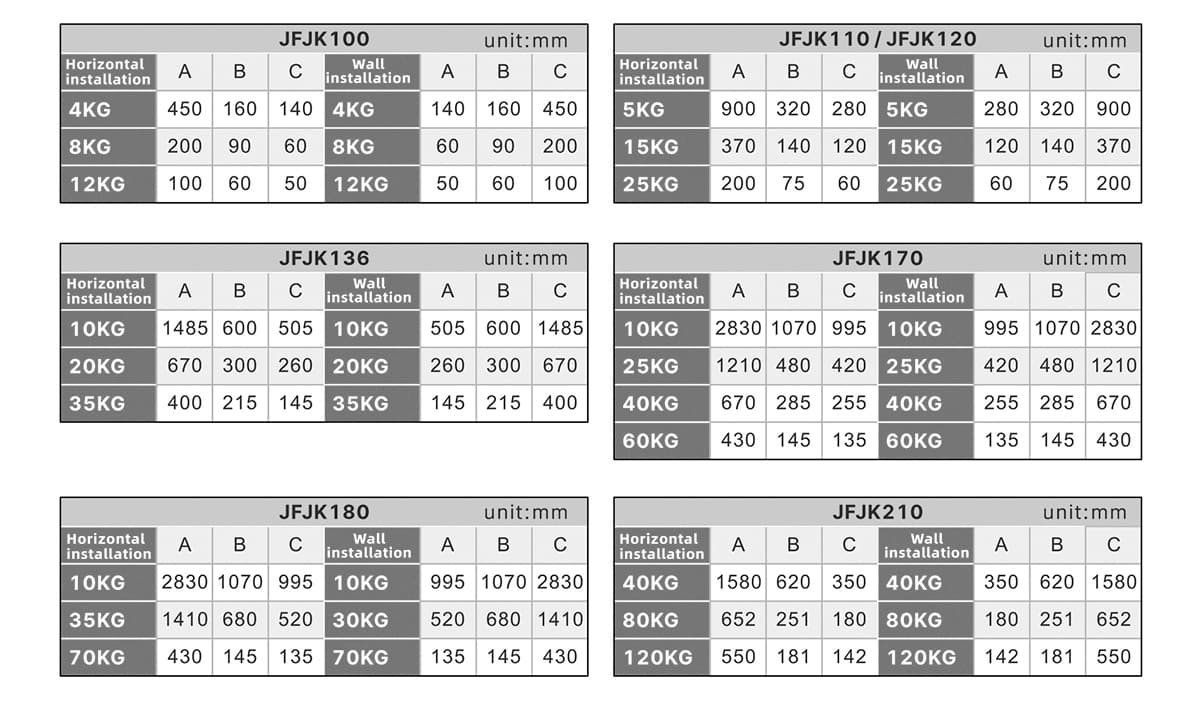
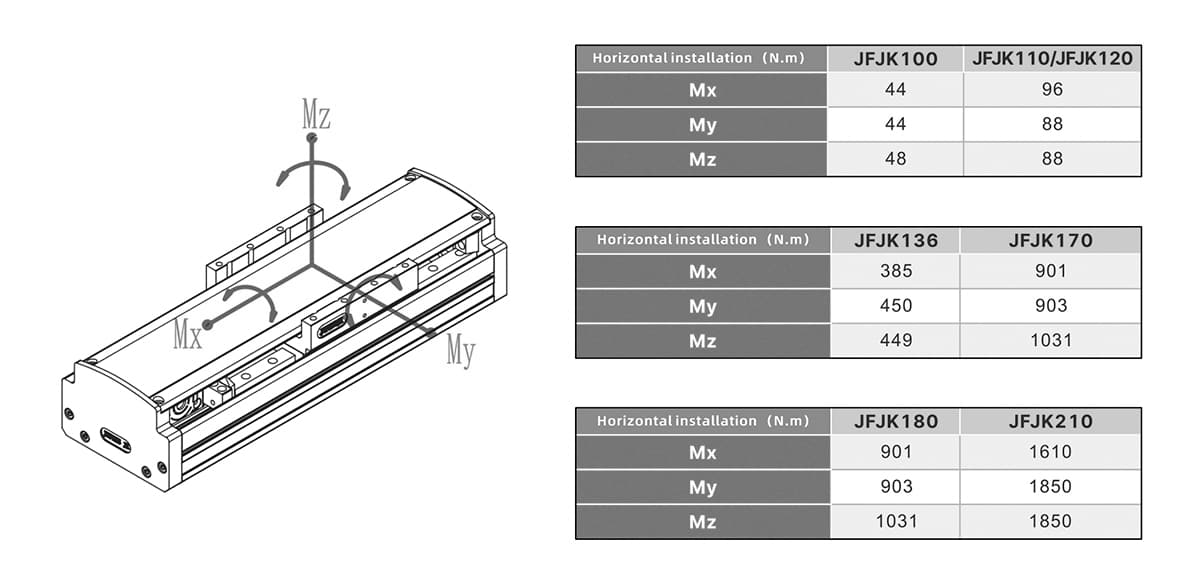
Allowable Overhang