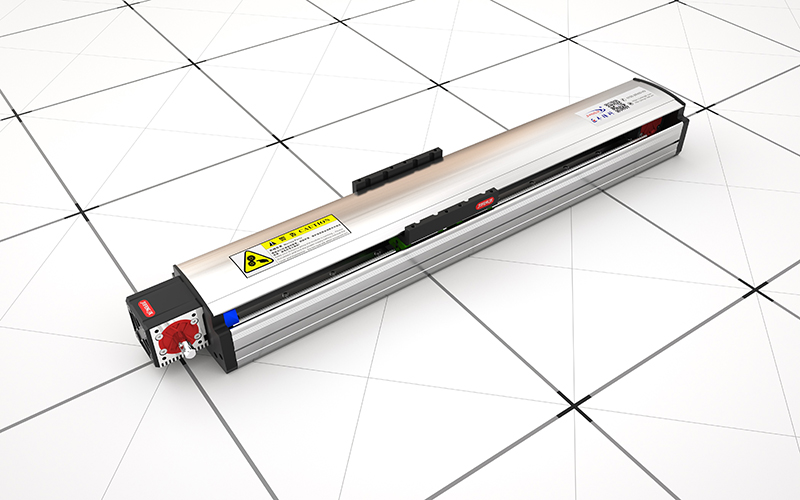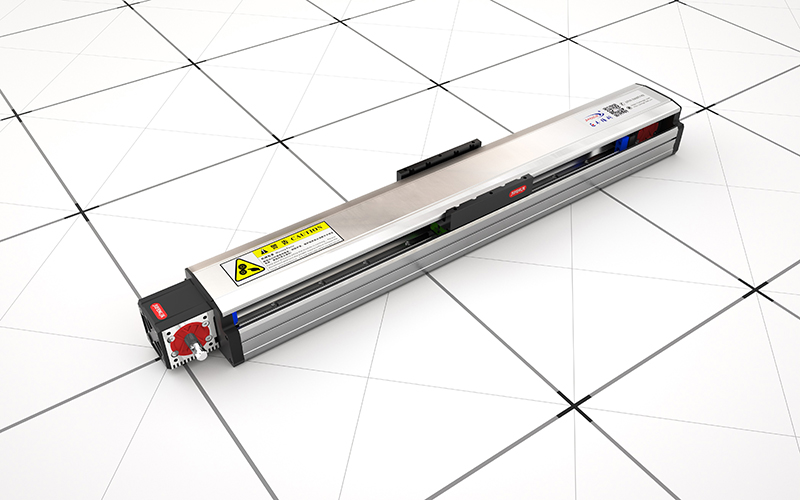
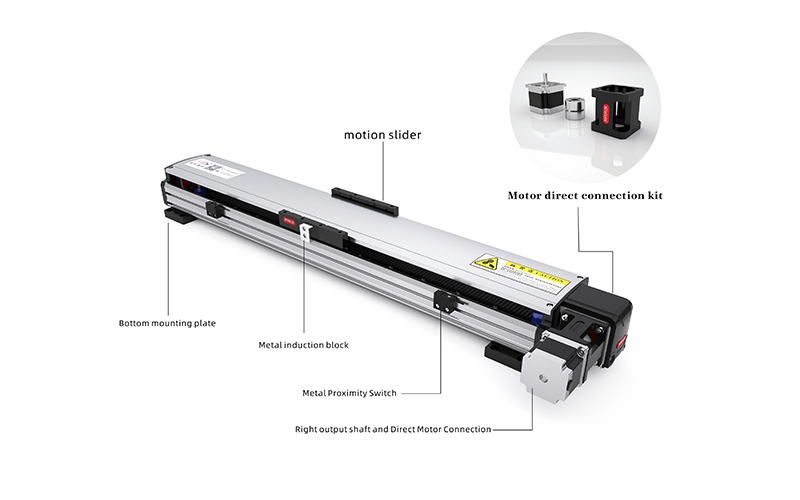
JFJK110 Semi-Enclosed Belt-Driven Actuator
High Speed up to 2m/s
Dual Internal Guide Rails
Semi-Enclosed Stability
Stroke up to 4000mm
Customizable Solutions
The compact end of the semi-enclosed range
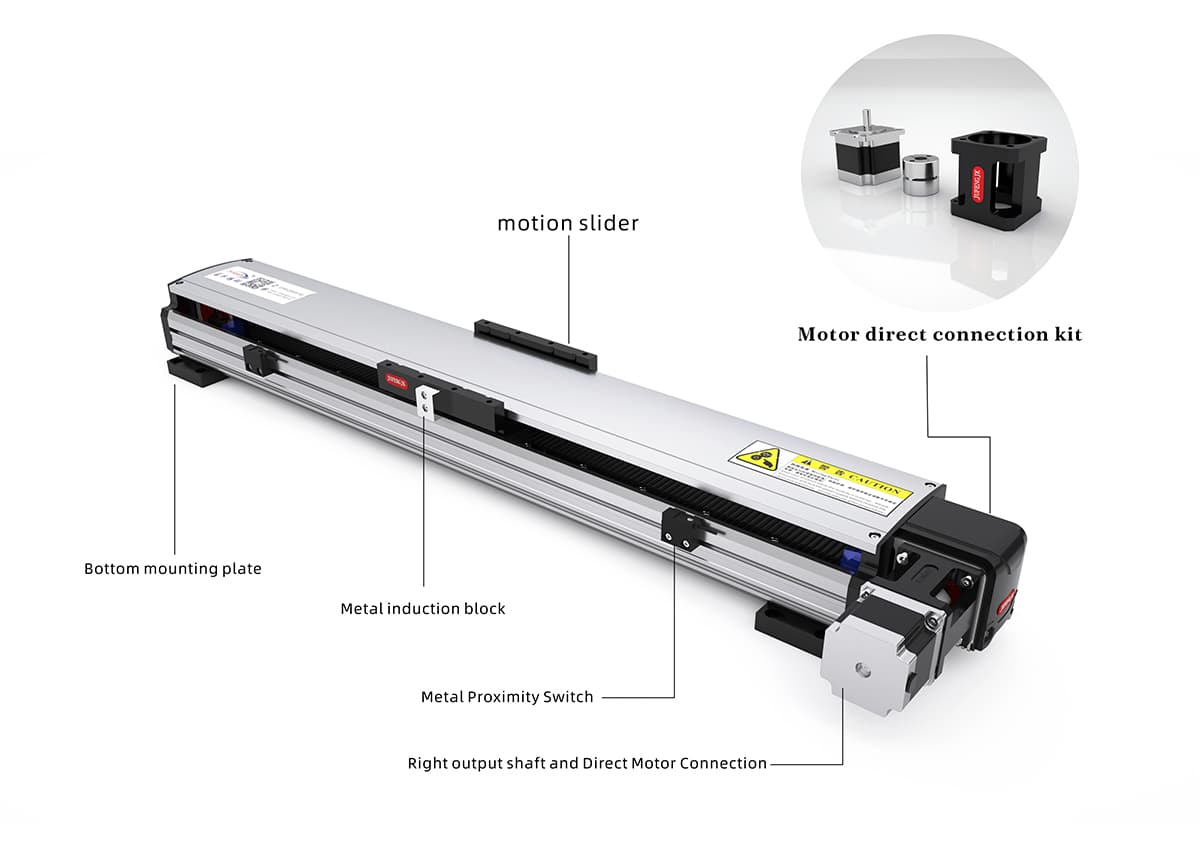
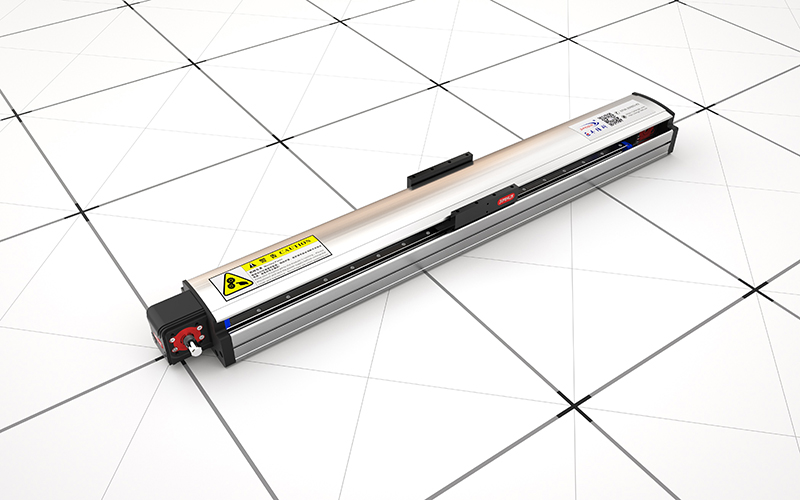
JFJK110 is the smaller of the two compact frames in the semi-enclosed belt family. It is the unit we quote when the machine has to stay small but the environment is not clean enough for an open module — benchtop assembly cells, inspection stations, and the short axes inside a machine guard where chips do reach the rail.
What it is not is a light-duty derivative. It carries the same two internal guide rails as the rest of the family, which means a tool that sits off the carriage centre is still resisted as a couple rather than levered against a single bearing. That is the difference between an axis that holds its accuracy after a year of production and one that develops unexplained play.
Parameters
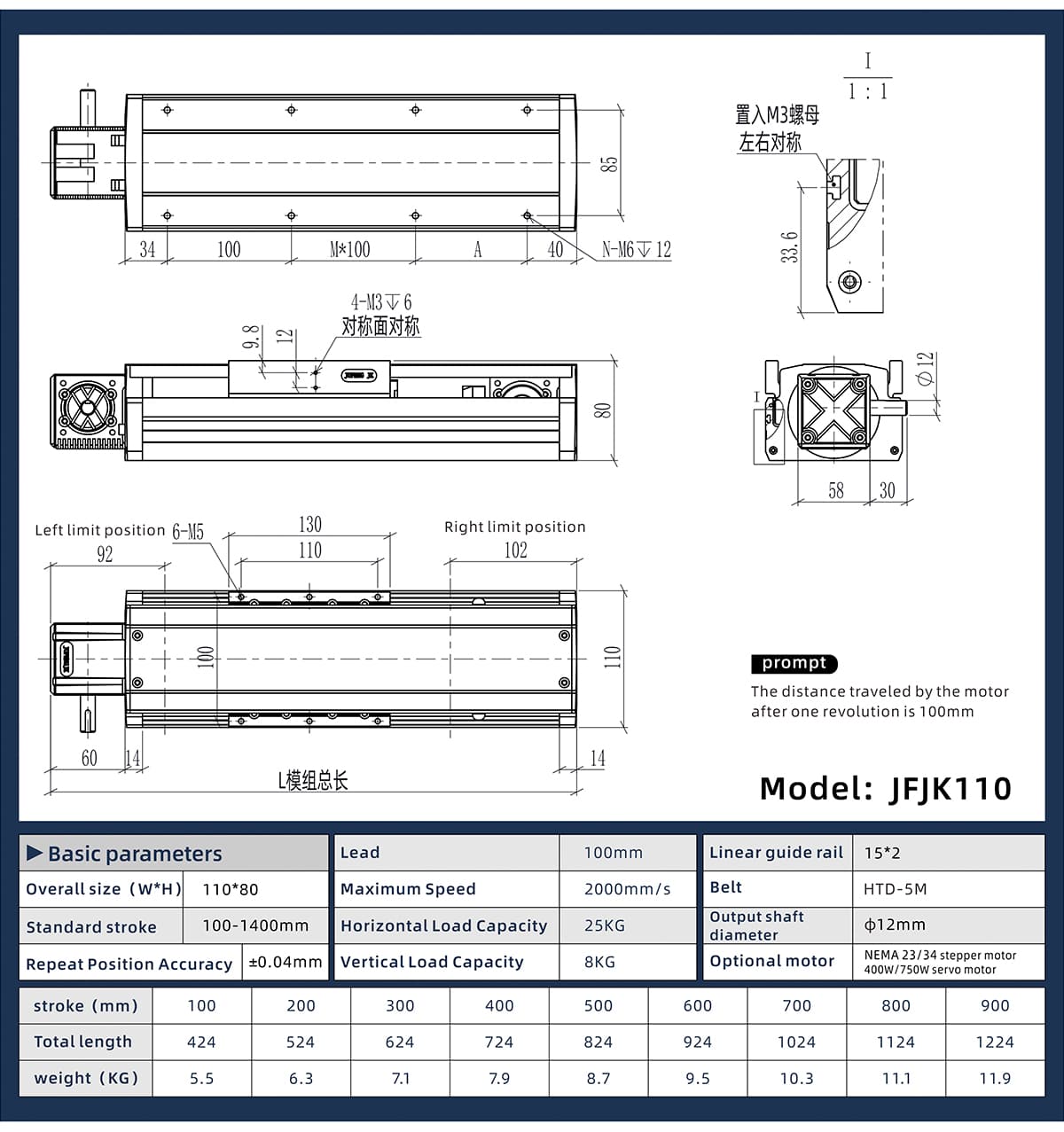
| Maximum speed | 2,000 mm/s |
| Repeatability | ±0.05 mm |
| Maximum stroke | 4,000 mm, built to your drawing |
| Guide system | dual internal guide rails |
| Structure | semi-enclosed aluminium profile |
| Frame group | compact automation (with JFJK100) |
| Profile width | 110 mm |
| Rated load, horizontal / vertical | 25 kg /8 kg |
| Overall length | stroke + 324 mm |
Where the 110 is chosen over the 100
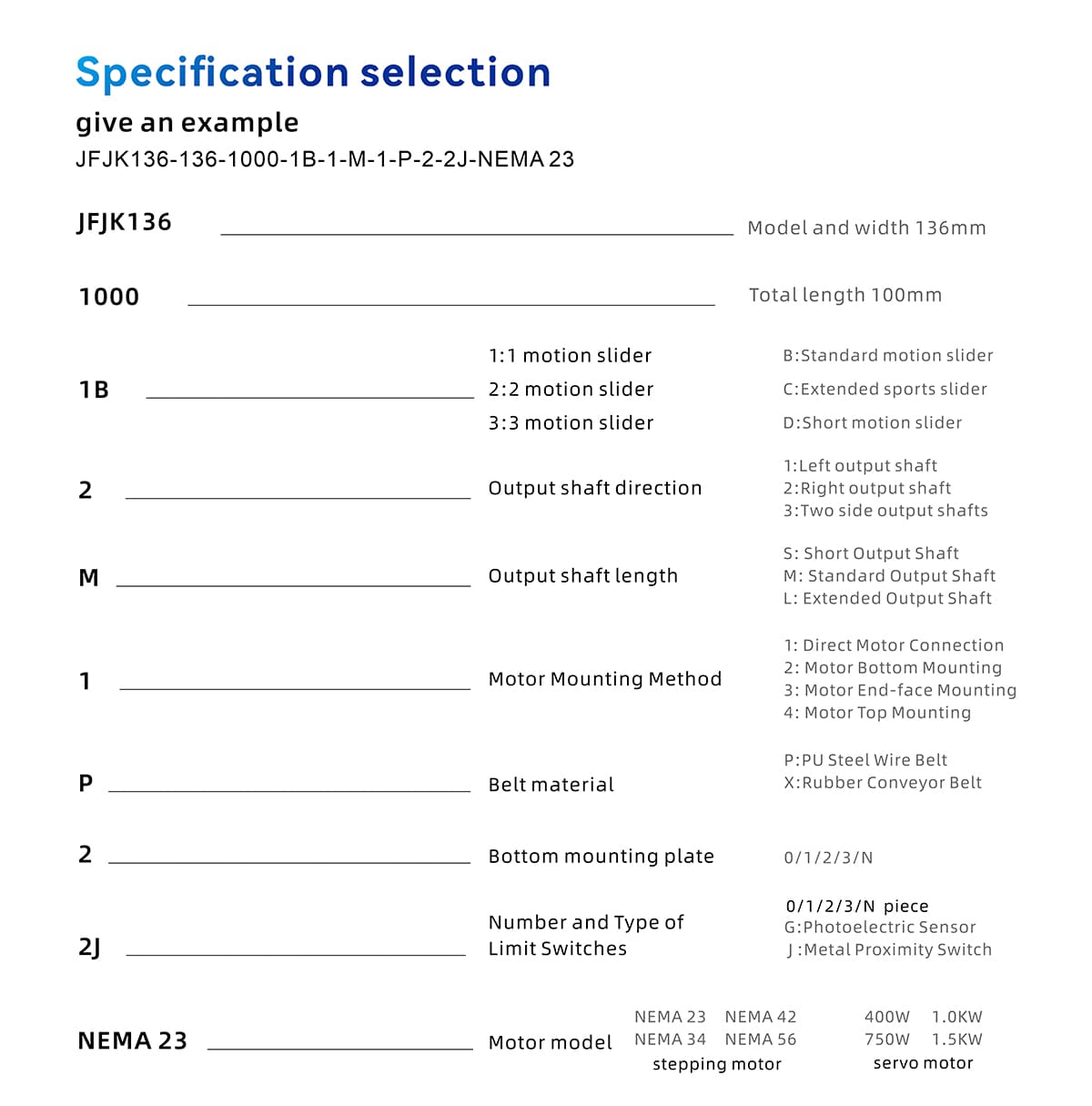
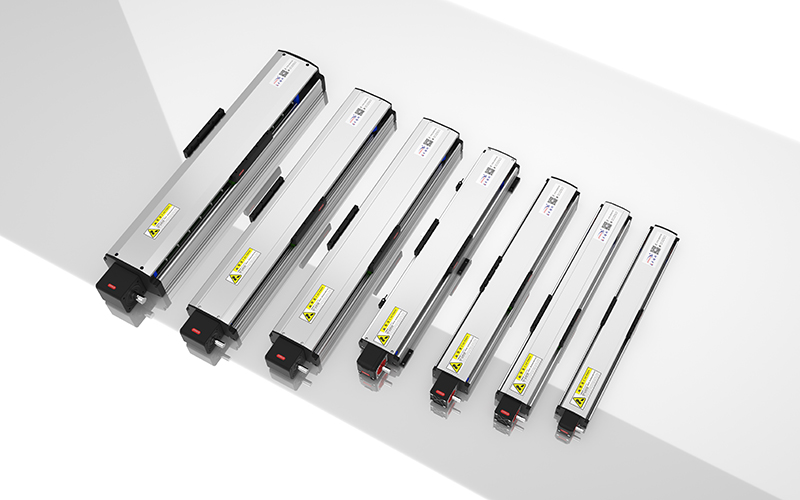
The two frames share a group; the choice between them is carriage width and stiffness, not speed. When the drawing shows a plate, a gripper pair or a bracket that has to sit on the carriage without overhanging, the wider of the two compact frames is the one that keeps the tool inside the machine envelope. When the carriage carries a single small head, the smaller frame is cheaper and lighter and there is nothing to gain by going up.
What it runs
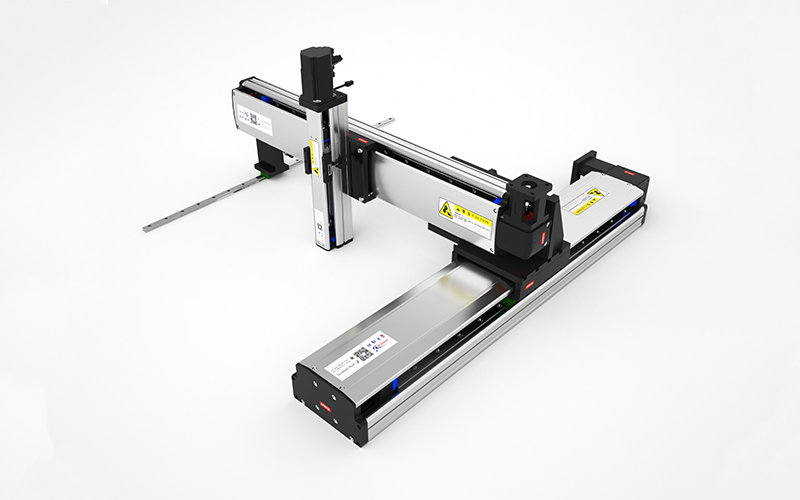
Short-to-medium transfer inside assembly and inspection machines, dispensing and soldering heads, sensor and camera positioning, and the cross-axis of a small two-axis head. In all of these the axis works at high cycle rate at moderate load, which is the belt-drive case: efficiency and low maintenance matter more than thrust.
FAQ
Can I use it as a vertical axis?
Mechanically yes, but a belt does not hold position with power removed. A vertical axis needs a brake motor or a counterbalance, and that changes the bracket — say so in the first message.
How is it different from the ball screw JFJK110S?
Different drive, not a different frame family. The 110S uses a ball screw and is the one to specify when the axis has to push, hold position, or stop within microns.
Send the axis