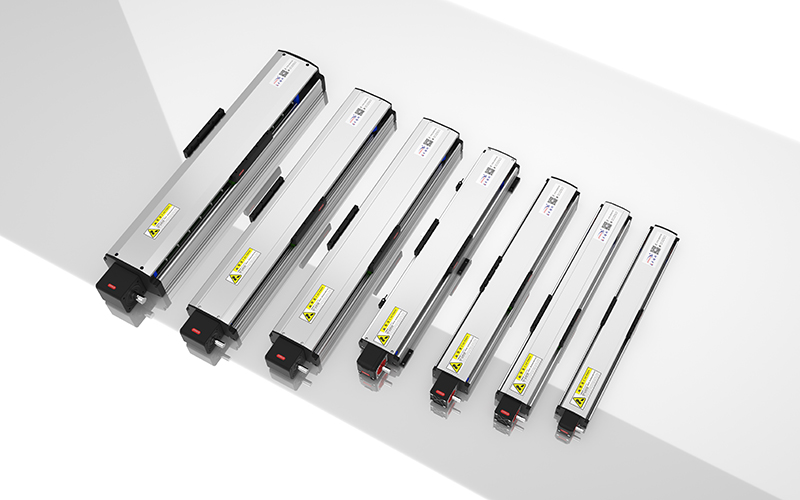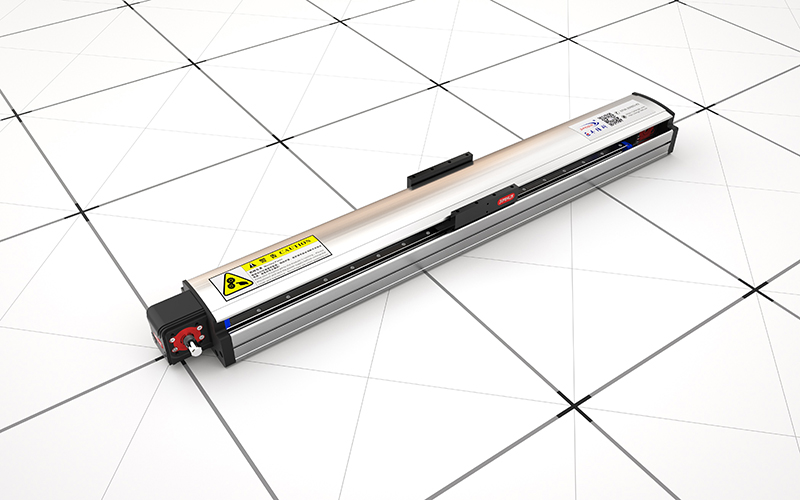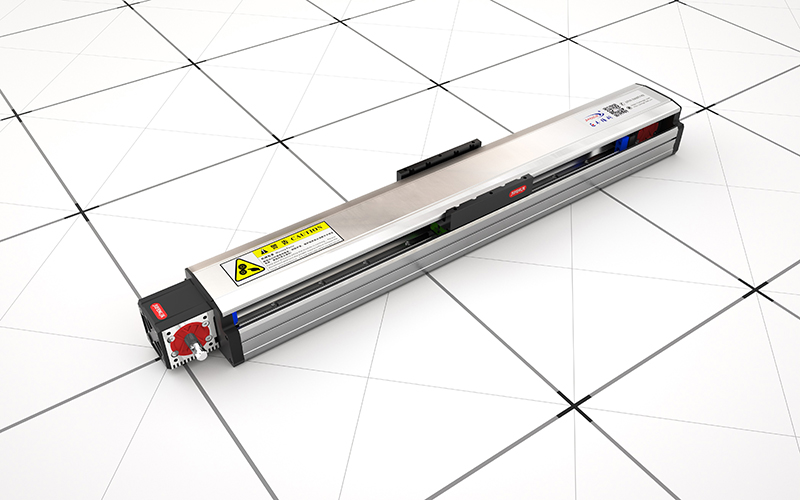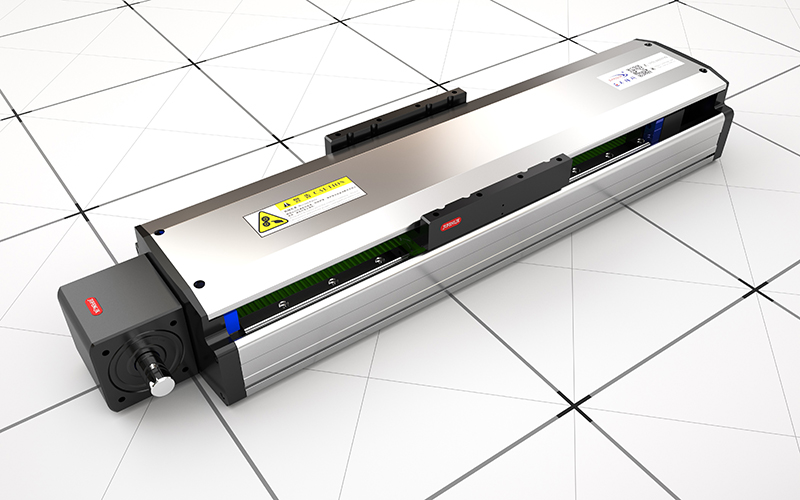
JFJK210 Semi-Enclosed Belt-Driven Actuator
Semi-Enclosed Belt-Driven Linear Module
High Speed, Long Stroke, Industrial-Grade Reliability
Speed meets protection — debris-proof without sacrificing cooling or easy maintenance
Max Speed 2000mm/s
Repeatability ±0.05mm
FEA-optimized aluminum profile
The widest section in the belt family
JFJK210 is the largest semi-enclosed belt frame we build. At this section the question stops being "how much can it carry" and becomes "how little does it move when it carries it" — because on a long belt axis the limiting factor is rarely the belt's tensile capacity, it is the frame deflecting under span and the carriage rocking under acceleration.
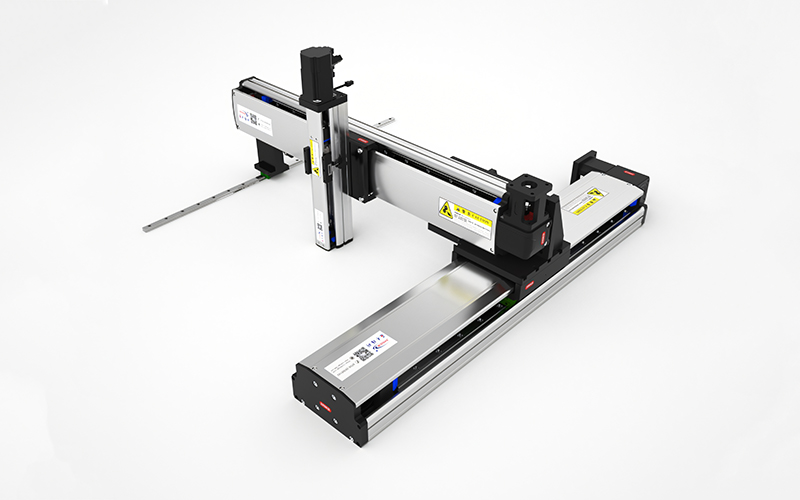
That makes the 210 the frame for long strokes that still have to hold a working plane: a wide inspection bench, a long transfer carrying a heavy fixture, the base axis of a gantry where everything else is mounted on top of it.
Parameters
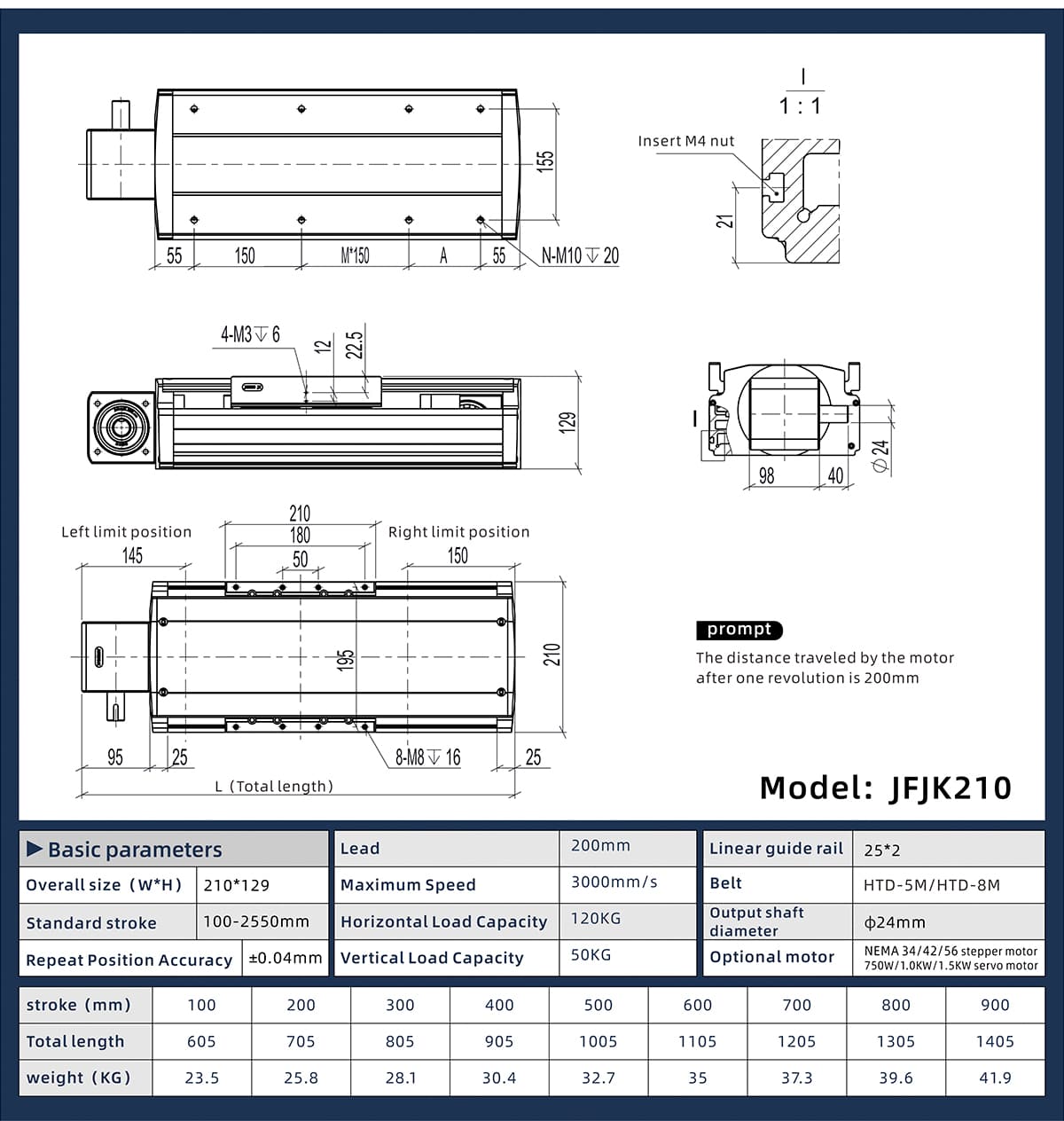
| Maximum speed | 2,000 mm/s |
| Repeatability | ±0.05 mm |
| Maximum stroke | 4,000 mm, built to your drawing |
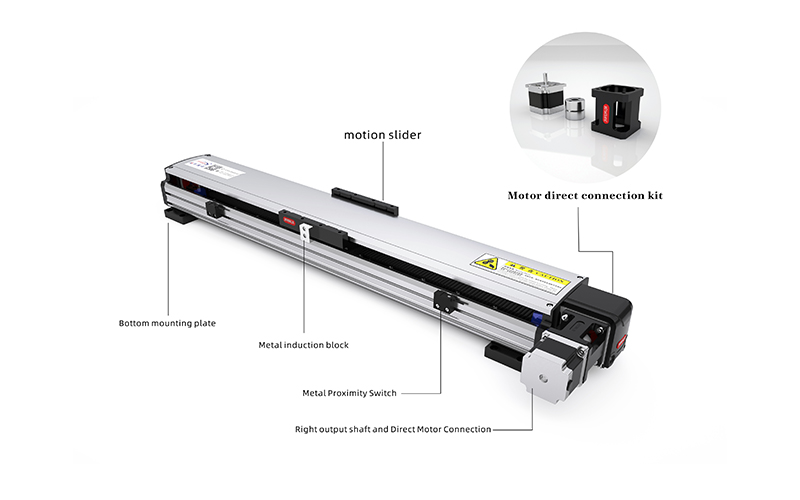
| Guide system | dual internal guide rails |
| Structure | semi-enclosed aluminium profile, FEA-optimised section |
| Frame group | maximum stability |
| Profile width | 210 mm】 |
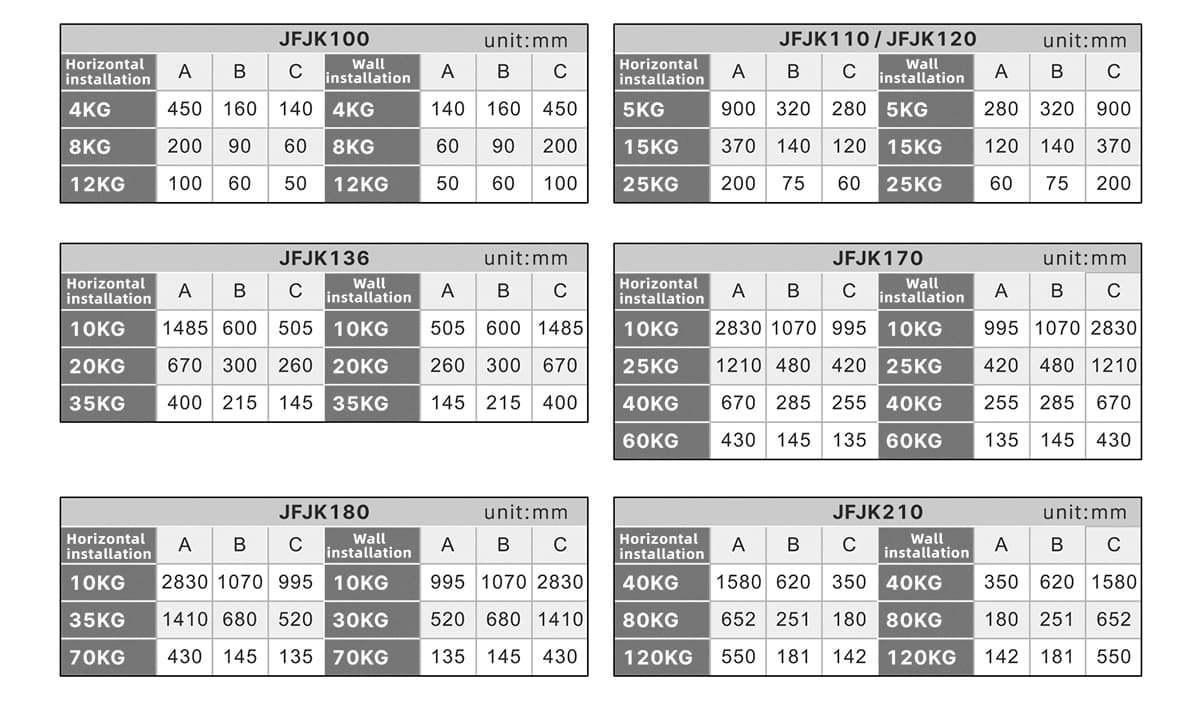
| Rated load, horizontal / vertical | 70 kg / 30kg |
| Overall length | stroke + 418mm |
What the extra section actually buys
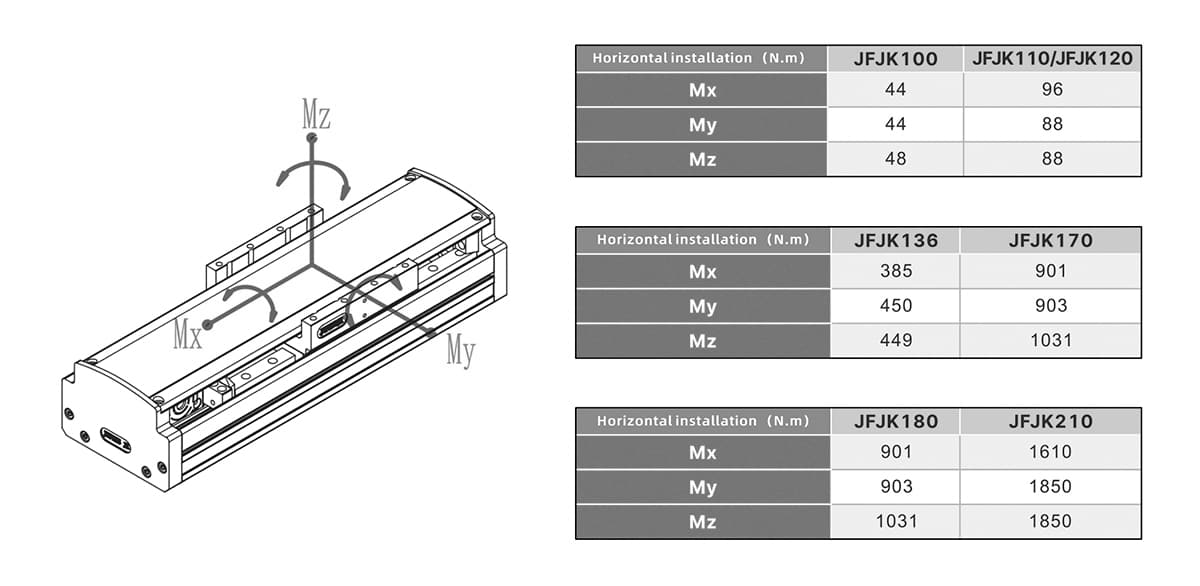
Three things, and none of them show up on a load rating. First, less deflection over span, so the working plane stays where the drawing says it is at mid-travel. Second, a lower natural frequency, so the axis settles faster after each stop instead of ringing into the next move. Third, a wider stance under the carriage, so acceleration produces less roll.
On a short axis none of that is worth paying for. Past roughly two metres, all three become the reason a machine can hold tolerance at speed.
Where it runs
Long transfer on packaging and handling lines, wide inspection and measurement benches, and gantry base axes where the frame carries the mass of everything above it. It is also used where the machine is built once and expected to run for a decade — the extra section is cheaper than rebuilding the frame.
FAQ
Should I use this instead of a gear and rack axis?
Below roughly 4 m, yes — a single belt frame is simpler and does not need a joint. Beyond that the rack range is the better answer because it extends by joining racks rather than by stretching a belt.
Does the bigger frame change the motor?
It changes the moving mass, so the inertia ratio changes. Send the motor you intend to use and we will confirm the sizing rather than let you discover it at commissioning.
Send the span and the mass above it
Email [email protected]. WhatsApp: +86 137 9839 6296.