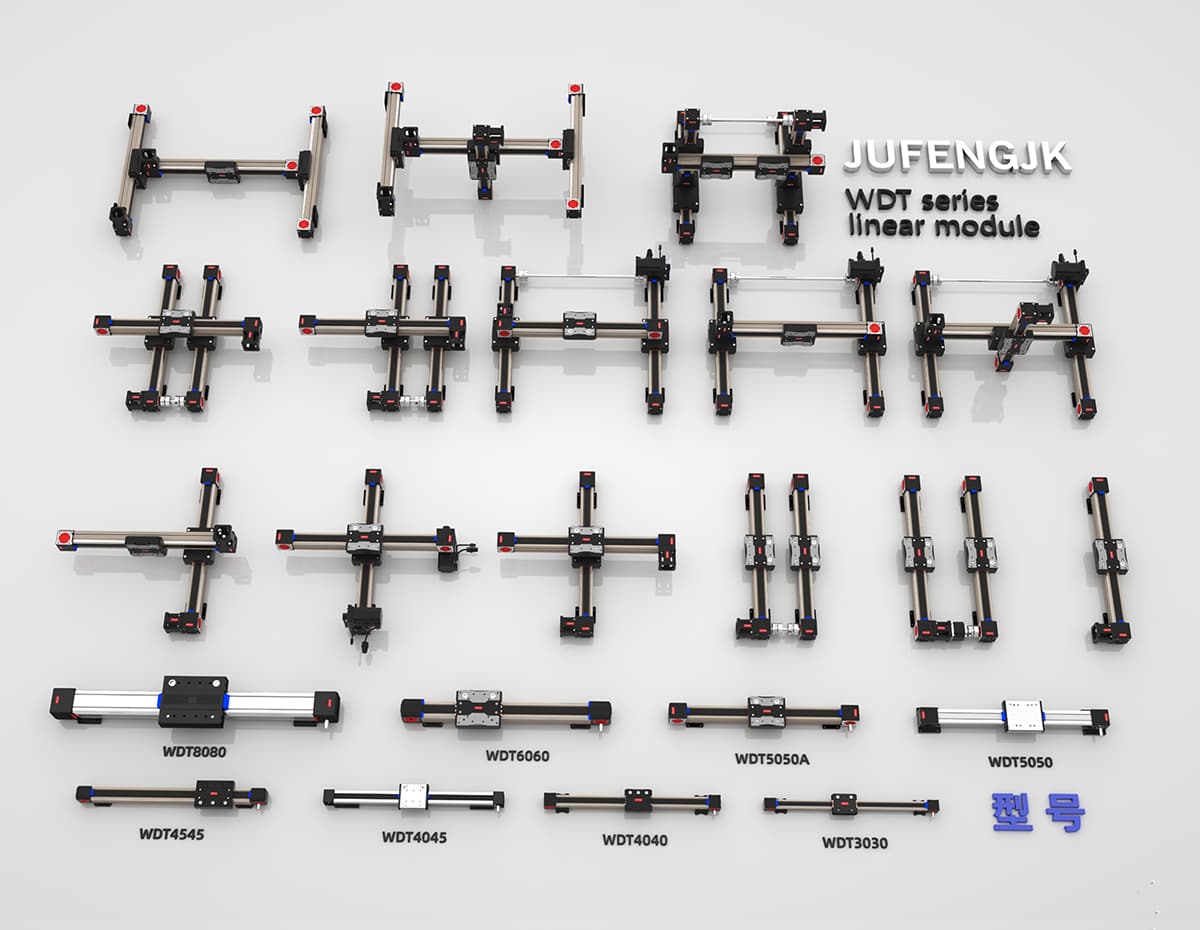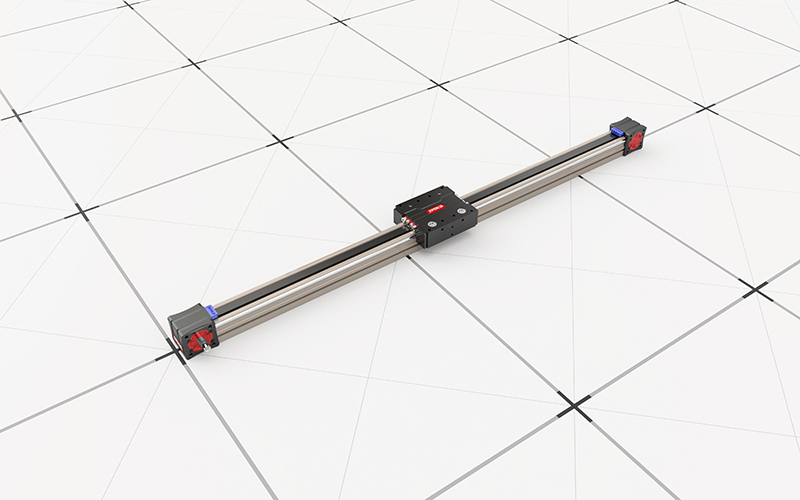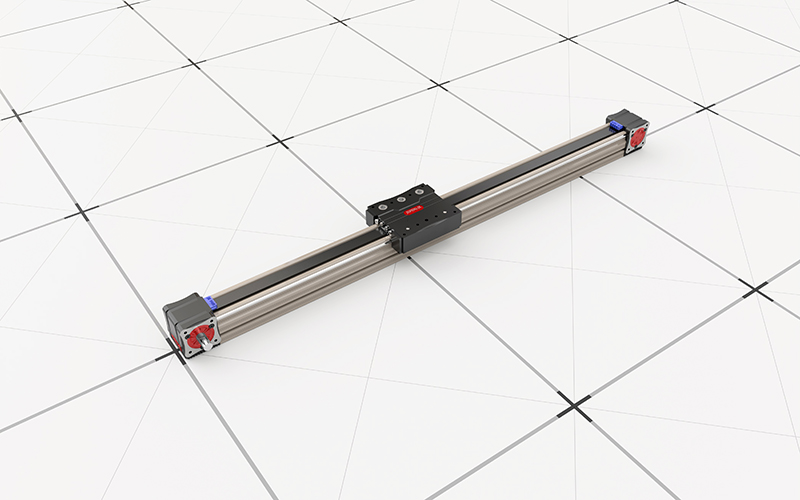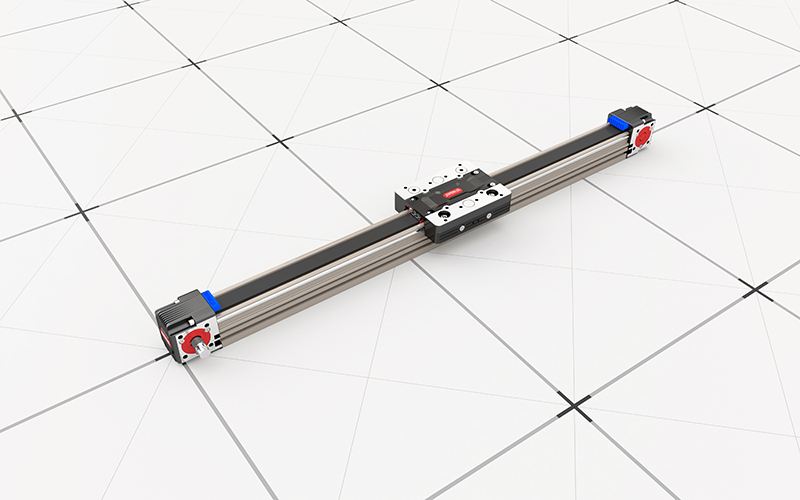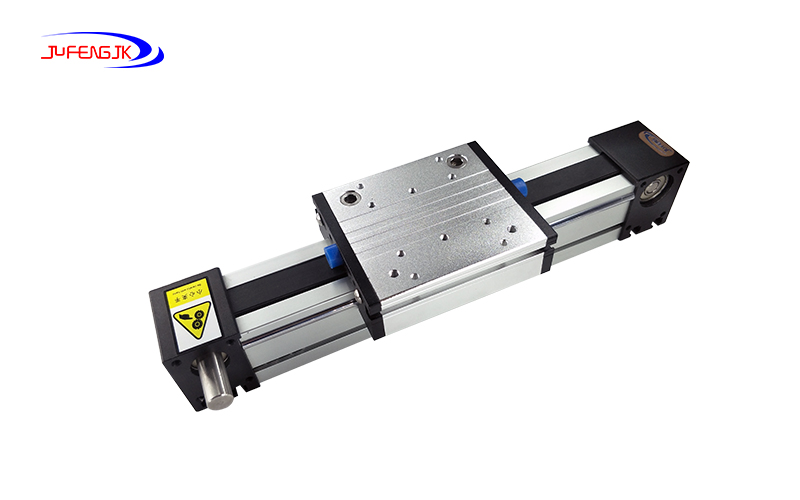
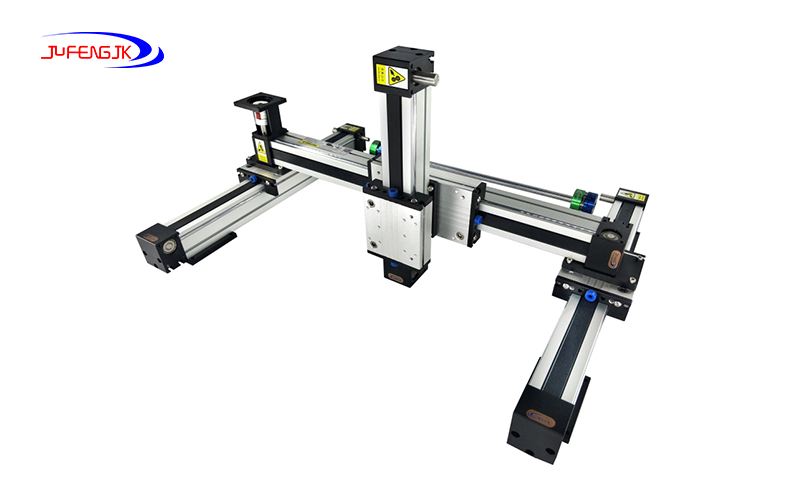
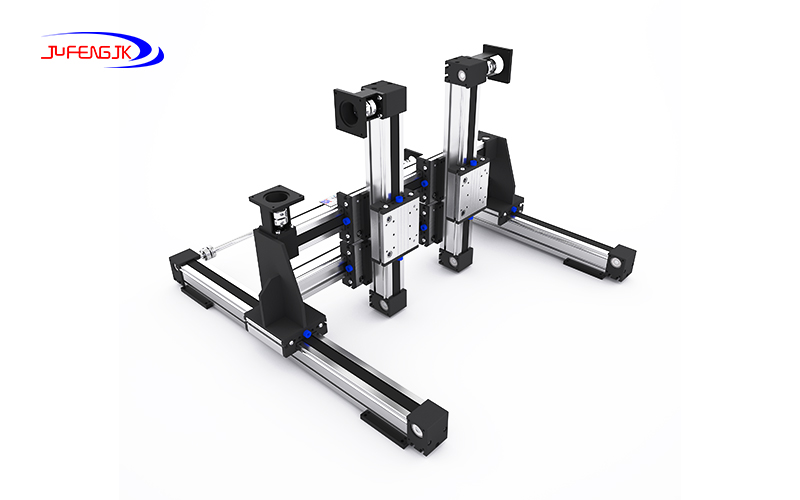
WDT4045 Belt-Driven Linear Module — Stable Motion Solution
Dual-Axis Stability
High Speed
Precise Positioning
Stroke up to 2000mm
Low Maintenance
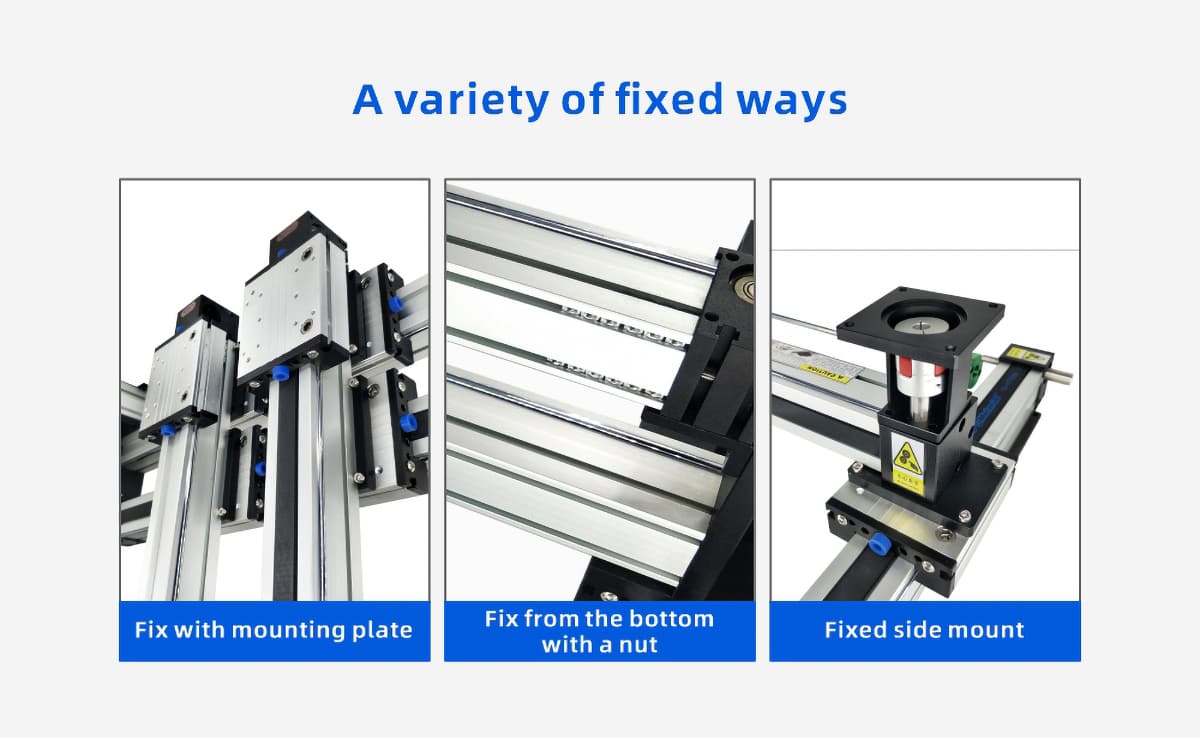
Installation method
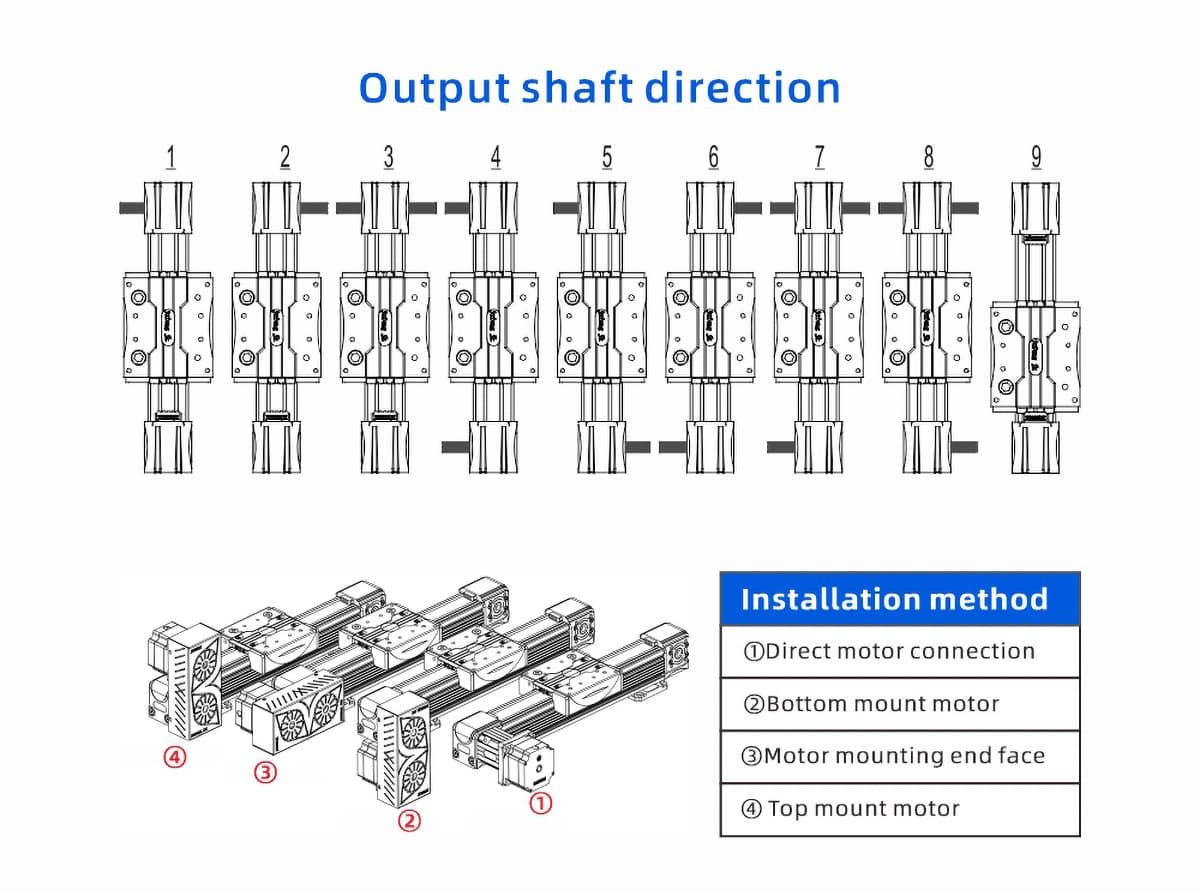
What 8 kg horizontal and 3 kg vertical actually means
Those two figures are not the same number divided by a safety factor — they describe two different load paths. Horizontally, the carriage carries the mass and the belt carries the thrust, so 8 kg is a working figure for a normal carriage with the tool near the centre. Vertically, gravity is permanent: the load hangs on the carriage whether the motor is energised or not, so the rating drops to 3 kg and the axis still needs a brake or a counterbalance to hold position when power is removed.
If your tool sits well off the carriage centre, derate both numbers before you size the frame — the limiting factor on a 40 mm profile is the moment, not the mass.
Where the 4045 is the better buy than the 4040
The extra 5 mm of profile width buys carriage width, and carriage width is what lets you mount a plate, a bracket or a pair of grippers without hanging them off the edge. When a customer's drawing shows two fixtures side by side, this is the frame that keeps the axis inside the envelope instead of pushing them to a 50 frame.
FAQ
Does the 4,000 mm rating mean I can order a 4 m axis?
The frame is rated to 4,000 mm of stroke; the standard table stops at 600 mm. Longer units are built to order and reviewed against the speed you need at that length.
Can I run it vertically with a standard motor?
No. A belt drive does not self-lock, so a vertical axis needs a brake motor or a counterbalance arrangement — tell us in the first message because it changes the bracket.